Runners need more than speed and endurance. Better ankle control, foot stability, and single-leg balance can support efficient movement and help build a stronger foundation for training.
These 10 balance boards cover beginner-friendly wobble training, ankle mobility, rehabilitation, core work, and more demanding stability exercises. Use the guide below to choose the right design, capacity, and difficulty for your goals.
Best 10 Balance Board for Running Strength Picks for 2026
Rehab-Ready Rocker

- Controlled forward-back or side-to-side instability
- Tactile top with anti-skid bottom
- Includes 37-plus exercise guide
Best For: Rehabilitation and progressive balance training
Versatile Mobility Trainer
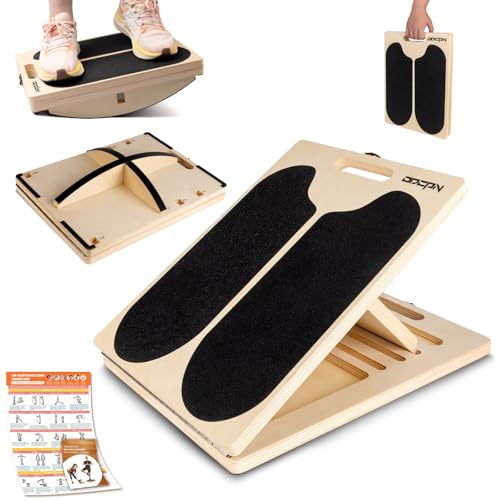
- Combines calf stretching and two balance modes
- Six adjustable slant angles
- Folds flat for storage or travel
Best For: Running mobility, recovery, and varied balance drills
Classic Home Trainer
Amazon Basics Wood Wobble Board
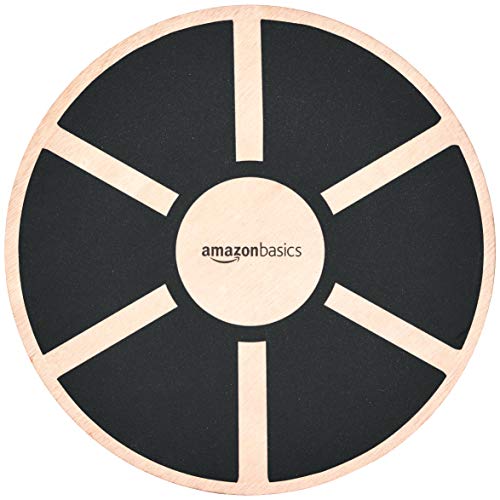
- Solid wood platform for general balance work
- Supports up to 265 pounds
- Useful for planks, push-ups, and standing drills
Best For: Simple home core and balance workouts
Precision Ankle Builder
Adjustable Ankle Balance Board

- Adjustable pegs for progressive ankle drills
- 360-degree controlled movement
- Includes illustrated and video guidance
Best For: Ankle stability, recovery, and foot-control training
Adjustable Surf-Style Trainer

- Adjustable 11-, 16-, or 22-inch roller spacing
- 15-ply wood supports up to 300 pounds
- Textured grip and TPE-covered roller
Best For: Progressive balance, core, and lower-body training
360-Degree Stability Trainer

- 360-degree half-ball rotation
- Textured anti-slip silicone surface
- Supports balance, core, and rehabilitation exercises
Best For: Advanced stability training and varied full-body drills
Focused Ankle Conditioning
StrongTek Single-Leg Balance Board

- Designed for one-foot ankle training
- Foldable and weighs 12.8 ounces
- Includes carry bag and exercise guide
Best For: Portable ankle mobility and running stability work
Professional Core Trainer

- 350-pound weight capacity
- Supports balance, core, and rehab exercises
- Compact anti-slip design
Best For: Progressive balance training and home rehabilitation
Runner's Ankle Trainer
Ankle Stability and Rehab Board

- Targets ankle strength and balance
- Non-skid base with textured top
- Includes three progressive workout plans
Best For: Running warmups and ankle rehabilitation
Desk-Friendly Stability Trainer
Reinforced Wooden Balance Board

- 350-pound plywood construction
- Reinforced base with anti-slip pads
- Arrives assembled for home or desk use
Best For: General balance training and standing-desk movement
Rehab-Ready Rocker – THERABAND Rocker Board
For shoppers comparing a balance board for running strength, the THERABAND Rocker Board offers controlled, directional instability rather than unrestricted wobbling. Its 30-degree angle, tactile top, and lightweight molded-plastic construction make it suitable for balance, core, agility, and conditioning work.
Best For: Rehabilitation, post-rehab conditioning, and users who want to practice forward-and-back or side-to-side balance separately.
Pros:
- Provides one controlled plane of instability at a time.
- Tactile top and anti-skid bottom support secure training.
- Includes an illustrated guide with more than 37 exercises.
- Supports users up to 150 kg.
Cons:
- It does not provide multidirectional instability in one movement.
- The 13 1/8-by-14-inch training surface may feel compact for some users.
This is a focused option for building balance and core control progressively. Runners seeking a structured rehabilitation or stability routine may prefer its predictable rocker motion over a more challenging 360-degree board.
Versatile Mobility Trainer – 3-in-1 Slant & Balance Board
This 3-in-1 board is a flexible choice for a balance board for running strength because it combines calf stretching with 180-degree directional balance and 360-degree rotation. Six slant angles let users adjust the intensity for warm-ups, mobility work, recovery, or more demanding balance sessions.
Best For: Runners who want one portable tool for calf mobility, ankle-focused recovery, directional balance, and rotational core training.
Pros:
- Combines slant-board stretching with 180- and 360-degree balance modes.
- Offers six adjustable calf-stretch angles from 20 to 45 degrees.
- Magnetic side panels allow quick mode changes and the board folds flat.
- Includes a training poster and instructions.
Cons:
- Its multiple parts require setup when changing between modes.
- The supplied details list both a 460-pound capacity claim and a 300-pound maximum recommendation; shoppers should verify the applicable limit.
Among these options, this is the broadest all-in-one mobility and balance design. It is especially appealing when calf stretching and varied stability drills matter as much as basic wobble training.
Classic Home Trainer – Amazon Basics Wood Wobble Board
The Amazon Basics Wood Wobble Board is a straightforward balance board for running strength, core work, coordination, and posture practice. Its solid wood platform has a slip-resistant surface and supports exercises ranging from standing balance poses to planks and push-ups.
Best For: Home users, athletes, gyms, and rehab spaces wanting a simple full-platform wobble board for general conditioning.
Pros:
- Supports balance, coordination, posture, and core-strength exercises.
- Solid wood top supports up to 265 pounds.
- Slip-resistant surface helps provide a secure grip.
- Backed by an Amazon Basics one-year limited warranty.
Cons:
- It must be used on a dry, non-slip surface rather than a wet or smooth floor.
- It offers a general wobble format without adjustable settings.
This is a practical, uncomplicated pick for adding instability to a home workout. Choose it if you prefer a traditional wood wobble board and do not need specialized angle adjustment or ankle-specific features.
Precision Ankle Builder – Adjustable Ankle Balance Board
Designed around foot and ankle control, this adjustable board is a targeted balance board for running strength and stability. Its 360-degree movement, adjustable pegs, textured birch-wood surface, and included illustrated and video guidance support progressive ankle-focused training.
Best For: Users rebuilding ankle stability after a sprain or surgery, or those working on plantar fasciitis, Achilles discomfort, gait, and single-leg control.
Pros:
- Adjustable pegs allow training configurations to progress with the user.
- 360-degree controlled movement targets ankle and foot mechanics.
- Textured non-slip surface is designed for barefoot use.
- Includes an illustrated guide and QR-code video tutorials.
Cons:
- Its narrow 11.8-by-4.3-inch format is more ankle-specific than a general full-body balance board.
- The product is positioned for targeted stability work, so it may be less versatile for broad standing exercises.
This is the most specialized option in the group. Runners prioritizing ankle recovery, precision foot mechanics, or adjustable progression may find it more relevant than a conventional wobble board.
Adjustable Surf-Style Trainer – 3-in-1 Wooden Balance Board
If you want a balance board for running strength that can progress with your ability, this 3-in-1 wooden trainer offers adjustable challenge levels. Removable stoppers create 11-, 16-, or 22-inch roller distances, while the 15-ply wood construction supports up to 300 pounds.
Best For: Beginners and experienced users who want adjustable balance, core, leg, and coordination training.
Pros:
- Three roller-distance settings accommodate different skill levels.
- 15-ply pressed wood supports up to 300 pounds.
- Emery foot-grip paper and a thick TPE-covered roller help reduce slipping and provide smoother use.
- Useful for board-sport practice and general balance conditioning.
Cons:
- The roller-style design may require more space and control than a compact single-leg trainer.
- The listed warranty is 30-day returns plus a one-year warranty, so coverage details should be reviewed.
Its adjustable setup makes this a versatile pick for building balance and lower-body control gradually. It is especially appealing if you want one board that can serve both beginner practice and more advanced sessions.
360-Degree Stability Trainer – Advanced Wood Balance Board
For a balance board for running strength that emphasizes multidirectional control, this advanced wood model uses a 360-degree half-ball base. Its broad surface, anti-slip covering, and claimed support capacity make it suited to balance, core, and stabilizer-muscle work.
Best For: Users seeking a versatile balance platform for conditioning, physical-therapy-style exercises, and full-body stability work.
Pros:
- 360-degree rotation challenges balance from multiple directions.
- Wood construction with a gray mesh silicone surface provides a textured, cushioned grip.
- Can support exercises such as squats, planks, push-ups, yoga, and surfing practice.
- Built-in hand openings make the 17.5-by-13.4-inch board easier to carry.
Cons:
- The advanced rotating base may be demanding for beginners without support.
- Although one note claims 500-pound support, the product details list a 350-pound maximum recommendation; verify the applicable limit before use.
- Its larger, multidirectional design is less compact than a small single-leg board.
This is the most versatile option of the three for varied stability drills, but its rotating base favors users who want a stronger balance challenge. Start conservatively, particularly if using it for rehabilitation or unfamiliar movements.
Focused Ankle Conditioning – StrongTek Single-Leg Balance Board
This compact single-leg trainer is a practical choice for a balance board for running strength when ankle control and foot stability are the priority. Its controlled rocking motion targets one foot at a time, and the foldable design makes it easy to store or take to the office, gym, or home.
Best For: Runners and other athletes focusing on ankle mobility, foot strength, coordination, and lower-body stability.
Pros:
- Single-foot format creates a focused ankle and balance challenge.
- Textured foot pads and a floor-gripping base support controlled movement.
- Lightweight two-panel design folds for storage and transport.
- Includes a carry bag, exercise guide, and beginner-friendly chair-supported progression.
Cons:
- The small 11.5-by-4.3-inch platform is designed for one foot rather than full-board exercises.
- It provides a focused rocking motion, not the multidirectional roller challenge of a larger balance board.
Choose this model when portability and targeted ankle work matter more than performing broad, full-body balance drills. Its guided progression also makes it approachable for beginners while still allowing independent practice as control improves.
Professional Core Trainer – Wooden Wobble Board
For shoppers seeking a balance board for running strength, this wooden wobble board provides a versatile platform for balance, coordination, and core-focused training. Its 350-pound capacity, anti-slip surface, and compact design make it suitable for home, gym, or office use.
Best For: Adults who want progressive balance work, core exercises, physical therapy support, or a portable standing-desk training option.
Pros:
- Supports up to 350 pounds and uses a durable wooden construction.
- Works for squats, push-ups, planks, balance drills, and rehabilitation exercises.
- Anti-slip surface and floor-protection pads improve workout safety and protect indoor floors.
- Compact, portable design is easy to store or transport.
Cons:
- The rocker-style design may require a gradual learning curve for beginners.
- Its 13.5-by-17-inch footprint may feel limited for users wanting a larger platform.
This is a strong all-purpose choice if you want one board for running-supportive balance training, core work, and rehabilitation. The sturdy capacity and exercise versatility are particularly useful for users progressing beyond basic standing drills.
Runner's Ankle Trainer – Ankle Stability and Rehab Board
This ankle-focused trainer is a practical balance board for running strength, warmups, and recovery. Its textured top, non-skid rubber base, and compact form focus training on ankle stability while supporting beginner-to-advanced progression with the included workout guide.
Best For: Runners, basketball players, rehabilitation users, and anyone targeting ankle strength, balance, or post-sprain recovery.
Pros:
- Designed to strengthen weak ankles and improve balance during rehabilitation.
- Textured top and non-skid rubber base help limit slipping.
- Supports pre-workout warmups and post-injury training for running and other activities.
- Includes three progressive workout plans from beginner to advanced.
Cons:
- The small 7.5-by-4.8-inch size focuses on ankle work rather than full-body wobble exercises.
- Its specialized design may be less suitable for broad exercises such as planks or squats.
Choose this model when ankle stability is the priority. It is more targeted than a full-size wobble board, making it a useful addition to a runner’s warmup or rehabilitation routine.
Desk-Friendly Stability Trainer – Reinforced Wooden Balance Board
For a balance board for running strength that also fits into daily routines, this reinforced wooden model combines balance training with ankle support and standing-desk use. It arrives assembled and includes anti-slip and floor-protection features for convenient indoor workouts.
Best For: Beginners, desk users, and adults seeking balance, posture, core, or physical-therapy exercises on a stable wooden platform.
Pros:
- High-quality plywood construction supports up to 350 pounds.
- Double reinforcement bands add stability and strength.
- Anti-slip pads improve grip, while anti-scratch pads help reduce floor wear and noise.
- Preassembled design is ready to use and works under a standing desk.
Cons:
- The larger 16.45-by-12.99-inch size may require more storage space than a compact ankle trainer.
- Its broad, general-purpose design may be less targeted for isolated ankle rehabilitation.
This board suits shoppers who want one convenient tool for balance practice, core conditioning, posture work, and reducing sedentary time. The reinforced construction and ready-to-use design make it especially practical for home or office settings.
How We Picked the Best Balance Board for Running Strength
We focused on balance trainers that can support running-related strength work, including ankle stability, calf mobility, proprioception, and core control. The selection includes rocker boards, wobble boards, slant boards, adjustable models, and wooden trainers suited to different experience levels.
We also considered weight capacity, surface traction, adjustability, portability, and versatility. A useful board should feel secure during controlled exercises while offering enough challenge to progress over time. Because balance training can be demanding, we recommend using any board on a clear, level surface and following professional guidance during injury rehabilitation.
Quick Comparison
- Best for straightforward home training: A standard wooden wobble board with a slip-resistant surface.
- Best for runners who need mobility work: A slant or ankle mobility board that targets the calves and ankles.
- Best for adjustable progression: A 3-in-1 or adjustable board with multiple balance configurations.
- Best for heavier users: A model with a clearly stated, high weight capacity and a broad standing platform.
- Best for rehabilitation: A stable ankle trainer that allows slow, controlled single-leg exercises.
Key Buying Factors for a Balance Board for Running Strength
Board Type and Difficulty
Rocker boards generally tilt in one direction and are often easier to control than fully rotating wobble boards. A 360-degree board creates a greater challenge for the ankles and core. Beginners should start with a predictable design before moving to a more unstable platform.
Surface Grip and Platform Size
Look for textured or non-slip standing surfaces, particularly if you train in socks or use the board for single-leg drills. A wider platform may feel more reassuring for beginners, while a compact board is easier to store and carry.
Weight Capacity and Construction
Check the stated capacity rather than assuming all wooden boards are equivalent. Solid wood, reinforced bases, and durable pivot components can improve confidence and long-term stability. Leave a sensible margin between your body weight and the listed limit.
Adjustability and Training Range
Adjustable height or interchangeable bases can make one board useful for mobility, balance, and strength exercises. This flexibility is valuable if multiple people will use it or if you want to increase difficulty gradually.
Who Should Buy Which Balance Board for Running Strength?
New users and casual runners should choose a stable rocker or basic wobble board with strong traction. Experienced runners may prefer a 360-degree or adjustable trainer for more demanding single-leg and core work. Athletes focused on calf tightness or ankle mobility should consider a slant or dedicated ankle board. Anyone returning from an injury should prioritize controlled movement, a secure surface, and advice from a qualified clinician over maximum instability.