The best resistance training bands for runners make it easier to add strength, power, and mobility work without a full gym setup. The right band can support warmups, glute activation, sprint drills, and progressive resistance training.
This roundup compares loop bands, pull-up bands, bungee systems, and sport-specific resistance tools so you can match the equipment to your training goals, experience, and available space.
Best 10 Resistance Training Bands for Runners Picks for 2026
Best for Acceleration Drills
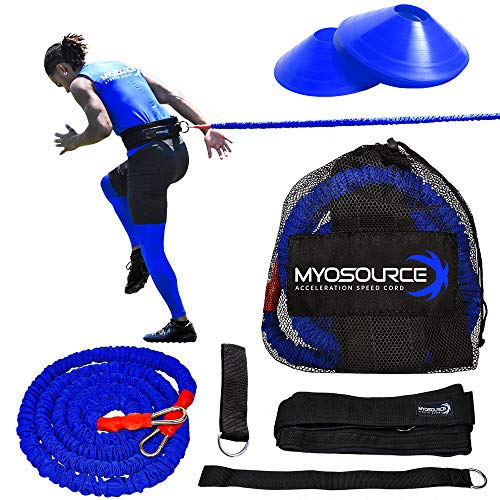
- Multidirectional resisted sprint training
- Three adjustable waist-belt sizes
- Includes eight agility cones
Best For: Runners building acceleration, agility, and explosive power
Best for Leg and Glute Work

- Five lower-body resistance levels
- Non-rolling woven fabric design
- Compact for gym or travel use
Best For: Runners targeting glute activation, hips, and legs
Best for Partner Resisted Sprints
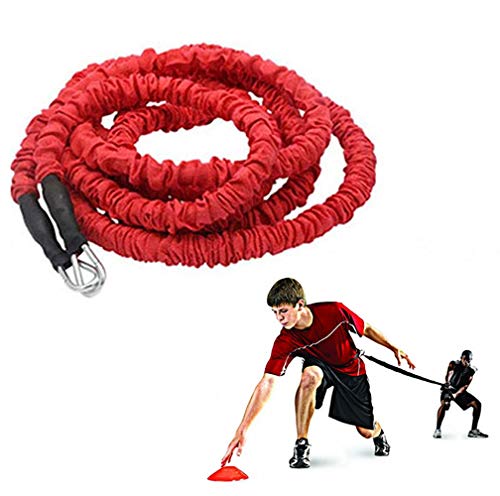
- Supports speed and explosive-force drills
- Partner or anchored training options
- Listed lengths from 6.6 to 16.6 feet
Best For: Runners training resisted speed, power, and endurance
Best All-Purpose Pick

- Five levels up to 115 pounds combined
- Supports full-body and mobility work
- Includes a compact carry bag
Best For: Runners wanting versatile strength and travel training
Best for Speed Work
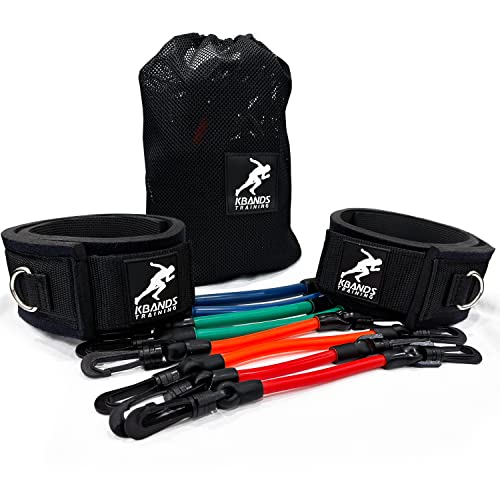
- Padded thigh bands resist rolling and slipping
- Eight resistance options for varied users
- Includes four digital training programs
Best For: Speed, agility, hip, and glute training
Best for Versatility
ROSAPOAR Long Resistance Bands

- Five bands range from 5 to 125 pounds
- Supports strength work and assisted pull-ups
- Includes a bag and workout guide
Best For: Portable full-body strength and cross-training
Best for Progress Tracking

- Six levels range from 15 to 55 pounds
- Compact loops target legs, hips, arms, and back
- Includes guide, bag, and fitness record card
Best For: Portable progressive strength and mobility routines
Best for Dynamic Speed Work
Pseudois Resistance Bungee Band

- 8-to-20-foot cord for resisted sprints and jumps
- 360-degree belt supports multidirectional drills
- Door anchor enables solo workouts
Best For: Runners focused on acceleration, agility, and power
Best Adjustable Band Set
Pull Up Bands Resistance Bands Set

- Five levels provide 5-to-125-pound resistance
- Useful for strength, mobility, and rehabilitation
- Storage bag supports portable workouts
Best For: Runners wanting versatile full-body training
Best Latex-Free Option

- TPE construction avoids latex and powder residue
- Five levels range from 5 to 125 pounds
- Compact for home, office, or travel workouts
Best For: Latex-sensitive runners building progressive strength
Best for Acceleration Drills – Speed Cord Training Kit
For runners seeking resistance training bands for runners that support sprint mechanics and multidirectional work, this high-tension speed cord kit is designed for resisted acceleration, deceleration, and re-acceleration drills. It includes an adjustable belt, anchor strap, hand strap, and eight portable cones.
Best For: Runners and multi-sport athletes focused on explosive power, acceleration, agility, and vertical-jump training.
Pros:
- 360-degree D-ring allows resistance from multiple directions.
- Three belt sizes accommodate waists up to and over 40 inches.
- Can be used independently with an anchor or with a training partner.
- Includes eight stackable agility cones for footwork drills.
Cons:
- Provides one resistance level rather than adjustable levels.
- Its 2.3-pound kit and 96-inch cord may be more equipment than casual runners need.
This is a specialized choice for runners who want resisted sprint and agility sessions rather than general strength training. The belt options and multidirectional setup make it particularly useful for structured field workouts.
Best for Leg and Glute Work – Fabric Loop Bands
These fabric resistance training bands for runners offer a compact way to add hip, glute, and leg activation work before or after a run. The five loop bands use a wide woven design intended to stay in place during squats, lunges, hip circles, and rehabilitation exercises.
Best For: Runners adding glute activation, hip strengthening, warm-ups, or lower-body accessory work.
Pros:
- Five resistance levels range from 40 to 180 pounds.
- Wide fabric construction is designed to resist rolling and pinching.
- Compact loops fit easily in a gym bag or travel kit.
- Suitable for leg workouts, hip thrusts, and rehabilitation warm-ups.
Cons:
- These are lower-body loop bands, so they are less suited to upper-body exercises.
- The supplied details do not indicate handles or anchor attachments.
For runners, this set is a practical complement to mileage because it focuses on the hips, glutes, and legs. The range of tensions also makes it easier to use one set for warm-ups and progressively harder activation work.
Best for Partner Resisted Sprints – Explosive Force Rope
This resistance rope gives runners a way to add external load to speed, stamina, and explosive-force drills. The elastic trainer can be used with a partner or attached to a stable grounded object, making it suited to resisted running and athletic conditioning.
Best For: Runners and athletes working on resisted speed, power, agility, and endurance.
Pros:
- Supports up to 50 pounds of tension according to the listed details.
- Can stretch up to three times its original length.
- Works for partner drills or individual anchored training.
- Available in listed lengths of 6.6, 9.8, and 16.6 feet.
Cons:
- The supplied configuration is a single resistance level.
- Partner or secure-anchor setup is recommended for effective use.
- It lacks the belt and cone accessories included with some speed-training kits.
This rope is a focused tool for runners who prefer dynamic resisted drills and already have a suitable partner or anchor point. Its length options provide flexibility, but setup and anchoring require more planning than a simple loop band.
Best All-Purpose Pick – TechStone Loop Band Set
For runners who want resistance training bands for runners that cover strength, mobility, and recovery work, this five-level natural-latex loop set is a versatile option. The bands can be used for lower- and upper-body exercises, stretching, rehabilitation, and pull-up assistance, with a carry bag for portability.
Best For: Runners wanting one lightweight set for strength training, mobility, cross-training, and travel workouts.
Pros:
- Five resistance levels combine for up to 115 pounds of listed tension.
- Supports full-body training, stretching, Pilates, and rehabilitation exercises.
- Lightweight, compact, and supplied with a carry bag.
- Made from natural latex with a non-slip feature.
Cons:
- Loop bands do not provide a waist belt or dedicated sprint-resistance setup.
- Resistance values can vary depending on which bands are combined and how far they are stretched.
This is the most broadly useful choice in the group for runners building a portable strength routine around their running. It is less specialized for resisted sprinting, but its five levels and full-body exercise range make it suitable for regular training and mobility sessions.
Best for Speed Work – Kbands Leg Resistance Bands
For runners looking for resistance training bands for runners that emphasize hip strength, glute work, and explosiveness, the Kbands system is a specialized option. Its padded thigh bands, rotational clip, multiple resistance levels, and included digital training programs support mobility-focused drills and lower-body exercises.
Best For: Runners who want guided speed, agility, hip, and glute training with thigh-mounted bands.
Pros:
- Padded thigh bands are designed not to roll or slip during movement.
- Eight resistance options support users from youth through advanced athletes.
- Includes Speed 101, Leg Toner, Agility FX, and 123 Reaction Pro digital trainers.
- Stackable, anti-snap bands include a lifetime warranty.
Cons:
- The thigh-band design is more specialized than a basic loop band.
- Digital programs require downloading them to a compatible smartphone, tablet, or laptop.
This is a strong fit for runners prioritizing movement-specific speed and agility work rather than general-purpose stretching. The included programs add structure, while the broad resistance range allows progression.
Best for Versatility – ROSAPOAR Long Resistance Bands
These long resistance training bands for runners offer a broad tension range for strength exercises, assisted pull-ups, and travel workouts. The five-band set covers 5 to 125 pounds, making it useful for upper- and lower-body movements such as rows, raises, pulls, and leg work.
Best For: Runners who want one portable set for strength training, cross-training, and assisted bodyweight exercises.
Pros:
- Five bands provide resistance from 5 to 125 pounds.
- Long 81.9-inch bands work for rows, pulls, raises, flys, and assisted pull-ups.
- Made from double-layered, natural latex tubing with non-slip properties.
- Includes a carrying bag and workout guide.
Cons:
- These are long pull-up-style bands rather than compact leg loops.
- Natural latex may not suit users with latex sensitivities.
The wide tension range makes this the most adaptable choice of the three for runners building a portable full-body routine. It is especially practical when strength sessions need to include both resistance exercises and assisted pull-up work.
Best for Progress Tracking – Six-Level Loop Bands
For runners seeking compact resistance training bands for runners, this six-band loop set offers clearly labeled progression from 15 to 55 pounds. The short loops are suited to targeted work for the legs, hips, arms, and back, while the exercise guide and fitness record card help organize regular training.
Best For: Runners who want portable loop bands for progressive strength, mobility, or physical-therapy-style exercises.
Pros:
- Six color-coded resistance levels range from 15 to 55 pounds.
- Compact 11.81-by-1.97-inch loops are easy to take to a gym, park, office, or home.
- Hypoallergenic latex is described as tear-resistant, wear-resistant, and tested beyond 8,000 stretches.
- Includes an exercise guide, storage bag, and fitness record card.
Cons:
- The maximum listed resistance is 55 pounds, lower than the long-band set.
- Loop bands are less suitable for assisted pull-ups or exercises requiring long tubing.
This set is a practical choice for runners who value simple lower-body training and measurable progression. Its compact format and tracking card make it convenient for consistent routines, from hip exercises to general strength work.
Best for Dynamic Speed Work – Pseudois Resistance Bungee Band
For runners seeking resistance training bands for runners that emphasize acceleration and multidirectional movement, the Pseudois bungee band adds dynamic resistance to sprints, shuffles, jumps, and backpedals. Its 8-foot nylon cord stretches to 20 feet, while the adjustable waist belt and door anchor support partner or solo sessions.
Best For: Sprint, agility, and power training on the track, field, court, or at home.
Pros:
- Supports explosive speed and power work with a stretchable 8-foot-to-20-foot cord.
- 360-degree rotation belt allows movement in multiple directions.
- Includes a door anchor for solo resistance training.
- Lightweight and travel-friendly, with reinforced webbing and double stitching.
Cons:
- Offers one medium resistance level rather than adjustable band resistance.
- Partner training may be needed for many sprint and acceleration drills.
- Users should inspect the cord and clips before each session.
This is a specialized choice for runners who want resisted acceleration and agility drills rather than a conventional set of loop bands. The belt-based design offers freedom of movement, but its single tension level makes it less adaptable for progressive strength training.
Best Adjustable Band Set – Pull Up Bands Resistance Bands Set
This five-band set is a versatile option for runners who want resistance training bands for runners that can complement strength, mobility, and rehabilitation work. Natural latex bands provide five resistance levels from 5 to 125 pounds, and the included storage bag makes the set convenient for home, gym, or travel use.
Best For: Full-body strength training, mobility work, physical therapy, and progressive resistance workouts.
Pros:
- Five bands cover a broad 5-to-125-pound resistance range.
- Can support squats, presses, push-ups, pull-up assistance, stretching, and speed training.
- Natural latex construction is described as durable, soft, and odorless.
- Includes a storage bag and instruction manual for portable use.
Cons:
- Natural latex may not suit users with latex sensitivities.
- The set does not include handles or a waist belt for running-specific resisted sprints.
- Combining bands increases resistance, but requires choosing and managing separate bands.
For most runners, this is the more flexible all-purpose set in the group. It is well suited to building supporting strength and improving mobility, though it is less specialized for sprint-resistance drills than a bungee belt system.
Best Latex-Free Option – Renoj Resistance Bands Set
The Renoj set is a practical pick for runners looking for resistance training bands for runners without latex. Its five color-coded TPE bands span 5 to 125 pounds, allowing users to move from warm-ups and mobility exercises to heavier leg, glute, and full-body strength work.
Best For: Latex-sensitive users and runners building a compact, progressive home or travel gym.
Pros:
- Latex-free TPE construction is described as non-toxic, odorless, and powder-free.
- Five clearly marked levels cover 5 to 125 pounds.
- Supports stretching, yoga, pull-up assistance, and lower- and upper-body strength exercises.
- Compact design fits easily in a drawer, backpack, or suitcase.
Cons:
- Like other pull-up band sets, it is not designed specifically for resisted running with a belt.
- Separate bands must be selected or combined to change the training challenge.
- No storage bag is listed among the included components.
This set stands out when latex avoidance and portability matter. Its graduated resistance range can support a runner’s strength progression, but athletes seeking direct acceleration resistance may prefer the Pseudois bungee design.
How We Picked the Best Resistance Training Bands for Runners
We focused on the features that matter most to runners: useful resistance ranges, secure construction, portability, and versatility. The selection includes compact loop sets for activation and mobility, longer bands for assisted movements and strength exercises, and bungee or cord systems designed for resisted sprinting and power drills.
We also considered whether each type of band can support progressive training. A good set should let you increase challenge gradually rather than forcing you to move immediately to a resistance level that compromises form.
Quick Comparison
| Band Type | Best For | Main Advantage |
|---|---|---|
| Fabric loop bands | Glute activation and hip work | Comfortable, stable fit around the legs |
| Latex loop bands | Mobility, strength, and travel | Compact and available in multiple levels |
| Long resistance bands | Full-body training and assistance | Greater exercise range and versatility |
| Bungee or speed cords | Sprint, agility, and power drills | Dynamic resisted movement |
Key Buying Factors for Resistance Training Bands for Runners
Resistance and Progression
Choose a set with several resistance levels so you can use lighter tension for warmups and activation, then progress to heavier tension for strength exercises. Printed resistance guidance is useful, but actual tension varies with stretch length and technique.
Band Style and Exercise Range
Mini loops work well for lateral walks, glute bridges, and hip stability. Long bands are better for rows, presses, assisted pull-ups, and anchored exercises. Bungee systems are more specialized and make sense when resisted running, acceleration, or agility is a priority.
Comfort, Durability, and Safety
Look for smooth fabric or latex, reinforced attachment points, and handles or anchors that suit your intended exercises. Inspect bands regularly for cuts, thinning, cracking, or permanent deformation. Use them in a clear area and avoid overstretching beyond the manufacturer’s guidance.
Portability and Storage
Runners who travel or train outdoors may prefer a compact loop set or a lightweight long-band kit. A storage bag helps prevent exposure to heat, sunlight, and sharp objects that can shorten band life.
Who Should Buy Which Resistance Training Bands for Runners?
Choose fabric loop bands if your priority is glute activation, hip stability, and lower-body warmups. They are often comfortable for repeated movement and easy to pack.
Choose latex loop or long-band sets if you want the broadest range of strength, mobility, and rehabilitation exercises. Multiple levels are especially useful for beginners and households sharing equipment.
Choose pull-up assistance bands if you want heavy resistance for strength training, assisted pull-ups, or full-body exercises. Their longer length offers more setup options than mini bands.
Choose bungee or speed-resistance systems if you specifically train acceleration, sprint mechanics, agility, or explosive power. These tools require more space and careful setup, but they can add sport-specific challenge that standard loops cannot.