The best home gym machine for runners should support more than mileage. It can help you build strength, improve conditioning, add low-impact cardio, or make structured training easier at home.
We selected 10 options across curved manual treadmills, motorized treadmills, rowers, steppers, and multifunction home gyms so you can match equipment to your running goals, available space, and budget.
Best 10 Home Gym Machine for Runners Picks for 2026
Runner-Powered Conditioning

- Six resistance levels for self-powered intervals
- Five-layer shock-absorbing running belt
- 400-lb capacity with digital workout monitor
Best For: Runners training with sprints, HIIT, and manual resistance
Low-Impact Cross-Training

- Quiet magnetic resistance for home use
- Stable dual-rail design supports up to 350 lb
- App tracks distance, time, calories, and more
Best For: Runners adding quiet, full-body rowing sessions
High-Capacity Speed Work

- Wide 63-by-19-inch curved running surface
- Four resistance levels for jogging to HIIT
- 450-lb capacity with LCD display and transport wheels
Best For: Runners needing spacious manual speed and endurance training
Compact Recovery Cardio
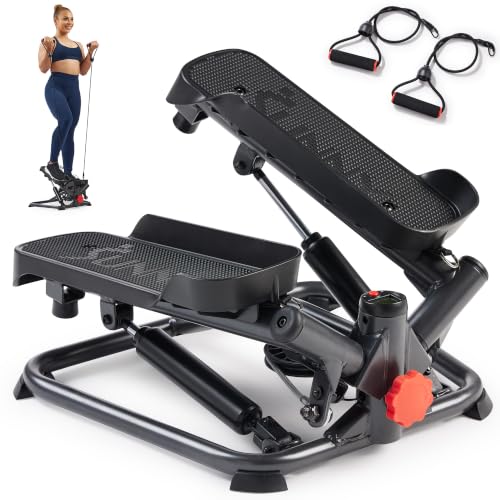
- Twist motion targets legs and core
- Resistance bands add upper-body exercises
- Compact footprint with 350-lb capacity
Best For: Runners seeking low-impact, space-saving conditioning
Incline Training Pick
LIJIUJIA 15% Incline Treadmill
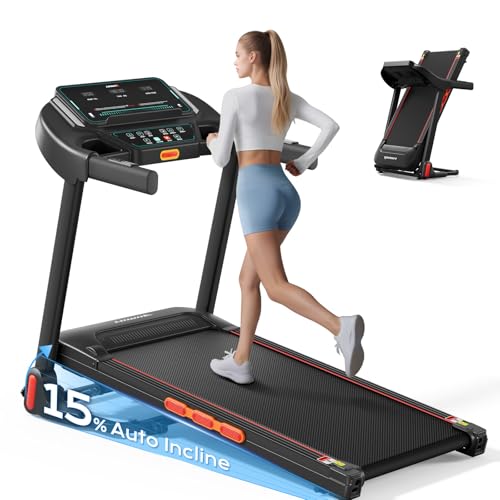
- 0%-15% automatic incline
- 6-point cushioning for lower-impact workouts
- Folds for compact storage
Best For: Incline training, jogging, and space-conscious home gyms
Strength Cross-Training Pick
SincMill Multifunctional Home Gym

- 148-pound weight stack
- Includes leg pedal and multiple attachments
- Thick alloy-steel construction
Best For: Runners adding full-body strength and leg training
Premium Smart Treadmill

- 12 MPH speed and 15% motorized incline
- 22-by-60-inch cushioned running deck
- 16-inch HD touchscreen with connected features
Best For: Endurance runners and interactive home workouts
Best Overall
SB Fitness CT400 Curved Treadmill
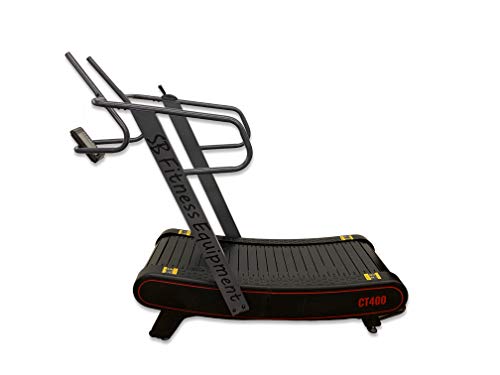
- Self-generated curved design supports natural pace changes
- Three resistance levels suit HIIT and strength-focused sessions
- Display tracks speed, distance, time, calories, and total miles
Best For: Runners wanting versatile, non-motorized training
Best for Small Spaces
CURSOR FITNESS SF20 Incline Treadmill

- 16% manual incline adds hill-training variety
- Folds compactly for storage under beds or sofas
- Quiet 3.0HP motor supports speeds up to 7.2 MPH
Best For: Apartment users and moderate-paced home runners
Best Foldable Manual Option

- Electricity-free design has no speed limit
- Curved track supports natural forward lean and pace control
- Foldable frame and wheels simplify storage
Best For: Runners wanting manual sprint and form-focused training
Runner-Powered Conditioning – Curved Manual Treadmill
If you want a home gym machine for runners that responds directly to your stride, this curved manual treadmill is built for self-powered walking, jogging, sprinting, and HIIT. Its six resistance levels, shock-absorbing belt, and roomy running deck suit runners who want speed work without electricity.
Best For: Runners focused on intervals, sprint training, and self-powered conditioning.
Pros:
- Six resistance levels provide quick, effort-based intensity changes.
- Five-layer belt is designed to absorb impact and encourage a natural mid-foot strike.
- 400-pound recommended capacity, steel construction, transport wheels, and workout-data monitor.
Cons:
- At 316 pounds, it is substantially heavier than many home cardio machines.
- Manual operation requires continuous effort rather than motorized assistance.
- The listed warranty description is only one year.
This is a serious, space-demanding option for runners who value immediate speed response and no electricity. It makes the most sense when sprinting and interval training matter more than easy, motor-assisted pacing.
Low-Impact Cross-Training – Merach Q1S Magnetic Rower
The Merach Q1S is a practical home gym machine for runners who want low-impact cross-training alongside running. Its quiet magnetic resistance, dual slide rail, and app-supported workout data make it suitable for steady conditioning without adding more running impact.
Best For: Runners seeking quiet, full-body cross-training and guided indoor workouts.
Pros:
- Magnetic flywheel is designed for smooth, quiet rowing.
- Dual rails add stability and support users up to 350 pounds.
- MERACH and KINOMAP app compatibility provides courses, tracking, and workout data.
Cons:
- The rower requires two included AAA batteries for its display.
- Its 65-inch length needs dedicated floor space during use.
- The one-year manufacturer warranty is shorter than some fitness-equipment warranties.
Rowing complements running by adding upper- and lower-body work through a low-impact movement pattern. Choose this model if a quiet machine, app guidance, and easy repositioning are more important than sprint-specific training.
High-Capacity Speed Work – Non-Electric Curve Treadmill
This commercial-grade curve treadmill is a strong home gym machine for runners who want a wide, self-powered surface for jogging, sprinting, and HIIT. Four resistance levels let you adjust effort, while positioning on the belt controls acceleration and deceleration without buttons.
Best For: Runners who need a spacious manual treadmill with high user capacity for speed and endurance work.
Pros:
- 63-by-19-inch curved belt accommodates a range of strides and body sizes.
- Four resistance levels support lighter jogging through high-intensity sessions.
- 450-pound recommended capacity, LCD display, wheels, and a two-year parts-replacement warranty.
Cons:
- The 79-inch length and 35-inch width require substantial room.
- Self-powered operation demands active effort throughout the workout.
- Four resistance levels offer fewer adjustment steps than some competing manual treadmills.
With its broad belt and high capacity, this model prioritizes stability and demanding training over compact storage. It is a sensible pick for runners who want manual speed control and room for full strides.
Compact Recovery Cardio – Sunny Twist Stair Stepper
For runners who want a compact home gym machine for runners’ strength and cardio support, the Sunny twist stair stepper adds low-impact stepping without taking up treadmill-sized floor space. Its side-to-side motion, resistance bands, and adjustable step height create a varied home workout.
Best For: Runners wanting compact, low-impact lower-body and core conditioning with optional upper-body work.
Pros:
- Twisting steps engage the glutes, thighs, calves, and core.
- Adjustable resistance bands extend training to the arms, shoulders, chest, and back.
- Compact 19.5-by-18.9-inch footprint, 350-pound capacity, and Bluetooth SunnyFit connectivity.
Cons:
- Its stepper motion does not replicate running stride mechanics.
- The warranty is one year for the frame and 180 days for other parts.
- Hydraulic stepping is intended for controlled, low-impact workouts rather than high-speed running.
This stepper works best as a space-saving complement to a running routine, especially for gentle cardio, leg conditioning, and movement variety. It is less suitable if your primary goal is practicing running pace or stride.
Incline Training Pick – LIJIUJIA 15% Incline Treadmill
If you want a home gym machine for runners that supports hill work and interval sessions without taking over your living space, the LIJIUJIA treadmill is a practical option. Its 0%-15% automatic incline, 0.5-8.5 MPH speed range, cushioning system, and folding design cover walking, jogging, and incline-focused training.
Best For: Runners who prioritize incline workouts, joint comfort, and compact storage.
Pros:
- Automatic incline adjusts from 0% to 15% for hill simulations and interval training.
- 6-point cushioning system helps reduce impact on knees, ankles, and back.
- Folding hydraulic design, transport wheels, and 90% pre-assembly simplify home use.
- Handrail heart-rate sensors and controls allow adjustments while running.
Cons:
- 8.5 MPH top speed may not suit faster runners or sprint-focused training.
- Its running surface dimensions are not provided in the supplied details.
The LIJIUJIA is best suited to recreational runners and structured incline trainees rather than high-speed athletes. Bluetooth audio, low-noise operation, and a 300-pound maximum user weight add useful everyday convenience.
Strength Cross-Training Pick – SincMill Multifunctional Home Gym
For runners seeking a home gym machine for runners that adds strength work to a cardio routine, the SincMill multifunctional gym provides a broad selection of exercises. Its 148-pound weight stack, leg exercise pedal, curl pad, bars, and ankle straps support lower- and upper-body training at home.
Best For: Runners building complementary leg, pulling, curling, and general full-body strength.
Pros:
- 148-pound weight stack provides adjustable resistance for strength sessions.
- Leg exercise pedal is designed to target more leg muscle groups.
- Includes curl pad, one-hand bars, ankle straps, top and bottom bars, and chains.
- Thick alloy-steel frame and weight guards are built for regular home use.
Cons:
- At 69 inches deep by 40.7 inches wide by 80 inches high, it requires substantial space.
- Assembly is still required, despite the included instructions and tutorial video.
- It does not provide treadmill-style running or cardio features.
This machine is a useful cross-training choice when a runner wants resistance work rather than another cardio device. Its exercise variety and included accessories make it more versatile than a single-station strength tool, but measure your workout area carefully before buying.
Premium Smart Treadmill – BowFlex T16 16-Inch Treadmill
The BowFlex T16 is a feature-rich home gym machine for runners who want a spacious deck, connected training, and enough speed for endurance and interval workouts. It combines a 3.5 HP motor, 0-12 MPH speed, 15% motorized incline, and a 16-inch HD touchscreen in a folding treadmill.
Best For: Runners wanting immersive workouts, a wide running surface, and advanced home-training features.
Pros:
- 22-by-60-inch deck offers generous room for running and walking workouts.
- Speeds up to 12 MPH and 15% incline support endurance, hill, and interval training.
- 16-inch HD touchscreen provides access to JRNY workouts, metrics, and supported streaming entertainment.
- FlexZone XL cushioning, folding SoftDrop frame, and a 375-pound maximum user weight add practicality.
Cons:
- Its 77.2-by-37-by-67.6-inch dimensions require considerable floor space.
- The large connected display and premium feature set may be more than a minimalist runner needs.
- Some connected training and entertainment features may depend on compatible services or devices.
The T16 is the strongest treadmill match here for serious home running, particularly if deck space and interactive features matter. Its lifetime frame and motor warranties are additional advantages, while the folding frame can help manage its substantial footprint.
Best Overall – SB Fitness CT400 Curved Treadmill
For runners comparing a home gym machine for runners, the SB Fitness CT400 stands out as a self-generated curved treadmill built for running, walking, sport-specific training, and HIIT. Its no-maximum-speed design and adjustable resistance make it especially suited to workouts where you control the pace.
Best For: Runners who want a commercial-style, non-motorized treadmill for varied training and high-intensity intervals.
Pros:
- Self-generated power supports natural pace changes without a motor.
- Three resistance levels add challenge and strength-focused training.
- Flexible track slats are designed to provide shock absorption.
- LCD/LED display tracks time, distance, speed, calories, and total miles.
Cons:
- At 145 pounds, it is substantial to move despite its transport wheels.
- The 18-inch-wide deck may feel narrower than some motorized treadmills.
- Its open-box product grade may not appeal to shoppers seeking new-equipment grading.
The CT400 is a strong match for runners who prioritize responsive, self-powered training over compact storage. Its 375-pound recommended capacity, adjustable resistance, and sport-specific versatility make it a capable centerpiece for a dedicated home gym.
Best for Small Spaces – CURSOR FITNESS SF20 Incline Treadmill
The CURSOR FITNESS SF20 is a practical home gym machine for runners who need a compact, powered treadmill. It combines a 0.6–7.2 MPH speed range with a manual incline up to 16%, quiet operation, folding storage, and a 90% pre-assembled design.
Best For: Apartment users and home exercisers seeking a foldable treadmill for walking, jogging, and moderate-paced running.
Pros:
- Manual incline adjusts from 0% to 16% for hill-style training.
- Seven-layer belt and cushioning components are designed to reduce joint impact.
- 3.0HP brushless motor is rated for speeds up to 7.2 MPH and noise below 45dB.
- Folds to 44.3 by 21.8 by 4.1 inches and includes built-in wheels.
Cons:
- The 15-by-37.5-inch running belt is relatively compact for long-stride runners.
- A 7.2 MPH maximum may not suit sprint-focused training.
- It has a one-year manufacturer warranty.
The SF20 favors convenience and storage efficiency over a full-size running platform. Its incline, cushioning, quiet motor, and 400-pound capacity make it a useful choice for home cardio, especially where space is limited.
Best Foldable Manual Option – QZDXJ-003 Curved Treadmill
For runners seeking a home gym machine for runners without a power cord, this foldable curved treadmill uses manual self-propulsion and zoned track positioning to control acceleration, cruising, and stopping. Its curved design encourages a natural forward lean while leaving the pace entirely to the user.
Best For: Runners who want an electricity-free treadmill for form practice, pace control, and sprint-oriented workouts.
Pros:
- No speed limit lets users set the pace through their own effort.
- Curved construction is designed to engage more muscles and reduce joint stress.
- Foldable handrails and transport wheels help with storage and repositioning.
- Rubber tracks include raised particles for added traction.
Cons:
- The 15.75-inch track width is narrower than many traditional treadmills.
- Manual propulsion requires continuous effort and may feel demanding for beginners.
- It lacks a motorized speed-control system and advanced workout programs.
The QZDXJ-003 is appealing when natural pacing and low operating complexity matter most. Its 350-pound capacity, two-year warranty, foldable frame, and clear LED display support straightforward daily running and sprint training.
How We Picked the Best Home Gym Machine for Runners
We grouped these machines by the training benefits they offer runners: running-specific conditioning, incline work, strength development, cross-training, and recovery-friendly cardio. We also considered resistance control, belt or rail design, noise, footprint, weight capacity, display functionality, and whether the machine requires electricity.
A good Home Gym Machine for Runners should complement your training rather than simply duplicate every outdoor run. Curved treadmills can encourage active foot placement and self-paced effort, while motorized treadmills make steady pacing, incline intervals, and controlled workouts easier. Rowers, steppers, and strength stations add variety and help address muscular weaknesses that running alone may not cover.
Quick Comparison
- Best for self-paced running: Curved manual treadmills, including the six-level and four-level resistance models.
- Best for quiet cross-training: The Merach Q1S magnetic rowing machine.
- Best for stair-focused conditioning: The Sunny Health & Fitness Twist Stair Stepper.
- Best for incline workouts: The LIJIUJIA 15% treadmill and CURSOR FITNESS 16% incline treadmill.
- Best for premium guided treadmill training: The BowFlex T16.
- Best for full-body strength: The SincMill multifunctional home gym.
- Best for commercial-style curved running: The SB Fitness Equipment CT400.
- Best for compact storage: The foldable 350-pound-capacity curved treadmill.
Key Buying Factors for a Home Gym Machine for Runners
Training Purpose
Choose the machine based on the gap in your current routine. If you need more running volume with precise pace control, select a motorized treadmill. For sprint-style efforts and self-paced conditioning, consider a curved treadmill. A rower or stepper is better when you want cardiovascular work with less repetitive impact.
Impact, Resistance, and Adjustability
Look for shock absorption, multiple resistance levels, incline adjustment, or smooth magnetic resistance. Adjustable settings let you progress gradually and create varied workouts instead of repeating the same stimulus.
Space, Noise, and Power
Measure the complete operating area, not just the stored footprint. Motorless treadmills can reduce electrical needs, while magnetic rowers are often quieter than many motorized machines. Foldable designs may suit apartments, but confirm that folding does not compromise stability.
Stability and Fit
Check the maximum user weight, running surface dimensions, handle placement, seat or rail travel, and machine stability. Taller runners and users with longer strides may need a larger deck or rowing rail. A stable frame is especially important for fast intervals and incline work.
Who Should Buy Which Home Gym Machine for Runners?
Choose a curved manual treadmill if you want a self-powered running workout, responsive speed changes, and no motor maintenance. Choose a motorized incline treadmill for repeatable pace sessions, hill simulations, and structured indoor training.
Choose the rower if you want low-impact full-body conditioning, or the twist stepper if climbing strength and compact cardio are priorities. Choose the multifunction home gym if strength training is the biggest missing piece in your running program.
Before buying, compare warranty coverage, assembly requirements, replacement-part availability, and the machine’s actual dimensions. The right choice is the one you will use consistently while leaving enough room in your training plan for outdoor runs, mobility work, and recovery.