The best lever weightlifting belts provide firm abdominal support without shifting during heavy squats, deadlifts, and presses. The right choice depends on more than thickness alone: fit, leather quality, lever hardware, and adjustability all affect performance.
We compare 10 popular options for different training goals, body types, and budgets so you can choose a belt that feels secure under load and remains practical between sessions.
Best 10 Lever Weightlifting Belts Picks for 2026
Reliable Leather Pick

- 10mm leather construction
- Quick-locking lever buckle
- Four-inch core and back support
Best For: Heavy squats, deadlifts, and powerlifting
Competition-Ready Choice

- IPF and USAPL stated approval
- 10mm bovine leather construction
- Heavy-duty steel lever buckle
Best For: Training and sanctioned powerlifting competition
Flexible Training Pick

- Flexible premium nylon
- Self-locking metal buckle
- Breathable and washable design
Best For: Olympic lifting, functional fitness, and varied training
Warranty-Backed Power Pick
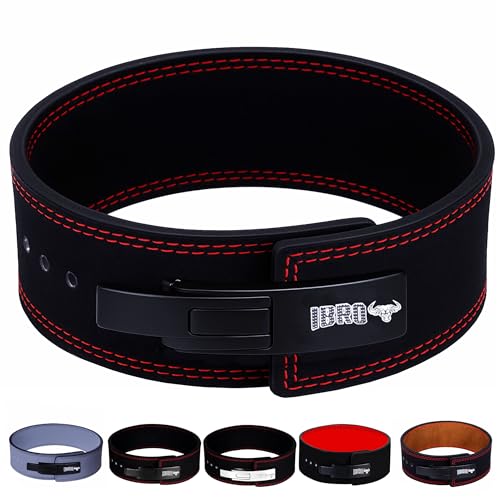
- 10mm genuine leather
- Fast-release lever closure
- One-year replacement warranty
Best For: Heavy powerlifting and strongman-style training
Best Budget Lever Belt

- 10mm leather construction
- 4-inch support profile
- Heavy-duty adjustable lever buckle
Best For: Lifters needing a large-size leather lever belt
Best Adjustable Lever Belt
POZTEV 10mm Leather Powerlifting Belt

- Quick-release lever mechanism
- 4-inch back-support profile
- One-year replacement warranty stated
Best For: Training across squats, deadlifts, and powerlifting movements
Best Size Range Lever Belt

- 10mm-thick leather body
- 4-inch-wide support profile
- Advertised 24–45-inch adjustment range
Best For: Broad strength-training use with fast lever adjustment
Feature-Rich Style Pick
10mm Full-Grain Leather Lever Belt

- Laser-etched steel lever with reinforced stitching
- 13-position adjustment system
- Curved 4-inch panel with suede interior
Best For: Lifters wanting adjustability and bold styling
Competition-Ready Value Pick

- Uniform 4-inch support profile
- 10 precision-drilled adjustment holes
- IPL and USPA approved
Best For: Lifters wanting approved, all-around support
Reliable Leather Pick – 10mm Gray Lever Belt
This 10mm leather option is a straightforward choice for shoppers comparing lever weightlifting belts for heavy squats, deadlifts, and powerlifting. Its four-inch profile and quick-locking lever are designed to provide consistent torso support and a fast, secure fit.
Best For: Lifters who want a sturdy leather belt with simple lever adjustment for heavy training.
Pros:
- 10mm leather construction resists stretching for consistent support.
- Heavy-duty lever buckle closes quickly and allows precise fitting.
- Four-inch width supports the abs and lower back during major lifts.
Cons:
- The leather construction may feel less flexible than a nylon belt.
- Accurate sizing requires measuring your true waist rather than pants size.
This belt focuses on essential powerlifting features: durable leather, a four-inch support area, and quick lever closure. Verify the listing’s sizing chart before ordering, especially since the listed model is a medium with a 35-inch waist size.
Competition-Ready Choice – Gymreapers 10mm Lever Belt
For lifters comparing lever weightlifting belts for both training and meets, the Gymreapers 10mm model combines a four-inch bovine leather body with a heavy-duty steel lever. It is designed for powerlifting, bodybuilding, and strength work, with stated IPF and USAPL approval.
Best For: Competitive powerlifters who want one leather belt for gym sessions and sanctioned competition.
Pros:
- 10mm genuine bovine leather and suede exterior provide a structured brace.
- Camac steel lever buckle offers quick, precise adjustments.
- Stated to meet IPF, IPL, USPA, and USAPL requirements.
- Double-lined stitching and finished edges support long-term shape retention.
Cons:
- A structured leather belt can require more break-in than flexible nylon.
- The listed medium size covers a 30–36-inch waist, so careful measurement is important.
This is the most competition-focused option in the group, with explicit federation claims and a durable leather build. Its 10mm thickness should appeal to lifters prioritizing bracing and stability over maximum flexibility.
Flexible Training Pick – Element 26 Self-Locking Belt
The Element 26 offers a different approach for shoppers comparing lever weightlifting belts: a flexible nylon design with a full-metal self-locking buckle. Its four-inch profile is intended to support intra-abdominal pressure while remaining breathable, washable, and easy to pack.
Best For: Lifters who want adjustable, low-maintenance support for powerlifting, Olympic lifting, and functional fitness.
Pros:
- Self-locking metal buckle engages under load and releases quickly.
- Premium nylon conforms to the core without a stated break-in period.
- Breathable material can be hand washed and air dried.
- Folds easily for gym-bag storage and is described as competition approved.
Cons:
- Nylon may not provide the same rigid feel as a 10mm leather belt.
- The straight four-inch design may be less contoured than some leather options.
This belt is a practical choice when convenience and mobility matter as much as support. The self-locking buckle, washable nylon, and foldable construction make it especially versatile across lifting styles.
Warranty-Backed Power Pick – IBRO 10mm Lever Belt
The IBRO 10mm model is aimed at lifters seeking a heavy-duty leather option among lever weightlifting belts. It uses a quick-release lever, four-inch back support, double stitching, and pre-broken Amara suede for a more comfortable starting feel.
Best For: Heavy lifters who want a competition-ready leather belt with a one-year replacement warranty.
Pros:
- 10mm genuine leather construction provides a firm, durable brace.
- Quick lever closure can be loosened in less than a second.
- Contoured four-inch design is intended to resist twisting and folding.
- Includes a stated one-year warranty with free replacement for product problems.
Cons:
- The firm leather construction may offer less flexibility than nylon.
- The listed medium has a 96-centimeter waist specification, so confirm fit against the seller’s chart.
IBRO combines a traditional leather powerlifting build with quick lever operation and a warranty. The pre-broken suede may make it a more approachable choice for lifters who want substantial support without waiting through a long break-in period.
Best Budget Lever Belt – MANUEKLEAR 4-Inch Lever Belt
If you want a straightforward option among lever weightlifting belts, this MANUEKLEAR model combines a leather build with a heavy-duty adjustable lever buckle. Its 4-inch profile and 10mm thickness are suited to lifters who want firm support for strength training.
Best For: Lifters seeking a basic 10mm leather lever belt in a large 34–40-inch size range.
Pros:
- 10mm-thick leather construction
- 4-inch width provides substantial trunk coverage
- Heavy-duty lever closure allows adjustable fitting
Cons:
- Listed in only an L (34–40 inches) size
- The supplied details do not specify warranty coverage
This belt is a practical pick if its listed size matches your waist and you prefer the quick, secure feel of a lever closure. Check the fit carefully before ordering, since the available sizing is limited.
Best Adjustable Lever Belt – POZTEV 10mm Leather Powerlifting Belt
For shoppers comparing lever weightlifting belts for repeated squat and deadlift sessions, this POZTEV belt emphasizes quick adjustments and a supportive leather design. The 10mm construction, 4-inch back support, and lever mechanism target lifters who want a snug fit without repeated prong-belt adjustments.
Best For: Men and women who want an adjustable leather belt for powerlifting, weightlifting, bodybuilding, squats, and deadlifts.
Pros:
- Lever mechanism is designed for quick tightening and release
- 10mm leather construction with a 4-inch vertical back-support profile
- Pre-broken leather is described as durable and comfortable
- Includes stated one-year free replacement warranty and lifetime customer support
Cons:
- The listed medium size is 32–38 inches, so fit should be checked carefully
- The details refer to both 10mm and 9mm thickness, which may require clarification
Its combination of quick adjustment, substantial back coverage, and stated support service makes it a versatile choice. Confirm the exact thickness and size before purchase, especially if you need a precise competition-style specification.
Best Size Range Lever Belt – MANUEKLEAR 10mm Lever Belt
This MANUEKLEAR model is one of the more substantial lever weightlifting belts in the lineup, with a 10mm-thick leather body and 4-inch width. Its lever is designed for fast locking and adjustment, while the stated 24–45-inch adjustment range gives shoppers more sizing flexibility than the listed medium fit alone suggests.
Best For: Beginners and experienced lifters wanting a wide, thick leather belt for squats, deadlifts, powerlifting, and general strength training.
Pros:
- 10mm-thick, 4-inch-wide leather construction
- Lever buckle is designed for one-second locking
- Advertised adjustment range from 24 to 45 inches
- Suitable for multiple strength-training movements
Cons:
- The listed size is M (29–35 inches), so the broader adjustment claim should be verified
- Its thick, wide design may feel substantial for lifters preferring a lighter belt
Choose this belt if you prioritize a robust support profile and quick lever operation. Because the product lists both a medium size and a wider adjustment range, verify the included belt’s actual fit and adjustment points before ordering.
Maximum Support Pick – 10mm Suede Leather Lever Belt
For lifters comparing lever weightlifting belts, this 10mm suede leather model emphasizes firm, even support for heavy squats and deadlifts. Its 4-inch profile, non-slip suede surface, and adjustable steel lever are designed for quick tightening and loosening.
Best For: Serious lifters seeking maximum core and lower-back support, including USPA- or IPL-approved competition use.
Pros:
- 10mm genuine suede leather provides substantial support with some flexibility.
- Heavy-duty steel lever enables fast, tight compression.
- 4-inch width supports the back, abdominals, and core evenly.
- Listed as USPA and IPL approved.
Cons:
- The rigid, heavy-duty design is intended for serious lifters rather than casual training.
- The lever requires removing two screws for waist-size adjustment.
- Accurate true-waist measurement is important; pants size should not be used.
This is a straightforward choice when support and competition-oriented construction matter most. Confirm your measured waist against the listing’s sizing chart before ordering.
Feature-Rich Style Pick – 10mm Full-Grain Leather Lever Belt
This Jaffick model stands out among lever weightlifting belts with a 10mm full-grain leather build, a laser-etched steel lever, and a bold skull-embroidered design. Its 13-position adjustment system is intended to make compression changes quick during varied training sessions.
Best For: Lifters who want heavy-duty leather support, multiple adjustment positions, and distinctive gym styling.
Pros:
- 10mm full-grain leather and reinforced stitching are built for demanding use.
- 13 micro-adjustment holes allow more positioning options than a basic setup.
- Curved 4-inch back panel is designed for squat positioning and range of motion.
- Suede interior and perforated leather are intended to improve grip and breathability.
Cons:
- The white finish and skull embroidery may not suit understated gym preferences.
- Its 10mm construction may feel firm compared with lighter training belts.
- The supplied notes do not specify competition approval.
With its broad adjustment range and distinctive construction, this belt is appealing for athletes who regularly switch exercises and want a more personalized fit. Check the available size details carefully before purchase.
Competition-Ready Value Pick – 10mm 4-Inch Suede Lever Belt
For shoppers seeking lever weightlifting belts with a uniform profile, this RDX belt combines 10mm suede leather with a 4-inch width and a steel lever buckle. Ten precision-drilled holes provide compression adjustment for deadlifts, squats, Olympic lifting, and cross-training.
Best For: Men and women who want a consistently wide, suede leather belt with listed IPL and USPA approval.
Pros:
- Uniform 4-inch width provides consistent support around the torso.
- 10mm suede leather and cushioned lining are designed for durability and comfort.
- Steel lever adjusts across 10 precision-drilled holes.
- Listed as IPL and USPA approved.
Cons:
- The constant 4-inch width may feel restrictive for some movements or body types.
- Only 10 adjustment positions are specified, fewer than some competing designs.
- Careful measuring across the belly button is required for proper sizing.
This belt offers a balanced combination of competition-oriented approval, firm leather support, and a practical adjustment range. Use the supplied waist-measurement guidance rather than relying on pant size.
How We Picked These Lever Weightlifting Belts
We focused on the features that matter most during serious strength training: belt thickness, width, material, lever construction, adjustment range, and stated powerlifting approvals. We also considered whether each design appears suited to repeated use in squats, deadlifts, bench pressing, and general gym training.
Leather belts generally offer the rigid support lifters expect from a lever design, while quality hardware helps maintain consistent tension. Because fit varies by waist size and belt shape, buyers should verify the manufacturer’s sizing chart rather than relying on a usual clothing size.
Quick Comparison
| Feature | What to compare | Why it matters |
|---|---|---|
| Thickness | 8mm, 10mm, or 13mm | Thicker belts feel more rigid; thinner options may break in faster. |
| Width | Typically about 4 inches | A wider profile can provide consistent torso coverage and support. |
| Material | Genuine leather or layered construction | Durability, stiffness, comfort, and long-term value depend heavily on materials. |
| Lever | Fixed or adjustable mounting | Adjustability helps accommodate changes in clothing, waist size, or training preference. |
| Approval claims | IPF, USPA, or IPL listings | Important for lifters competing under a particular federation’s rules. |
Key Buying Factors for Lever Weightlifting Belts
Thickness and Stiffness
A 10mm belt is a practical middle ground for many lifters, offering substantial support without the break-in period and bulk of some 13mm models. Very rigid belts can be useful for maximal attempts, but may feel restrictive during warmups or exercises that require more movement.
Fit and Adjustment
Measure around the area where the belt will sit, following the brand’s instructions. The lever should close securely without forcing you to over-tighten it. An adjustable lever plate is especially useful if your waist changes or multiple people share the belt.
Leather, Edges, and Hardware
Look for sturdy leather, reinforced mounting points, smooth edges, and a lever that opens and closes consistently. A belt that digs into the ribs or hips can discourage regular use, even if it is highly rigid.
Competition Compatibility
If you compete, confirm the current equipment rules of your federation. Approval language in a listing is helpful, but dimensions, materials, and closure requirements can vary by organization and may change over time.
Who Should Buy Which Lever Weightlifting Belts?
- New lifters: Choose a well-sized 8mm or 10mm model with straightforward adjustment and comfortable edges.
- Powerlifters training heavy: A rigid 10mm or 13mm leather belt with dependable lever hardware is usually the better fit.
- Competitive lifters: Prioritize verified dimensions and compatibility with your federation before choosing based on price.
- Lifters with changing waist size: Select an adjustable lever system rather than a fixed setup.
- Budget-conscious buyers: Compare hardware quality, included replacement parts, and warranty coverage—not just belt thickness.
Whichever model you select, introduce it gradually, position it consistently, and use it alongside sound bracing technique. A lever belt should reinforce a stable lifting setup, not replace proper form or progressive training.