Selectorized cable crossover machines make it easier to train the chest, back, shoulders, arms, legs, and core from one adjustable station. Dual cable columns, weight stacks, and multiple pulley positions support both traditional exercises and functional movement patterns.
This roundup compares 10 options for different spaces, budgets, and training goals. Use the guide below to narrow your choices based on adjustability, resistance, footprint, and installation requirements.
Best 10 Selectorized Cable Crossover Machines Picks for 2026
Best Versatile Value
Body-Solid Powerline Cable Crossover

- Dual independent 160-lb. stacks
- High and low pulley exercise variety
- 10-year frame warranty
Best For: Versatile home or commercial cable training
Best Heavy-Duty Capacity
Altas Strength 3073 Functional Trainer

- Dual 220-lb. stacks, 440 lb. total
- 2.5mm steel frame with 1,000-lb. capacity
- Includes lat, row, and ankle attachments
Best For: High-capacity garage and basement gyms
Best Space-Saving Design
GMWD Wall-Mounted Cable Machine

- Foldable wall-mounted construction
- 26 height and 13 angle settings
- Switchable 2:1 and 1:1 ratios
Best For: Compact home gyms with suitable wall space
Best Smooth-Motion Trainer
Body-Solid Best Fitness Functional Trainer

- Pulleys swivel over 180 degrees
- Eight sealed ball-bearing pulleys
- 10-year frame warranty
Best For: Full-body cable training with fluid pulley movement
Space-Smart Pick
JELENS CC01 Functional Trainer

- Compact triangular design occupies about 12.1 square feet
- 15 pulley positions for varied cable exercises
- Includes bars, handles, and triceps rope
Best For: Small home gyms and apartment workout spaces
Most Adjustable
REP Fitness Arcadia Functional Trainer
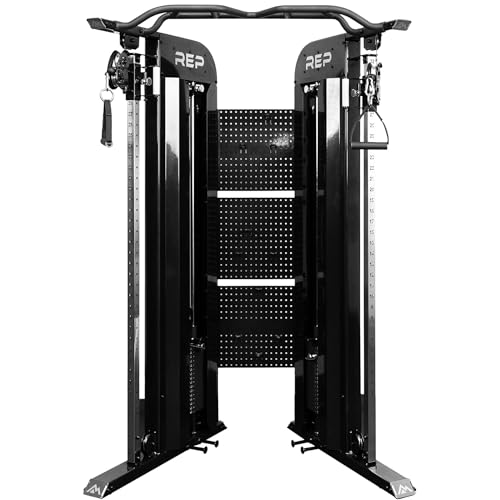
- 32 cable positions for highly customizable movement
- 170-pound dual stacks with 220-pound upgrade option
- Built-in storage and integrated band pegs
Best For: Dedicated home and garage gyms seeking adjustability
Commercial-Grade Choice
Body-Solid GDCC250B Cable Crossover

- Dual independent 160-pound weight stacks
- Commercial-rated, heavy-duty steel frame
- Lifetime coverage on frame and selected components
Best For: Spacious home gyms and light-commercial facilities
Space-Saving Pick

- Compact 52 x 56 x 82-inch footprint
- 17 pulley positions per side
- Includes bars, handles, and storage
Best For: Home users needing versatile cable training in limited space
Commercial-Style Choice
Dual-Stack Cable Crossover Trainer

- Dual 180-pound stacks with 2:1 ratio
- 17 adjustable cable positions
- 11-gauge steel and aluminum pulleys
Best For: Users wanting precise resistance and heavy-duty construction
Full-Featured Alternative
- Dual 180-pound weight stacks
- 17 cable positions with marked adjustments
- Includes handles, pull bar, and accessories
Best For: Full-body training with a heavy-duty all-in-one cable system
Best Versatile Value – Body-Solid Powerline Cable Crossover
The Body-Solid Powerline is a practical choice for shoppers comparing selectorized cable crossover machines for a home or commercial gym. Its dual independent 160-pound stacks support isolateral training, while the high and low pulley positions cover a broad range of full-body exercises.
Best For: Users who want a sturdy, versatile functional trainer with independent weight stacks and extensive exercise options.
Pros:
- Dual independent 160-pound weight stacks allow dedicated resistance for each side.
- Supports high and low pulley exercises, including presses, rows, pulldowns, kickbacks, and flys.
- Heavy-duty steel construction, powder-coat finish, and a 10-year frame warranty.
- Wide frame provides room for varied cable movements.
Cons:
- At 62.6 inches wide and 476 pounds, it requires substantial floor space and planning.
- The listed 1/2:1 weight ratio provides lighter cable resistance than a 1:1 system.
The Powerline emphasizes stability, exercise variety, and long-term frame coverage. It is a strong fit when space is available and independent cable work matters more than a compact footprint.
Best Heavy-Duty Capacity – Altas Strength 3073 Functional Trainer
The Altas Strength 3073 is aimed at buyers seeking selectorized cable crossover machines with substantial resistance capacity. It combines dual 220-pound stacks, a 2:1 pulley ratio, a commercial-grade steel frame, and attachments for common upper- and lower-body movements.
Best For: Garage and basement gym users who prioritize high total stack capacity and a broad full-body exercise menu.
Pros:
- Dual 220-pound stacks provide 440 pounds of total selectorized weight.
- 2:1 pulley ratio is designed for smooth, continuous cable tension.
- 2.5mm steel frame is rated for a 1,000-pound capacity.
- Includes lat bars, row handles, and ankle straps.
Cons:
- The 50-by-65-inch footprint and 84-inch height require a dedicated workout area.
- Assembly is a substantial DIY project despite the included manual and installation video.
- Warranty coverage is listed as one year on parts.
With its larger stacks and heavy-duty frame, the 3073 is built around capacity and versatility. Confirm ceiling clearance and available floor space before choosing it for a home gym.
Best Space-Saving Design – GMWD Wall-Mounted Cable Machine
The GMWD G7 Pro stands out among selectorized cable crossover machines for its wall-mounted, foldable design. Its adjustable swivel arms offer multiple height and angle settings, while the dual-cable bracket lets users switch between 2:1 and 1:1 resistance ratios.
Best For: Home gym owners who need broad cable-training versatility in a compact, wall-mounted setup.
Pros:
- Foldable wall-mounted design helps conserve floor space when not in use.
- 26 height holes and 13 arm-angle settings support individualized positioning.
- Switchable 2:1 and 1:1 cable ratios accommodate different training preferences.
- Includes a lat bar, cable bar, dual-cable bracket, leg holder, and mounting hardware.
Cons:
- Wall mounting is required, so installation depends on a suitable wood or concrete surface.
- Its 350-pound maximum recommendation is lower than the larger stack trainers in this roundup.
- The one-year manufacturer warranty is relatively limited.
The GMWD is a practical option when footprint matters most. Its adjustability and fold-flat construction offer impressive exercise flexibility, provided the wall can support a secure installation.
Best Smooth-Motion Trainer – Body-Solid Best Fitness Functional Trainer
The Body-Solid Best Fitness Functional Trainer is a straightforward option for shoppers comparing selectorized cable crossover machines with smooth pulley movement. Its swiveling top and bottom pulleys provide more than 180 degrees of movement for high- and low-pulley exercises.
Best For: Users who value smooth, multidirectional cable motion and a wide range of full-body exercises.
Pros:
- Top and bottom pulleys swivel through more than 180 degrees.
- Patented nylon bushing technology and eight sealed ball-bearing pulleys support smooth operation.
- Handles exercises including flys, rows, pulldowns, presses, crunches, and kickbacks.
- Includes a 10-year frame warranty and one-year parts warranty.
Cons:
- At about 112 inches wide, it needs a particularly long, dedicated footprint.
- The listed 133-pound maximum resistance is lower than the other full-size trainers here.
- The supplied specifications describe a fixed handle rather than independently adjustable arms.
This model focuses on pulley articulation and exercise variety rather than maximum resistance. It makes the most sense for buyers with ample wall-to-wall space who want fluid cable positioning.
Space-Smart Pick – JELENS CC01 Functional Trainer
For shoppers comparing selectorized cable crossover machines for a compact home gym, the JELENS CC01 emphasizes exercise variety without a large footprint. Its triangular frame occupies about 12.1 square feet, while 15 pulley height positions support movements such as rows, pulldowns, chest flyes, and kickbacks.
Best For: Apartment and small-home-gym users who want a versatile functional trainer with pull-up capability.
Pros:
- Compact 64.17-by-53.94-inch footprint with an 81.89-inch height.
- 15 adjustment levels and a smooth PU-coated steel cable system.
- Includes a pulldown bar, low-row bar, triceps rope, cable handles, and pull-up handles.
- Triangular frame supports up to 210 pounds on the cable system and 500 pounds on the detachable pull-up bar.
Cons:
- Assembly is recommended for two to three people and takes approximately 1.5 hours.
- Warranty coverage is listed as one year.
The CC01 is a practical choice when floor space matters but you still want high- and low-pulley training plus pull-ups. Its included accessories make it easier to begin training without immediately adding attachments.
Most Adjustable – REP Fitness Arcadia Functional Trainer
The REP Fitness Arcadia stands out among selectorized cable crossover machines for its broad adjustability. It provides 32 cable positions, dual 170-pound stacks with an upgrade option to 220 pounds each, and add-on weights for more precise resistance changes.
Best For: Home or garage-gym users who prioritize cable positioning, progressive loading, and organized attachment storage.
Pros:
- 32 cable positions accommodate high, low, and more targeted movements.
- Dual stacks provide 170 pounds per side, with optional upgrades to 220 pounds per side.
- 5-pound dropdown add-on weights support micro-adjustments.
- Built-in storage and integrated band pegs add setup flexibility.
Cons:
- The listed configuration includes two D-handles, while many additional attachments are optional.
- The frame measures 35.8 inches deep by 55.3 inches wide by 80.8 inches high, so it still requires dedicated space.
Arcadia is a strong fit for users who want many cable angles and room to expand their setup. Its optional weight-stack upgrades and attachment packages let buyers tailor the machine, though the final configuration may require additional purchases.
Commercial-Grade Choice – Body-Solid GDCC250B Cable Crossover
For buyers seeking selectorized cable crossover machines with a heavier commercial-style build, the Body-Solid GDCC250B uses an extra-wide frame and dual independent weight stacks. It supports a wide range of high- and low-pulley exercises, from crossovers and presses to rows, pulldowns, and lower-body movements.
Best For: Serious home users and light-commercial gyms that have room for a large, durable cable station.
Pros:
- Dual independent 160-pound stacks support isolateral training.
- Heavy-duty 11-gauge, 2-by-4-inch oval tubing and commercial rating.
- Supports a broad full-body exercise selection, including pull-ups, rows, presses, and kickbacks.
- Lifetime warranty coverage is listed for the frame, welds, weight plates, and guide rods.
Cons:
- At 73 inches wide, 84 inches deep, and 84 inches high, it needs substantial floor and ceiling clearance.
- The machine weighs 514 pounds, making placement difficult to change.
- The 1/2:1 pulley ratio provides lighter effective resistance than the stack weight suggests.
The GDCC250B favors stability and long-term durability over compactness. Its large footprint and weight make it less suitable for tight rooms, but the independent stacks, extensive exercise list, and strong frame warranty suit demanding training environments.
Space-Saving Pick – Mikolo Functional Trainer
The Mikolo is a practical option for shoppers comparing selectorized cable crossover machines for a home gym corner. Its 52 x 56 x 82-inch footprint includes dual adjustable pulleys, a lat pulldown system, a low pulley, and a pull-up bar while supporting up to 350 pounds.
Best For: Home users who want broad cable-training functionality in a compact, plate-loaded machine.
Pros:
- Compact design occupies about 20 square feet.
- 17 height positions per side support varied exercise setups.
- Includes lat pulldown bar, row bar, and two strap cable handles.
- Storage hooks and weight posts help keep attachments and plates organized.
Cons:
- Plate-loaded design requires separate weight plates.
- Its 154-pound machine weight may provide less inherent mass than heavier commercial-style trainers.
The Mikolo stands out when floor space and exercise variety matter most. Its included attachments and storage features make it a versatile starting point, though buyers will need compatible plates for resistance.
Commercial-Style Choice – Dual-Stack Cable Crossover Trainer
This functional trainer is a strong contender among selectorized cable crossover machines for users who want precise resistance changes and commercial-style construction. It combines 17 adjustable cable positions with dual 180-pound stacks and a 2:1 resistance ratio in a 65 x 35 x 84.9-inch frame.
Best For: Home or commercial gym users seeking a durable dual-stack trainer with fine weight adjustments.
Pros:
- Dual 180-pound weight stacks provide broad resistance capacity.
- 10-pound stack increments feel like 5 pounds for more controlled progression.
- 11-gauge steel construction and aluminum pulleys support frequent use and smooth cable travel.
- Includes D-handles, additional grip options, and an exercise diagram.
Cons:
- At 855 pounds, it is substantially heavier and less convenient to relocate.
- The 84.9-inch height requires careful ceiling-clearance planning.
This model favors stability, adjustment precision, and long-term use over portability. Its dual stacks and detailed setup markings make it especially appealing for households or facilities sharing one versatile machine.
Full-Featured Alternative – Commercial Functional Trainer
The Commercial Functional Trainer offers the core features shoppers often seek in selectorized cable crossover machines: dual 180-pound stacks, 17 cable positions, and a compact 65 x 35 x 84.9-inch layout. It is designed for full-body strength training with adjustable handles and included accessories.
Best For: Strength-training users who want an all-in-one, dual-stack cable system with a broad exercise range.
Pros:
- Dual 180-pound stacks and a 2:1 ratio allow varied resistance selection.
- Laser-etched markings and pre-lubricated uprights simplify adjustments.
- 11-gauge steel and a chip-resistant matte black finish are suited to intensive use.
- Includes cable handles, a pull bar, pulleys, weight stacks, and accessories.
Cons:
- The 855-pound weight makes installation and repositioning demanding.
- Its nearly 85-inch height may not suit rooms with limited ceiling clearance.
This version is a sensible fit when users prioritize a complete training station and commercial-oriented build. Confirm the room dimensions and plan for a substantial installation before choosing it.
How We Picked These Selectorized Cable Crossover Machines
We focused on machines that combine adjustable cable columns with integrated or compatible weight stacks, allowing users to change exercises without loading plates for every set. We also considered pulley range, resistance capacity, frame design, accessory compatibility, footprint, and suitability for home or light-commercial use.
Because specifications and bundles can vary, confirm the current weight-stack configuration, included attachments, dimensions, warranty, and assembly requirements before purchasing.
Quick Comparison
| Feature | What to Compare | Why It Matters |
|---|---|---|
| Weight stacks | Stack capacity and whether stacks are included | Determines available resistance and purchase cost |
| Cable adjustment | Number of height positions and travel range | Affects exercise variety and user fit |
| Frame | Freestanding, wall-mounted, or compact design | Influences stability, installation, and floor space |
| Attachments | Handles, bars, ankle straps, and pull-up options | Expands the exercises possible out of the box |
Key Buying Factors for Selectorized Cable Crossover Machines
Resistance and Pulley Performance
Choose a weight stack that matches your current strength while leaving room for progression. Check whether the listed capacity is per stack or combined, and look for smooth pulley movement, protective shrouds, and durable cable hardware. A high pulley and low pulley are useful for lat pulldowns, rows, triceps work, leg exercises, and rotational movements.
Adjustability and Exercise Range
More height positions generally make it easier to set up presses, flyes, rows, lateral raises, and athletic cable drills. Swivel arms or independently adjustable columns can improve alignment, but they may require additional clearance. Review the included accessories and whether a bench, pull-up bar, or specialty handles are part of the package.
Space, Mounting, and Assembly
Measure ceiling height, width, depth, and the working area around the cables—not just the frame dimensions. Freestanding units may need substantial floor space and anchoring, while wall-mounted models can save room but require a suitable structural surface. Plan for delivery, assembly, and access to the weight stacks.
Durability and Ownership Cost
Inspect the frame construction, pulley components, finish, cable warranty, and replacement-part availability. A lower-priced machine may become less economical if it lacks essential attachments or has limited service support. Also account for flooring, installation hardware, and optional weight stacks.
Who Should Buy Which Selectorized Cable Crossover Machines?
Choose a compact or wall-mounted model if your gym has limited floor space and you can safely mount the unit to a structural wall. These designs suit apartment, garage, and smaller home gyms.
Choose a dual-stack functional trainer if multiple people train, you want independent resistance for cable crossover movements, or you regularly perform unilateral exercises. Higher-capacity stacks are better for progressive strength training.
Choose a feature-rich freestanding machine if you want the broadest exercise selection, integrated pull-up capability, and a dedicated centerpiece for a home or light-commercial gym. Before ordering, verify that the ceiling height, footprint, and delivery path can accommodate it.