The best heart rate monitor helps you train with more useful data, whether you run, cycle, row, attend classes, or track general fitness. The right choice depends on accuracy, comfort, device compatibility, and how continuously you need to measure your pulse.
This roundup compares 10 options across chest straps, optical armbands, fingertip sensors, and personal ECG devices so you can choose a monitor that matches your goals and everyday setup.
Best 10 Heart Rate Monitor Picks for 2026
Reliable Everyday Tracking

- Soft, adjustable washable strap
- Up to 3.5-year battery life
- User-replaceable CR2032 battery
Best For: Everyday fitness tracking and long-term convenience
Quick Rhythm Checks
KardiaMobile Personal Heart Monitor

- Results in about 30 seconds
- No subscription or Wi-Fi required
- Compact smartphone-compatible design
Best For: Portable personal heart-rhythm checks
Connected Training Accuracy

- Bluetooth, ANT+, and 5 kHz connectivity
- Waterproof with internal memory
- Comfort-focused Pro chest strap
Best For: Athletes using connected training equipment
Pulse and Oxygen Readings

- Measures pulse rate and SpO2
- Includes perfusion index and plethysmograph
- Batteries and lanyard included
Best For: Portable pulse and oxygen checks
Best for COROS Workouts

- Breathable, flexible armband design
- Connects with up to three devices
- 38-hour operating battery life
Best For: COROS athletes seeking a comfortable Bluetooth workout monitor
Best for Versatile Training

- Wear on arm or clip to goggles
- Supports ANT+ and dual Bluetooth
- Streams or records workout data
Best For: Multi-sport users wanting flexible placement and connectivity
Best for Long Battery Life
- Up to 300 hours per battery
- Supports Bluetooth and ANT+
- IP67 waterproof design
Best For: Athletes needing long runtime and broad training-app compatibility
Best All-Rounder
POWR LABS Bluetooth ANT+ Chest Strap
- Bluetooth and ANT+ support for many devices and apps
- 400-plus-hour replaceable-battery life
- Soft strap with IPX67 sweat and water resistance
Best For: Multi-device athletes who want long battery life
Best Visibility Features

- LED confirms readiness and connection
- ANT+ and Bluetooth compatibility
- 800-hour replaceable-battery rating
Best For: Frequent trainers who want clear connection feedback
Best for Indoor Training
- Bluetooth and ANT+ support for apps and equipment
- Compatible with Peloton and bike computers
- Claimed plus-or-minus 1 BPM data accuracy
Best For: Connected indoor cycling and gym workouts
Reliable Everyday Tracking – Garmin HRM-Dual
The Garmin HRM-Dual is a practical heart rate monitor for workouts and everyday fitness tracking. Its adjustable soft strap is designed for comfort, while the user-replaceable CR2032 battery can last up to 3.5 years.
Best For: Runners, gym users, and fitness enthusiasts who want a comfortable chest-strap monitor with long battery life.
Pros:
- Soft, adjustable strap for comfortable wear
- Washable strap after removing the heart rate module
- User-replaceable battery with up to 3.5 years of life
Cons:
- Chest-strap design may not suit users who prefer fingertip or wrist measurement
- Compatible device details are limited to smartphones in the supplied specifications
Choose the HRM-Dual if low-maintenance ownership and a comfortable fit matter more to you than extra display or advanced monitoring features.
Quick Rhythm Checks – KardiaMobile Personal Heart Monitor
KardiaMobile is a compact heart rate monitor focused on quick heart-rhythm checks. Place your fingers on its sensors near a smartphone to receive results in about 30 seconds, without a subscription, Wi-Fi, cords, or a PC.
Best For: Smartphone users seeking a compact, FDA-cleared personal heart monitor for convenient rhythm checks.
Pros:
- Produces results in approximately 30 seconds
- Works without a subscription, Wi-Fi, cords, or PC
- Compact design weighs about 0.02 kg
Cons:
- Requires a compatible smartphone
- Battery life is listed at approximately 12 months
- Finger-contact measurement is not designed for continuous workout tracking
KardiaMobile is best viewed as a portable rhythm-checking device rather than a conventional exercise chest strap or continuous heart rate monitor.
Connected Training Accuracy – Polar H10 Chest Strap
The Polar H10 is a versatile heart rate monitor for structured training and connected workouts. It supports Bluetooth, ANT+, and 5 kHz connections, can use Bluetooth and ANT+ simultaneously, and includes internal memory for multiple hours.
Best For: Athletes and serious fitness users who need accurate readings, broad connectivity, and waterproof performance.
Pros:
- Recognized for high measurement precision
- Supports Bluetooth, ANT+, and 5 kHz connections
- Waterproof with internal memory for multiple hours
- Comfortable strap includes improved electrodes and silicone dots
Cons:
- CR2025 battery life is listed at approximately 400 hours
- Medium-to-XXL strap sizing may not fit every user
For demanding training setups, the H10 stands out because it combines multiple connection options with waterproof construction and onboard memory.
Pulse and Oxygen Readings – Innovo iP900AP Pulse Oximeter
The Innovo iP900AP is a fingertip pulse oximeter that measures pulse rate alongside blood oxygen saturation. Its improved sensor is designed to work at low blood perfusion, and the display includes adjustable brightness, pulse beeps, and an auditory alarm.
Best For: Home users, athletes, climbers, skiers, bikers, and aviators who want portable pulse and SpO2 checks.
Pros:
- Measures pulse rate and SpO2
- Includes a plethysmograph and perfusion index
- Comes with two AAA batteries and a lanyard
- Offers adjustable brightness, pulse beeps, and an auditory alarm
Cons:
- Measures from a fingertip rather than continuously during activity
- No Bluetooth connectivity is listed
- Pulse and SpO2 readings require remaining still during measurement
This model makes sense when pulse tracking and blood oxygen readings are both useful, especially for occasional checks before or after exercise.
Best for COROS Workouts – Comfortable Bluetooth Armband
The COROS Heart Rate Monitor is a practical heart rate monitor for sports and workout tracking. Its breathable armband design avoids the feel of a chest strap, while wear detection and automatic reconnection help simplify each training session.
Best For: COROS users and athletes who want a comfortable Bluetooth-only armband for workout heart-rate data.
Pros:
- Soft, breathable band with flexible sizing; the large band fits 9.4 to 16.9 inches.
- Can connect simultaneously with up to three compatible devices.
- Provides up to 38 hours of operation and 80 days of standby per charge.
- Wear detection automatically powers the monitor on and off.
Cons:
- Bluetooth only; it is not compatible with ANT+.
- Designed for sports and activities rather than daily heart-rate tracking.
- A Type-C adapter is not included with the USB charging cable.
This heart rate monitor is a strong fit for focused training, especially if you already use COROS devices. Choose another model if ANT+ support or everyday tracking is essential.
Best for Versatile Training – Polar Verity Sense Armband
Polar Verity Sense - Optical Heart Rate Monitor Armband - ANT+, Dual Bluetooth, Gray, S-L
Check Price On AmazonThe Polar Verity Sense is a versatile heart rate monitor that keeps your wrist free during exercise. Wear it on your upper or lower arm, attach it to compatible goggles, or use it against the skin under fitted clothing.
Best For: Swimmers and multi-sport users who need flexible placement, ANT+ connectivity, and dual Bluetooth connections.
Pros:
- Can be worn on the upper arm, forearm, or clipped to goggles.
- Supports Bluetooth and ANT+, with two simultaneous Bluetooth connections.
- Offers one-button operation for quick workout setup.
- Can stream heart rate in real time or record a session for later transfer.
Cons:
- Its supplied accessories and sizing may be more than needed for users wanting a basic armband.
- The notes do not specify battery runtime.
With multiple wearing options and broad device connectivity, the Verity Sense is a flexible choice for varied training routines. It is particularly useful when a wrist-free setup matters.
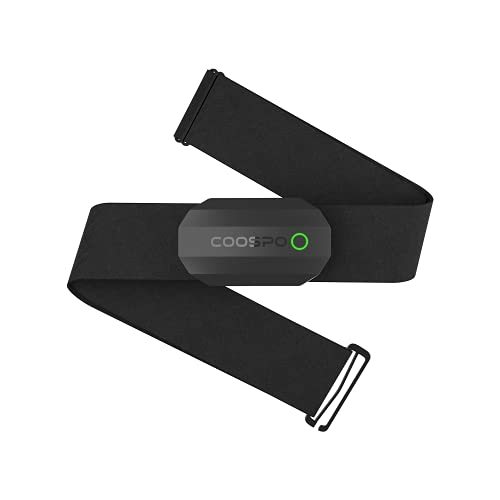
Best for Long Battery Life – COOSPO H808S Chest Strap
The COOSPO H808S is a chest-strap heart rate monitor built for real-time exercise data. It supports both Bluetooth and ANT+ connections, making it suitable for sports watches, bike computers, training apps, and other compatible fitness equipment.
Best For: Athletes who want a replaceable-battery chest strap with broad app compatibility and extended runtime.
Pros:
- Uses Bluetooth 4.0 and ANT+ to connect with multiple device types.
- Offers up to 300 hours of battery life from a replaceable CR2032 battery.
- Rated IP67 waterproof and compatible with apps including Strava, Zwift, and Peloton.
- LED indicators and a beep provide connection and operating feedback.
Cons:
- The electrode areas should be moistened before use.
- The chest strap is recommended for replacement every six months or 300 washes.
- Users must connect through the app rather than the phone’s Bluetooth settings.
The H808S is a practical training option when long battery life and ANT+ support matter. Its chest-strap format may be less comfortable than an armband, but it offers strong compatibility for structured workouts.
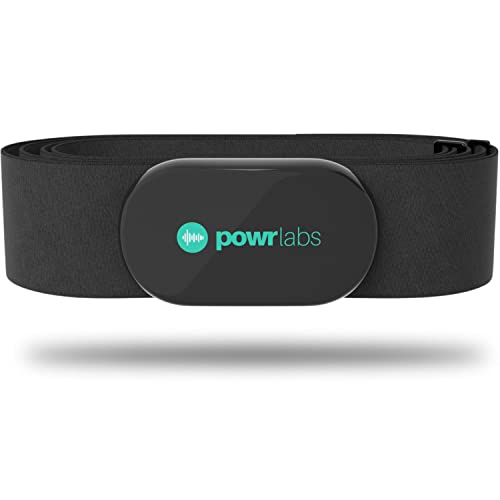
Best All-Rounder – POWR LABS Bluetooth ANT+ Chest Strap
For a heart rate monitor that works across a broad range of training devices, the POWR LABS chest strap combines Bluetooth and ANT+ connectivity with a comfortable, adjustable design. It is built for extended workouts and offers a long-lasting replaceable battery.
Best For: Cyclists, runners, and multi-device athletes who want broad compatibility and minimal battery maintenance.
Pros:
- Dual Bluetooth and ANT+ connectivity supports Garmin, Wahoo, Polar, Peloton, cycling computers, smartwatches, and many fitness apps.
- Soft, seamless fabric strap adjusts across a wide range and is designed to reduce chafing during long sessions.
- Claimed 400-plus-hour battery life with a replaceable battery included.
- IPX67 sweatproof and water-resistant construction is suited to hard training and wet conditions.
Cons:
- The monitor must be worn before pairing.
- Swimming use is mentioned in the product notes, but compatibility and performance may depend on the connected device or app.
Choose this heart rate monitor if compatibility and endurance matter most. Its dual-band wireless support and long battery life make it a practical option for athletes who rotate between several training platforms.
Best Visibility Features – GEOID HS500 Heart Rate Sensor
The GEOID HS500 is a heart rate monitor chest strap with a front LED that confirms readiness and connection. Its ANT+ and Bluetooth support, low-energy design, and 800-hour battery rating make it suitable for regular indoor and outdoor training.
Best For: Athletes who value a quick connection check, long battery life, and compatibility with phones, watches, bike computers, and fitness equipment.
Pros:
- Flashing LED provides a visual indication of readiness and connection when the sensor is worn.
- Supports ANT+ and Bluetooth connections with numerous apps, sports watches, bike computers, and gym equipment.
- Offers up to 800 hours of battery life with a replaceable CR2032 battery.
- IP67 waterproof design is suitable for rain and sweat during exercise.
Cons:
- The notes do not recommend using it for swimming.
- Bluetooth pairing should be completed through the fitness app rather than directly through the phone’s Bluetooth settings.
The HS500 stands out for its connection-confirmation light and unusually long stated battery life. It is a strong fit for users who want straightforward status feedback, provided they follow the app-based Bluetooth pairing instructions.
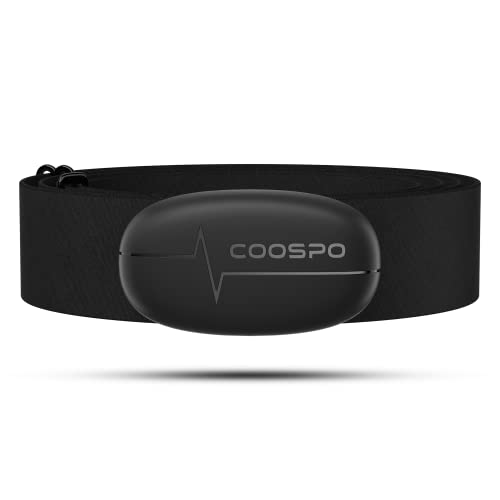
Best for Indoor Training – COOSPO H6 Chest Strap
The COOSPO H6 is a heart rate monitor designed for connected workouts, supporting Bluetooth and ANT+ devices such as Peloton, bike computers, sports watches, and gym equipment. It provides real-time heart rate data while keeping operation simple with a replaceable CR2032 battery.
Best For: Indoor cyclists, gym users, and athletes who need support for fitness apps and connected training equipment.
Pros:
- Dual Bluetooth and ANT+ transmission supports multiple devices and popular fitness apps.
- Works with Peloton, Concept2, NordicTrack and other listed gym equipment, plus Garmin and other GPS bike computers.
- Provides claimed plus-or-minus 1 BPM heart rate data for real-time training feedback.
- IP67 protection helps handle sweat and rainy-day training.
Cons:
- Battery life is rated at 300 hours, shorter than the other listed options.
- The strap electrodes should be moistened before use, especially in dry winter conditions.
- It is not intended for swimming or soaking.
The H6 is a sensible choice for app-based and equipment-based workouts, especially when Peloton or bike-computer compatibility is important. Properly wetting the electrode areas and separating the sensor after exercise can help support consistent use.
How We Picked the Best Heart Rate Monitors
We focused on the features that matter most in real-world use: measurement method, connectivity, comfort, water resistance, battery life, compatibility, and intended purpose. Chest straps generally provide responsive workout data, while optical armbands can be more comfortable for users who dislike a chest band. Fingertip pulse oximeters and personal ECG devices serve different health-tracking needs and should not be treated as direct substitutes for sports Heart Rate Monitors.
We also considered whether each model supports common standards such as Bluetooth and ANT+, which can determine whether it works with a watch, phone, cycling computer, fitness machine, or training app.
Quick Comparison
- Best for training accuracy: Polar H10 and Garmin HRM-Dual chest straps.
- Best for comfortable optical tracking: Polar Verity Sense and COROS Heart Rate Monitor.
- Best for broad device compatibility: ANT+ and Bluetooth chest straps from Polar, COOSPO, POWR LABS, and GEOID.
- Best for spot checks: Innovo Deluxe iP900AP fingertip pulse oximeter.
- Best for personal ECG readings: KardiaMobile.
Key Buying Factors for a Heart Rate Monitor
Measurement Style
Chest straps measure electrical signals and are often preferred for interval training because they respond quickly to changes in intensity. Optical armbands use light-based sensors and may be easier to wear throughout the day, though fit and skin contact can affect readings. A pulse oximeter is designed for spot measurements of oxygen saturation and pulse, not continuous workout tracking.
Connectivity and Compatibility
Check whether the monitor supports Bluetooth, ANT+, or both. Bluetooth is common with phones and newer fitness equipment, while ANT+ is useful for many sports watches, bike computers, and gym machines. If you plan to connect two devices at once, confirm the product’s pairing and broadcast capabilities.
Comfort, Fit, and Durability
A secure fit is essential for reliable readings. Chest straps should sit snugly below the chest muscles without restricting breathing, while armbands need firm contact without excessive pressure. For swimming or sweaty workouts, look for waterproofing or a suitable water-resistance rating.
Battery and Maintenance
Consider battery type, expected runtime, charging convenience, and replacement costs. Rinse washable straps after hard workouts and follow the manufacturer’s care instructions to preserve sensor performance.
Who Should Buy Which Heart Rate Monitor?
Runners, cyclists, and serious fitness users should start with a chest strap such as the Polar H10, Garmin HRM-Dual, or a compatible COOSPO, POWR LABS, or GEOID model. Users prioritizing comfort may prefer the Polar Verity Sense or COROS optical armband. People who need occasional oxygen and pulse readings should choose the Innovo pulse oximeter, while users seeking personal ECG recordings should consider KardiaMobile. Before buying, verify compatibility with your watch, phone, training app, or fitness equipment and remember that consumer monitors are not replacements for professional medical advice.