The best plyometric boxes under $50 can add explosive jumps, step-ups, squats, and conditioning drills to a home workout without requiring a large equipment budget. This roundup compares steel, wood, and foam designs across several heights and formats.
Look beyond the price tag: stability, surface grip, usable height, assembly, and storage all affect whether a box feels safe and practical during repeated training.
Best 10 Plyometric Boxes Under 50 Picks for 2026
Best Steel Pick

- Sturdy steel frame with 560-pound limit
- Rubberized top and base for stability
- Pre-assembled 12-inch platform
Best For: Stable, ready-to-use step-ups and conditioning
Best Adjustable Wood Pick
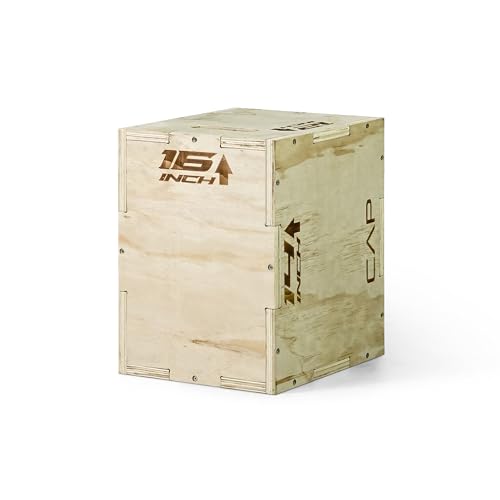
- Rotates between 12, 14, and 16 inches
- Interlocking engineered-wood construction
- Carry handles simplify repositioning
Best For: Progressive home and garage-gym training
Best Soft-Surface Pick
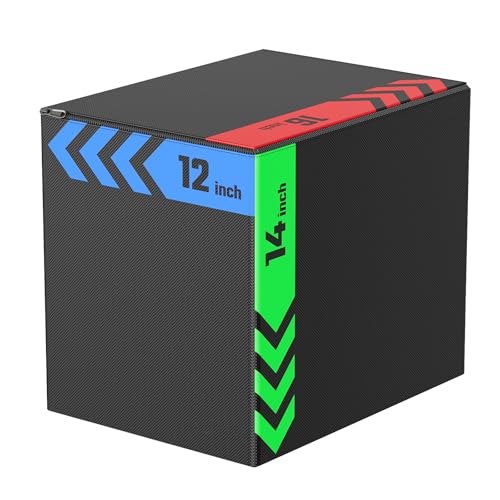
- Rotates across 12, 14, and 16 inches
- Heavy foam helps absorb impact
- Anti-slip 1000D Oxford-weave cover
Best For: Forgiving home-gym jump and step-up workouts
Best High-Capacity Foam Pick
Zoomster 3-in-1 Plyometric Box

- Three heights from 16 to 24 inches
- 450-pound stated weight capacity
- EPE foam core with reinforced PVC cover
Best For: Higher box jumps and high-intensity home workouts
Best Steel Stability
12-Inch GanFindX Plyometric Jump Box

- 500-pound capacity
- Reinforced steel trapezoid base
- Non-slip top and rubber feet
Best For: Compact, stable jump and step training
Best Adjustable Height
Amazon Basics 3-in-1 Wooden Plyo Box

- Three heights from 12 to 16 inches
- 450-pound weight capacity
- Built-in handles and sanded edges
Best For: Progressive indoor home-gym workouts
Best Beginner-Friendly Value
3-in-1 Wood Plyometric Jump Platform
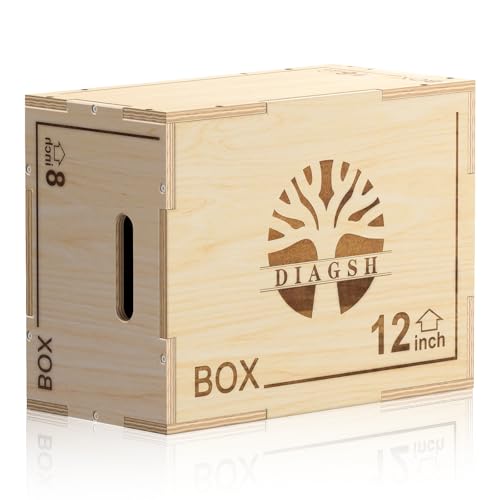
- 8-, 12-, and 16-inch heights
- 400-pound capacity
- Pre-drilled for easier assembly
Best For: Progressive jumps, squats, and conditioning
Best with Extra Features

- Three height options: 12, 13, and 16 inches
- 400-pound stated weight capacity
- Textured grip surface with side handles
Best For: Adjustable home and gym workouts
Best Heavy-Duty Pick

- Welded steel frame with 500-pound stated capacity
- Textured top and rubber feet for grip
- Fixed 12-inch height for approachable training
Best For: Stable beginner and home-gym training
Best High-Capacity Wood Pick
Fitvids Non-Slip Wooden Plyo Box

- Three sizes, each with three height options
- 450-pound stated weight capacity
- Slip-free plywood surface with puzzle joints
Best For: Versatile adjustable strength and stability training
Best Steel Pick – Rage Fitness Steel Plyo Box
For shoppers comparing plyometric boxes under 50, the Rage Fitness Steel Plyo Box is a compact, pre-assembled option built for step-ups, box jumps, dips, push-ups, and conditioning work. Its 12-inch height, rubberized contact points, and stated 560-pound maximum weight limit make it a practical choice when stability is the priority.
Best For: Users who want a sturdy, ready-to-use 12-inch platform for home strength and conditioning workouts.
Pros:
- Heavy-gauge steel frame supports up to 560 pounds.
- Rubber top and bottom help reduce slipping, wobbling, and tipping.
- Ships pre-constructed and weighs 12 pounds.
- Suitable for jumps, step-ups, dips, push-ups, agility, and cardio training.
Cons:
- Provides only one 12-inch training height.
- The compact 12.5-by-12.5-inch top may feel limiting for some users.
This box favors durability and simplicity over adjustable height options. It is a sensible fit for buyers who prefer a steel platform that can be used immediately and stored easily.
Best Adjustable Wood Pick – CAP Barbell 3-in-1 Plyo Box
The CAP Barbell 3-in-1 is a versatile contender among plyometric boxes under 50, rotating to provide 12-, 14-, or 16-inch training heights. Its engineered-wood construction, interlocking panels, recessed screws, and carry handles suit home or garage gyms where adjustability and repositioning matter.
Best For: Beginners and intermediate users who want multiple jump and step-up heights from one box.
Pros:
- Three height options support progressive training.
- Interlocking panels and countersunk screws create a secure assembled platform.
- Smooth-finished edges and recessed hardware reduce snag points.
- Built-in handles make the 14.6-pound box easier to move.
Cons:
- The engineered-wood platform has a 300-pound maximum recommendation.
- It requires assembly, unlike pre-constructed options.
With three usable orientations, this CAP Barbell model offers more progression than a fixed-height box. Its 300-pound limit should be checked against the intended user and workout style before purchase.
Best Soft-Surface Pick – papababe 3-in-1 Jump Box
For a softer landing surface, the papababe 3-in-1 Jump Box is worth considering among plyometric boxes under 50. The 12-by-14-by-16-inch foam box rotates for different heights and combines heavy foam, shock absorption, and a textured 1000D Oxford-weave cover for jumping, step-ups, squats, and related workouts.
Best For: Home-gym users who prefer a lightweight foam box with a more forgiving surface.
Pros:
- Three height options come from a 12-by-14-by-16-inch design.
- Heavy foam provides shock absorption and a softer feel than rigid materials.
- Waterproof, wear-resistant cover is described as anti-slip and sweat-proof.
- Weighs 15 pounds and includes a one-year manufacturer warranty.
Cons:
- Maximum load capacity is 200 pounds.
- Its soft construction may not provide the same rigid feel as steel or wood.
This model emphasizes comfort and portability rather than maximum load capacity. Confirm the 200-pound limit fits your needs, especially for high-impact or shared training.
Best High-Capacity Foam Pick – Zoomster 3-in-1 Plyometric Box
The Zoomster 3-in-1 is a high-capacity option in the plyometric boxes under 50 category, offering 16-, 20-, and 24-inch orientations in a 16-by-20-by-24-inch format. Its high-density EPE foam core, reinforced PVC cover, and textured non-slip surface are designed for box jumps, HIIT, step-ups, lunges, dips, and squats.
Best For: Users seeking a larger foam box with higher training heights and a stated 450-pound capacity.
Pros:
- Three levels provide 16-, 20-, and 24-inch training heights.
- Stated 450-pound capacity supports high-intensity training.
- High-density EPE foam combines shock absorption with structural support.
- Reinforced PVC cover resists tearing, abrasion, and wear.
Cons:
- The 16-by-20-by-24-inch size may require more storage space.
- At 10 pounds, it is light but may need careful placement on some floors.
This is the most height-flexible foam option in the group and offers the highest stated capacity among the foam models. Its larger dimensions make it better suited to dedicated workout areas than tight storage spaces.
Best Steel Stability – 12-Inch GanFindX Plyometric Jump Box
If you want plyometric boxes under 50 for compact, high-intensity training, the GanFindX offers a sturdy 12-inch platform with a reinforced steel frame. Its trapezoid base, textured top, and rubber feet are designed to keep the box steady during jumps, step-ups, and conditioning work.
Best For: Home or gym users who prioritize steel construction, stability, and a compact training platform.
Pros:
- Supports up to 500 pounds.
- Wide trapezoid steel base and rubber feet help minimize movement.
- Textured non-slip surface supports secure footing.
- Useful for box jumps, step-ups, Bulgarian squats, push-ups, and HIIT circuits.
Cons:
- Only offers a 12-inch height.
- Simple setup is required.
The GanFindX is a practical pick when stability and weight capacity matter more than adjustable height. Its stackable design also makes storage easier in smaller workout spaces.
Best Adjustable Height – Amazon Basics 3-in-1 Wooden Plyo Box
Among plyometric boxes under 50, this Amazon Basics model stands out for its three-height design. You can use the 16-, 14-, or 12-inch position for box jumps, step-ups, and conditioning while gradually adjusting workout difficulty.
Best For: Home gym users who want multiple training heights and a beginner-friendly wooden platform.
Pros:
- Offers three heights: 16, 14, and 12 inches.
- Supports up to 450 pounds.
- Wide built-in handles make repositioning easier.
- Sanded edges and pre-drilled holes support straightforward assembly and handling.
Cons:
- Designed primarily for indoor training.
- Assembly is required.
- Wood construction may be less suitable for users specifically seeking a steel box.
With clear height indicators and three usable levels, this is a flexible option for progressive training. Its indoor-focused wooden construction makes it especially suited to a home gym.
Best Beginner-Friendly Value – 3-in-1 Wood Plyometric Jump Platform
This 3-in-1 wood platform is a versatile choice among plyometric boxes under 50, with 8-, 12-, and 16-inch height options. The adjustable orientation lets beginners start lower and progress to more demanding jumps, squats, and conditioning exercises.
Best For: Beginners and experienced users who want three training heights in a compact wooden box.
Pros:
- Three height options: 8, 12, and 16 inches.
- Supports up to 400 pounds.
- Pre-drilled holes are intended to simplify assembly.
- Suitable for jumps, squats, HIIT, cardio, agility, and core conditioning.
Cons:
- Assembly is required.
- The 8-inch-wide listed dimensions may provide a smaller landing area than some larger boxes.
- Wood construction may not appeal to shoppers seeking metal durability.
The wide range of height settings gives this box useful room for progression, while its plywood construction keeps the design straightforward. It is a sensible option for varied home workouts when multiple heights are a priority.
Best with Extra Features – CAELUM 3-in-1 Wood Plyo Box
For shoppers comparing plyometric boxes under 50, the CAELUM 3-in-1 Wood Plyo Box offers three height options in one compact design. Its plywood construction, textured top, and side handles make it suitable for varied home or gym workouts.
Best For: Beginners and intermediate users who want adjustable heights for box jumps, step-ups, push-ups, dips, and squats.
Pros:
- Three height options: 12, 13, and 16 inches.
- Rated for up to 400 pounds.
- Textured non-slip surface and smooth, sanded edges.
- Pre-drilled holes, puzzle joints, and side handles support assembly and portability.
Cons:
- The 12 x 13 x 16-inch model does not have internal support.
- Assembly is required.
This is a versatile value pick when adjustable training heights matter most. Pay close attention to the model’s stated lack of internal support before choosing it for high-impact use.
Best Heavy-Duty Pick – VEVOR 12-Inch Steel Plyo Box
Among plyometric boxes under 50, this VEVOR steel platform stands out for its welded trapezoidal frame and 500-pound stated capacity. The 12-inch height is approachable for beginners, while the rubber feet and textured silicone top focus on stable training.
Best For: Beginners and home-gym users seeking a sturdy, single-height platform for jumps, step-ups, squats, and conditioning exercises.
Pros:
- Strong steel construction with a 500-pound stated capacity.
- Textured silicone surface and four rubber feet help provide grip.
- Supports box jumps, step-ups, push-ups, squats, and other exercises.
- Can be stacked or disassembled for storage and portability.
Cons:
- Only one 12-inch height is listed for this model.
- Assembly is required.
- Steel construction weighs 11.7 pounds.
This model is a practical choice if stability and a high stated capacity outweigh the flexibility of multiple training heights. Its fixed 12-inch platform is best suited to users comfortable with that step height.
Best High-Capacity Wood Pick – Fitvids Non-Slip Wooden Plyo Box
For those searching plyometric boxes under 50, the Fitvids Wooden Plyo Box combines a plywood puzzle-joint build with three height options per size. Its slip-free surface and 450-pound stated capacity make it a flexible option for home-gym strength and stability work.
Best For: Users who want adjustable plyometric training and a wooden box rated for a higher load capacity.
Pros:
- Each of the three available sizes offers three height options.
- High-quality plywood with puzzle joints and a 450-pound stated capacity.
- Slip-free surface supports stability during jumps.
- Assembly is described as taking about 10 minutes.
Cons:
- Assembly is required.
- The supplied details do not specify the exact three heights for every size.
- Wood construction may require more care than a steel platform.
Fitvids is a strong all-around option when you want height variety without moving to a single-purpose platform. Confirm the selected size and its available height settings before ordering.
How We Picked the Best Plyometric Boxes Under 50
We focused on the features that matter most for home and general fitness use: construction material, height options, platform dimensions, anti-slip surfaces, stability, assembly requirements, and versatility. The selection includes fixed-height steel platforms, three-in-one wood boxes, and padded foam models so shoppers can match the equipment to their workout space and experience level.
Because budget equipment can vary by size and seller, confirm the exact dimensions, weight limit, included hardware, and current price before ordering. A box listed under $50 in one configuration may cost more in a larger or upgraded version.
Quick Comparison
- Best for adjustable training: Three-in-one boxes provide multiple jump heights from one piece of equipment.
- Best for compact storage: Steel platforms and smaller boxes generally take up less room than larger wooden designs.
- Best for impact comfort: High-density foam boxes are more forgiving if you contact the edge.
- Best for rigid support: Properly assembled wood and steel boxes offer a firm surface for jumps and step-ups.
Key Buying Factors for Plyometric Boxes Under $50
Height and Progression
Choose a height that lets you land softly with your knees aligned and your hips controlled. Beginners may benefit from a lower setting or a step-up approach, while adjustable boxes make progression easier. Do not select a box solely because it offers the highest advertised height.
Stability and Construction
Steel is often compact and rigid, while wood can provide a broad, stable base when assembled correctly. Check for bracing, a sufficiently wide footprint, and a stated weight capacity. Tighten all hardware before use and place the box on a level, non-slip surface.
Surface Grip and Edge Design
A textured or non-slip top helps reduce foot movement during takeoff and landing. Rounded or padded edges can be useful for beginners and high-repetition workouts. Even a grippy box should not be used on a dusty, wet, or uneven floor.
Size, Storage, and Assembly
Measure your available floor area and ceiling clearance, especially for jump workouts. Wood models may require assembly and additional storage space, whereas compact steel designs can be easier to move. Review the product dimensions rather than relying on product photos.
Who Should Buy Which Plyometric Boxes Under 50?
Beginners and cautious home users should prioritize a lower height, a wide base, and a forgiving surface. A foam model or a three-in-one box used at its shortest setting can support gradual practice.
Experienced athletes may prefer a rigid steel or wood platform with a stable landing area and a height suited to their training plan. Verify that the box is designed for repeated jumping rather than light step-ups only.
Small-space shoppers should look for compact dimensions and manageable weight. Versatility-focused buyers will usually get more value from a three-in-one design that supports jumps, step-ups, split squats, and conditioning drills at different heights.