Low ceilings can make pull-ups awkward, but the right bar can turn a compact room into a practical home gym. This roundup compares doorway, joist-mounted, wall-mounted, and ceiling-mounted designs for different layouts and training goals.
We focus on clearance, installation, adjustability, grip options, weight capacity, and everyday usability so you can choose a pull-up bar that fits both your space and workout routine.
Best 10 Pull Up Bar for Low Ceilings Picks for 2026
Best Joist-Mounted Pick
Shnlie 42-Inch Joist Pull-Up Bar

- 440-pound listed capacity
- Mounts to wood joists, beams, or rafters
- Multiple foam-padded grip positions
Best For: Permanent home-gym installations with exposed wood mounting points
Best No-Drill Doorway Pick
Sportneer Adjustable Doorway Bar

- Fits 29.5–37-inch frames
- No-drill friction-mat installation
- Dual gear lock and integrated handle
Best For: Renters with compatible solid wood door frames
Best Flexible Ceiling Mount
Ultimate Body Press Reversible-Riser Bar

- Fits 16- or 24-inch joist spacing
- Four angled grip positions
- Includes mounting template and hardware
Best For: Joist-based home gyms needing flexible ceiling placement
Best Certified Doorway Option
Sportneer Safety-Lock Pull-Up Bar

- Fits 29.5–37-inch door frames
- No-drill dual gear locking system
- ASTM, EN957, and CA65 tested
Best For: Users wanting a removable bar for compatible solid wood doorways
Best Adjustable Ceiling Pick
Kipika 48" Ceiling-Mounted Pull-Up Bar

- Height adjusts from 25.8 to 41 inches
- Eight-hole steel design supports up to 500 pounds
- Multiple grips for pull-ups and chin-ups
Best For: Adjustable ceiling-mounted training in low or high spaces
Best Joist-Mount Value
Fitarc Joist-Mount Pull-Up Bar
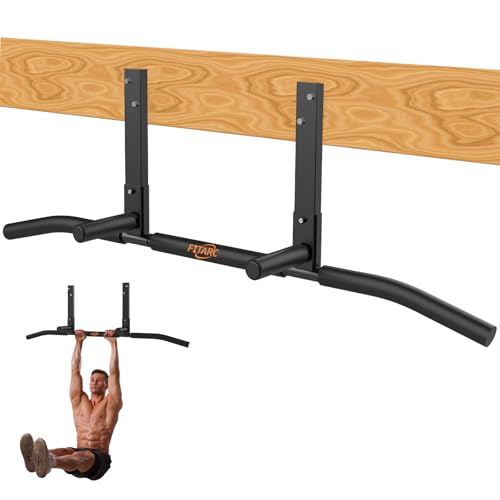
- Compact 12.9-inch height saves overhead space
- Rated for up to 440 pounds
- Four padded grips support varied exercises
Best For: Low-clearance basement or garage gyms with wooden beams
Best No-Drill Alternative
Ally Peaks Adjustable Doorway Pull-Up Bar

- Fits doorways 21.65 to 39.37 inches wide
- Removes easily without screwing into the frame
- Silicone pads help protect door trim
Best For: Removable doorway workouts in compact or rental spaces
Best Doorway Pick
Adjustable Foam-Grip Pull-Up Bar

- Fits 24–39-inch doorframes
- 220-pound capacity
- Supports multiple exercises
Best For: Renters and compact home gyms
Most Versatile Ceiling Mount
Adjustable Multi-Grip Pull-Up Bar

- Four adjustable height settings
- 400-pound maximum capacity
- Five grips plus accessory rings
Best For: Customizable overhead strength training
Best Wide Joist Option
42-Inch Adjustable Ceiling Bar

- 350-pound maximum capacity
- Two height settings
- Four grip configurations
Best For: Garages and gyms with sturdy joists or beams
Best Joist-Mounted Pick – Shnlie 42-Inch Joist Pull-Up Bar
If you need a pull up bar for low ceilings but have an exposed wood joist, beam, or rafter available, this Shnlie model offers a sturdy fixed-mount solution. Its 42-inch width, multiple grip positions, and 13-inch height provide useful workout space, though installation requires drilling.
Best For: Home gyms with a suitable wood joist, beam, or rafter and users who want a permanent, heavy-duty setup.
Pros:
- Supports up to 440 pounds according to the listing.
- Designed for installation on wood beams, joists, or rafters.
- Six foam grip pads provide cushioning and anti-slip support.
- Includes installation accessories, instructions, and video guidance.
Cons:
- Requires drilling and does not include a free-standing mounting board.
- Its 13-inch height should be checked against available ceiling clearance.
This is a practical choice when low-ceiling conditions make a tall rack unsuitable and a secure wood mounting point is available. Confirm the joist structure and clearance before installation.
Best No-Drill Doorway Pick – Sportneer Adjustable Doorway Bar
For a pull up bar for low ceilings without drilling, this adjustable Sportneer doorway model can fit solid wood frames from 29.5 to 37 inches. Its integrated handlebar and dual gear locking system make it convenient for compact spaces, but the manufacturer specifies a 297-pound maximum for use despite higher test-load figures.
Best For: Renters or home users with a compatible solid wood doorway who want a removable, no-drill exercise bar.
Pros:
- Adjusts from 29.5 to 37 inches for compatible door frames.
- No-drill installation uses PVC friction mats and four metal fixed points.
- Integrated cotton handlebar supports flexible grip positioning.
- Includes setup instructions, video guidance, arrow markers, and spirit levels.
Cons:
- Designed for solid wood door frames only.
- The manual limits maximum load to 297 pounds; painted or plastered surfaces may peel.
- Not suitable for door frames outside the stated width range.
This bar is one of the more space-efficient options for low ceilings because it uses an existing doorway rather than adding overhead hardware. Measure carefully and follow the stated load and installation restrictions.
Best Flexible Ceiling Mount – Ultimate Body Press Reversible-Riser Bar
This ceiling-mounted pull up bar for low ceilings is designed to place workouts away from the wall while accommodating either 16- or 24-inch joist spacing. Its 14-inch height and 42-inch width should be checked against your clearance, but the reversible risers provide useful placement flexibility.
Best For: Home gyms with accessible ceiling joists and users who want several grip options in a fixed ceiling installation.
Pros:
- Reversible risers fit 16- and 24-inch joist spacing.
- Four angled grip positions help vary exercises.
- Includes mounting template, hardware, and assembly instructions.
- Supports optional bodyweight resistance trainers.
Cons:
- Maximum recommended weight is 300 pounds.
- Ceiling installation requires suitable joists and drilling.
- The 14-inch drop may be restrictive in especially low spaces.
Its reversible riser design makes this a versatile ceiling option when joist spacing is a concern. Measure both the joists and overhead clearance before committing to installation.
Best Certified Doorway Option – Sportneer Safety-Lock Pull-Up Bar
This Sportneer doorway bar is a practical pull up bar for low ceilings when you have a compatible solid wood frame and want to avoid drilling. It adjusts from 29.5 to 37 inches, uses a dual gear safety lock, and is independently tested to the listed ASTM, EN957, and CA65 standards.
Best For: Users seeking a removable doorway bar with documented safety testing and a compatible solid wood frame.
Pros:
- Adjusts to door frames measuring 29.5 to 37 inches.
- No-drill design uses large PVC mats and four metal fixed points.
- Dual gear locking system helps prevent loosening.
- Independently tested for structural and environmental safety.
Cons:
- Requires a solid wood door frame.
- Painted or plastered surfaces may peel during removal.
- Longer extension distances may reduce the effective load capacity.
For low-clearance homes, this doorway design avoids the overhead drop of a ceiling mount and can be removed when needed. Verify frame width, construction, and surface condition before use.
Best Adjustable Ceiling Pick – Kipika 48" Ceiling-Mounted Pull-Up Bar
If you need a pull up bar for low ceilings, the Kipika is a practical ceiling-mounted option with height adjustment from 25.8 to 41 inches. Its multiple grip positions and ceiling installation make it suitable for tailoring your workout station to the available space.
Best For: Home gyms that need an adjustable-height ceiling bar for low or high ceilings.
Pros:
- Adjustable height supports different ceiling clearances and exercise preferences.
- Eight-hole design and heavy steel construction are rated to support up to 500 pounds.
- Multiple grip positions and a thick grip support varied pull-up and chin-up exercises.
Cons:
- Requires installation on a suitable standard joist.
- Its ceiling-mounted design is less convenient to remove than a doorway bar.
The Kipika stands out when ceiling height is the main concern. Verify your joist and available clearance before installation, then use the adjustable frame to create a more comfortable range of motion.
Best Joist-Mount Value – Fitarc Joist-Mount Pull-Up Bar
For shoppers seeking a pull up bar for low ceilings, the Fitarc uses a compact joist-mounted structure measuring 12.9 inches high. It is designed for wooden beams, basement gyms, and garage setups, making it a space-conscious choice for fixed installation.
Best For: Basement or garage gyms with suitable wooden beams and limited overhead space.
Pros:
- Compact 12.9-inch height helps conserve overhead space.
- Dual-support steel construction is rated for up to 440 pounds.
- Four padded grips provide multiple hand positions and help reduce hand fatigue.
Cons:
- Designed for joist mounting rather than quick, temporary setup.
- Installation requires a compatible wooden beam and following the included instructions.
The Fitarc is a straightforward option for a permanent low-clearance workout station. Its compact profile and padded multi-grip layout are useful, but confirm that your ceiling or beam structure is appropriate before mounting.
Best No-Drill Alternative – Ally Peaks Adjustable Doorway Pull-Up Bar
Although it is not ceiling-mounted, the Ally Peaks is worth considering when a pull up bar for low ceilings needs to avoid overhead installation. Its width and thickness adjustments fit doorways from 21.65 to 39.37 inches wide, and the bar can be removed when space is limited.
Best For: Renters or small-space users who want a removable doorway workout bar.
Pros:
- Adjusts across five width levels and two thickness levels for a more precise doorway fit.
- Installs without screwing into the frame and can be removed for storage.
- Chrome steel construction is rated for up to 500 pounds, with silicone frame protection.
Cons:
- Requires a compatible doorway measuring 21.65 to 39.37 inches wide.
- It cannot provide the same hanging clearance or fixed ceiling installation as a mounted bar.
- Users should tug down on the grips to confirm secure installation before exercising.
The Ally Peaks makes sense when drilling into a ceiling or joist is not practical. Measure the doorway carefully and check the fit before use, especially if you plan to perform its additional push-up, dip, or hanging-crunch exercises.
Best Doorway Pick – Adjustable Foam-Grip Pull-Up Bar
If you need a pull up bar for low ceilings, a doorway model can be a practical alternative to overhead mounting. This ProsourceFit bar adjusts from 24 to 39 inches to fit most standard doorframes and supports up to 220 pounds.
Best For: Renters and home users who want an adjustable, compact bar without ceiling installation.
Pros:
- Fits doorframes between 24 and 39 inches.
- Foam grips help improve comfort and reduce slipping.
- Supports pull-ups, chin-ups, dips, leg raises, and crunch anchoring.
- Includes mounting brackets and screws for a more secure installation.
Cons:
- Its 220-pound capacity is lower than the ceiling-mounted alternatives.
- Requires a suitable standard doorframe and installation hardware.
For low-ceiling rooms where overhead clearance is limited, this doorway design avoids the need to mount a bar above your head. It is the simplest option here, though users seeking heavier-duty or wider-grip training may prefer a fixed ceiling or joist model.
Most Versatile Ceiling Mount – Adjustable Multi-Grip Pull-Up Bar
For a pull up bar for low ceilings that mounts overhead, the SELEWARE model offers four height settings to help tailor clearance and exercise position. Its steel construction supports up to 400 pounds and includes five grip positions for varied upper-body training.
Best For: Users who want adjustable ceiling mounting, multiple grips, and accessory attachment points.
Pros:
- Adjusts to four different heights with safety hand screws.
- Offers five grip positions, including a ball finger grip.
- Supports up to 400 pounds and uses a four-hole mounting design.
- Includes rings for suspension straps and other training accessories.
Cons:
- Requires secure mounting to compatible wood or concrete structures.
- Ceiling installation may be less convenient than a doorway bar.
The height adjustment makes this a strong choice when ceiling clearance and user comfort need careful balancing. Confirm the mounting surface and stud spacing before buying, especially because the bar is intended for fixed structural installation.
Best Wide Joist Option – 42-Inch Adjustable Ceiling Bar
This joist-mounted pull up bar for low ceilings provides two height settings so you can select a lower position for standard pull-ups and hanging leg raises. The 42-inch-wide steel bar supports up to 350 pounds and can mount to solid wood, concrete, or steel structures.
Best For: Home gyms and garages with sturdy joists or beams that need a wide, heavy-duty training bar.
Pros:
- Supports up to 350 pounds for demanding workouts.
- Provides wide, narrow, parallel, and opposite grip options.
- Two height settings help manage clearance and range of motion.
- Can be installed on ceiling beams, overhead joists, or walls with included hardware.
Cons:
- Requires a solid wood, concrete, or steel mounting structure.
- The 42-inch width may need more wall or ceiling space than a doorway bar.
With its lower height setting and broad grip selection, this model is well suited to low-clearance training spaces that can support permanent hardware. Check the structure and available width before installation to ensure a secure fit.
How We Picked the Best Pull Up Bar for Low Ceilings
We evaluated these 10 options for the factors that matter most in compact workout spaces: required overhead clearance, mounting method, adjustability, construction, grip variety, stated weight capacity, and installation complexity. Doorway bars can be convenient for renters or temporary setups, while joist, wall, and ceiling mounts generally provide a more permanent training station. We also considered whether each design supports neutral-grip work, chin-ups, pull-ups, and accessory movements.
Because ceiling heights and framing vary, verify measurements and mounting requirements before ordering. A product advertised for a low-clearance room may still need enough space above the bar for your hands, head, and range of motion.
Quick Comparison
- Best for renters: No-drill doorway bars, especially adjustable models that fit the frame securely.
- Best for maximum stability: Joist-, wall-, or ceiling-mounted bars attached to suitable structural material.
- Best for varied grips: Multi-grip bars with parallel and angled handles.
- Best for flexible placement: Adjustable-height or reversible-riser ceiling mounts.
- Best for narrow spaces: Compact doorway bars or bars sized to the available frame or joist spacing.
Key Buying Factors for a Pull-Up Bar for Low Ceilings
Clearance and Mounting Position
Measure from the floor to the ceiling, then account for the bar’s drop from the mounting surface and your body height. A lower bar may work for strict pull-ups but can limit kipping, muscle-ups, or wide-grip movements. Check the bar width and the clearance around nearby walls, doors, light fixtures, and shelves.
Installation and Structural Support
No-drill doorway models are the simplest to install, but they depend on a compatible, sturdy frame and must be positioned exactly as directed. Mounted models should attach to structural joists, rafters, or appropriate wall framing—not drywall alone. Confirm the included hardware, joist spacing, and whether additional bolts or reinforcement are needed.
Capacity, Grip, and Comfort
Use the manufacturer’s weight rating as a limit, not a target, and include added weight from a vest or belt. Welded steel construction can improve durability, while padded or textured handles may reduce hand fatigue. Multi-grip layouts add exercise variety but usually require more space.
Who Should Buy Which Pull Up Bar for Low Ceilings?
Choose a no-drill doorway bar if you rent, want quick setup, or need to store the equipment after training. Select a joist or wall-mounted bar if stability is your priority and you can verify suitable framing. A ceiling-mounted model is useful when wall space is limited, particularly when its height or risers can be configured around a low ceiling. For progressive training, prioritize a high-capacity bar with comfortable grips and enough clearance for bands, straps, or other accessories.