Finding a comfortable bench can be difficult when standard models leave your head unsupported or force your knees and hips into awkward positions. The right longer, sturdier design can make pressing, rowing, and seated exercises feel more natural.
We’ve selected 10 adjustable and heavy-duty benches with features suited to taller lifters, including extended backrests, high weight capacities, stable frames, and useful incline or decline positions.
Best 10 Weight Benches for Tall People Picks for 2026
Best Heavy-Duty Pick
JEEKEE Extra-Long Adjustable Bench

- 34-inch backrest for users up to 6'5"
- 3x3-inch steel frame with 1,600-pound capacity
- 19+ adjustment positions
Best For: Tall lifters seeking maximum support and stability
Best All-in-One Pick
Keppi Bench3000 V2 Functional Bench

- Adjustable attachment accommodates different body types
- 1,200-pound flat-position capacity
- Vertical storage in 3.5 square feet
Best For: Versatile home gyms needing leg and arm attachments
Best for Extra-Tall Users
YOLEO Foldable Bench with Stand
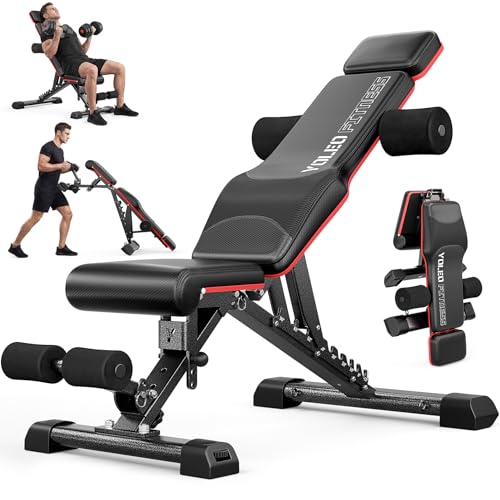
- Designed for users up to 7 feet
- Foldable design with transport wheels
- Includes bench-press stand and adjustable arm pads
Best For: Extra-tall users needing compact, versatile equipment
Best Competition-Style Pick
YOLEO Commercial Adjustable Bench

- 32-inch backrest supports the head
- Three-post frame targets lateral stability
- 2,315-pound stated test-load capacity
Best For: Serious lifters wanting a commercial-style bench
Best Overall
TYRSEN Extended-Head Adjustable Bench

- Backrest adjusts from 33 to 36 inches for users up to 6'5".
- Wide, stable steel frame rated up to 1,100 pounds.
- Eight back, three seat, and three leg positions.
Best For: Taller lifters prioritizing support and stability
Best Folding Option
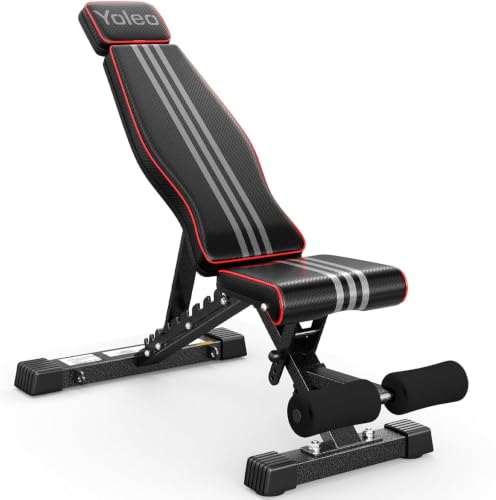
- Extended head and spine support is designed for taller users.
- 827-pound capacity and up to 60 workout configurations.
- Folds in about three seconds and weighs roughly 23 pounds.
Best For: Tall users needing compact, portable storage
Best for Comfort
Keppi FID Extended Backrest Bench

- 36-inch backrest supports the head, neck, and back.
- ASTM-certified 1,200-pound capacity with a welded steel frame.
- Twelve back and three seat positions provide 36 combinations.
Best For: Tall lifters training with heavy loads
Best Wide-Grip Power Station
YOLEO Olympic Weight Bench Set
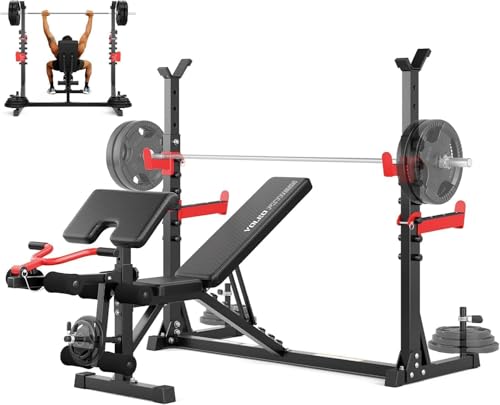
- 47.44-inch-wide rack for broader grips
- Adjusts from incline to -30° decline
- Includes rack, leg, preacher, and ab functions
Best For: Tall and broad-shouldered lifters building a versatile home gym
Best Tall-Lifter Comfort
FLYBIRD Extended-Backrest Bench

- Designed for lifters up to 6'5"
- 33–35-inch backrest with adjustable headrest
- Folds for compact storage
Best For: Tall users seeking comfort and adjustability in a home bench
Best Compact Heavy-Duty Option

- 30-inch extended backrest for added support
- 144 positions from -30° to 90°
- Folds to about 9.06 inches wide
Best For: Tall lifters with limited storage space
Best Heavy-Duty Pick – JEEKEE Extra-Long Adjustable Bench
For tall lifters comparing weight benches for tall people, the JEEKEE stands out with its 34-inch backrest, which is designed to support users up to 6’5″. Its commercial-style frame, high weight rating, and broad adjustment range make it suitable for demanding home-gym training.
Best For: Tall users who prioritize a long backrest and heavy-duty stability.
Pros:
- 34-inch backrest is designed for users up to 6’5″.
- 3×3-inch steel frame and 1,600-pound stated capacity provide a substantial foundation.
- Multiple backrest, seat, and headrest positions support flat, incline, and decline work.
Cons:
- The heavy-duty construction may be more bench than casual users need.
- The notes do not specify a folded storage footprint.
The JEEKEE is a strong choice when full back support and a stable feel matter more than compact storage. Its extended pad directly addresses a common fit issue for taller athletes.
Best All-in-One Pick – Keppi Bench3000 V2 Functional Bench
The Keppi Bench3000 V2 is a versatile option among weight benches for tall people because its attachment can be adjusted for different body types and limb lengths. It combines a heavy-duty adjustable bench with leg-extension, leg-curl, preacher, and arm-training functions.
Best For: Users who want one adjustable bench for strength training and isolation exercises.
Pros:
- Attachment includes multiple arm-length, roller, preacher-pad, and range-of-motion settings.
- Supports up to 1,200 pounds in the flat position.
- Stores vertically in a stated 3.5-square-foot footprint and has rear wheels.
Cons:
- The 93-pound frame and attachment system may be cumbersome to reposition regularly.
- Its tall-user suitability comes from adjustment range rather than a stated extra-long backrest.
This is a practical space-conscious choice for someone who wants more than pressing movements. The removable attachment also lets it convert to an adjustable bench in about 30 seconds without tools.
Best for Extra-Tall Users – YOLEO Foldable Bench with Stand
Among weight benches for tall people, this YOLEO model offers one of the clearest height-fit specifications: its three-level extendable headrest is designed for users up to 7 feet. The foldable bench also includes a bench-press stand, adjustable arm pads, and transport wheels.
Best For: Extra-tall users who need an adjustable, foldable bench with built-in pressing support.
Pros:
- Extendable headrest and backpad length range are designed for users up to 7 feet.
- Includes a foldable bench-press stand and more than 800 stated configurations.
- Folds to 36.2 x 20.9 x 12 inches and arrives 90% pre-assembled.
Cons:
- The 1,100-pound capacity is lower than the highest-rated options in this roundup.
- Its foldable design may appeal less to users seeking a competition-style fixed setup.
The YOLEO is especially compelling for very tall athletes and smaller rooms. Its height adjustment, compact folded dimensions, and included stand give it a useful balance of fit and convenience.
Best Competition-Style Pick – YOLEO Commercial Adjustable Bench
For lifters choosing weight benches for tall people, this YOLEO commercial bench combines a 32-inch backrest with an IPF-standard 17.7-inch height. Its three-post design, reinforced frame, and 2,315-pound test-load rating are aimed at stable performance during demanding strength sessions.
Best For: Serious lifters who want a commercial-style bench with a long backrest.
Pros:
- 32-inch backrest provides full head support during training.
- Three-post structure, reinforced sheet, and large rubber feet emphasize lateral stability.
- Ten backrest and three seat settings cover flat, incline, decline, and upright work.
Cons:
- The 2,315-pound figure is identified as a test-load capacity, not necessarily a recommended working load.
- It is less compact than a foldable bench.
This model suits users who value a competition-oriented frame and fast C-shaped locking adjustments. The long backrest and standard bench height also make it a credible option for taller lifters who want a stable commercial-style setup.
Best Overall – TYRSEN Extended-Head Adjustable Bench
For shoppers comparing weight benches for tall people, the TYRSEN stands out with an adjustable headrest and backrest length that accommodates users up to 6 feet 5 inches. Its wide base, heavy-duty frame, and incline, flat, and decline positions make it a strong choice for demanding home-gym workouts.
Best For: Taller lifters who want a stable, heavily built bench with generous head and spine support.
Pros:
- Adjustable backrest length from 33 to 36 inches for users up to 6 feet 5 inches.
- Commercial-grade steel frame with a stated capacity of up to 1,100 pounds.
- Eight back, three seat, and three leg positions support varied full-body training.
- Extra-wide 23.6-inch base, dual-bearing design, and anti-slip feet promote stability.
Cons:
- At 23 kg, it is less convenient to move than lightweight folding benches.
- The substantial frame may require more dedicated floor space.
The TYRSEN is a compelling pick when tall-user support and stability matter more than portability. Its extended adjustment range and broad base make it particularly well suited to heavy pressing and full-body strength sessions.
Best Folding Option – YOLEO XL Folding Weight Bench
The YOLEO XL is a practical option among weight benches for tall people who also need easy storage. Its extended head and spine support is designed with taller bodybuilders in mind, while the lightweight folding frame can be collapsed quickly after training.
Best For: Taller users in smaller spaces who want a portable bench with many adjustment options.
Pros:
- Extended headrest and curved backrest help support the spine and reduce strain.
- 827-pound capacity with a commercial-grade steel frame.
- Ten back, three seat, and three leg adjustments include a 90-degree vertical position.
- Folds in about three seconds and weighs approximately 23 pounds.
Cons:
- Its 17.1-inch width and lightweight design may feel less substantial than larger heavy-duty benches.
- It has a lower stated weight capacity than the two 1,200-pound-class alternatives here.
The YOLEO balances tall-user comfort with portability. Choose it when quick folding and compact storage are priorities, while keeping its lower capacity and lighter construction in mind for very heavy training.
Best for Comfort – Keppi FID Extended Backrest Bench
The Keppi FID is a strong contender for shoppers seeking weight benches for tall people and heavy strength training. Its 36-inch extended backrest supports the head, neck, and back, while the commercial-grade welded frame is rated for up to 1,200 pounds.
Best For: Tall lifters who want a high-capacity bench for pressing, decline work, and home-gym strength training.
Pros:
- 36-inch extended backrest provides full head, neck, and back support.
- ASTM-certified 1,200-pound capacity and fully welded commercial-grade steel frame.
- Twelve backrest and three seat positions create up to 36 angle combinations.
- Adjustable foot catch supports decline movements, while wheels aid repositioning.
Cons:
- At 59 pounds, it is considerably heavier to move than the YOLEO.
- The supplied details do not specify a maximum user height.
The Keppi offers the most substantial combination of capacity and extended back support in this group. It is best suited to users who prefer a gym-style, high-capacity bench and do not need a lightweight folding design.
Best Wide-Grip Power Station – YOLEO Olympic Weight Bench Set
For shoppers comparing weight benches for tall people, the YOLEO Olympic Weight Bench Set stands out with its 47.44-inch-wide rack. That extra width can give taller, broader, and larger-built lifters more room for wide-grip barbell presses, while the adjustable back pad supports flat, incline, and decline exercises.
Best For: Tall or broad-shouldered lifters who want a rack-based bench with full-body workout attachments.
Pros:
- 47.44-inch rack width provides generous grip clearance for wide-grip pressing.
- Eight back-pad settings cover incline, flat, and -30-degree decline positions.
- Combines benching, squatting, preacher curls, leg work, ab exercises, and plate storage.
- Includes protective squat catches, a safety pin, and stated 10-year frame and component coverage.
Cons:
- Its 93.7-inch depth and 47.44-inch width require substantial floor space.
- Dumbbells and barbells are not included.
- The all-in-one design weighs 81.6 pounds, making it less convenient to reposition.
The YOLEO is a strong choice when width and versatility matter more than portability. Its large footprint and included rack system suit a dedicated home gym, garage, or basement better than a compact apartment workout area.
Best Tall-Lifter Comfort – FLYBIRD Extended-Backrest Bench
Among weight benches for tall people, this FLYBIRD model is specifically designed for users up to 6 feet 5 inches. Its 33-to-35-inch backrest, removable adjustable headrest, and 17.5-inch seat height are intended to improve head, spine, and pressing alignment for taller lifters.
Best For: Tall home-gym users who prioritize head support, adjustability, and a foldable design.
Pros:
- Extended backrest and adjustable headrest support users up to 6’5″.
- Offers 96 combinations through eight backrest, four seat, and three leg positions.
- 750-pound stated capacity with a reinforced triangular frame and extended base legs.
- Folds to a compact storage size for smaller home workout spaces.
Cons:
- Its 750-pound capacity is lower than some heavy-duty alternatives.
- The locking pin is intended for the fully unfolded workout position and must be removed for folding.
- It is an adjustable bench rather than a complete rack-and-barbell station.
This is the most directly tall-user-focused option in the group. The extended support and headrest address a common fit problem, while the folding frame makes it practical for users who need to store the bench after training.
Best Compact Heavy-Duty Option – FLYBIRD WB5 Adjustable Bench
The FLYBIRD WB5 is a practical pick for shoppers seeking weight benches for tall people without giving up easy storage. Its 30-inch extended backrest provides added head and spine support, while the adjustable frame covers flat, incline, decline, and upright positions.
Best For: Tall lifters who need a sturdy, extended bench that folds into a small footprint.
Pros:
- 30-inch backrest and 15.7-inch seat pad provide added support during pressing.
- Offers 144 adjustment positions from -30 to 90 degrees, including upright training.
- ASTM-certified design with an 800-pound stated support rating in the product description.
- Folds to about 9.06 inches wide for storage beside furniture or under a bed.
Cons:
- The backrest is shorter than the 33-to-35-inch support offered by the other FLYBIRD model.
- Its 28.5-pound weight may feel less substantial than a fixed commercial-style bench.
- The product details list a 1-year warranty, with 3-year parts coverage noted in the description.
The WB5 balances tall-user support, adjustment range, and storage efficiency. It is especially suitable for apartments and smaller home gyms, provided its foldable format matches your preferred level of bench stability and portability.
How We Picked the Best Weight Benches for Tall People
We focused on benches that address the main problems taller users encounter: short back pads, limited usable surface area, unstable frames, and insufficient adjustment range. Selection factors included backrest length, pad dimensions, height, frame construction, weight capacity, incline and decline positions, portability, and the availability of attachments or integrated racks.
Advertised capacity should be treated as a ceiling rather than a target. Your body weight, dumbbells, barbell, and accessories all contribute to the total load, so a meaningful safety margin is important for progressive training.
Quick Comparison
| What to Compare | Why It Matters | Best For |
|---|---|---|
| Extended backrest | Provides better head, shoulder, and upper-back support | Tall lifters and heavy pressing |
| High weight capacity | Leaves room for body weight and future strength gains | Strength-focused home gyms |
| Multiple pad angles | Supports flat, incline, and decline exercises | Full-body programming |
| Foldable frame | Saves storage space between workouts | Compact rooms and apartments |
| Rack or leg attachment | Adds exercise options but increases footprint and complexity | Users building a more complete station |
Key Buying Factors for Weight Benches for Tall People
Backrest Length and Usable Support
Look beyond the headline dimensions. A pad should support your head and shoulders without forcing your lower back off the bench. Extra-long models are usually the safest starting point for users around 6 feet 5 inches or taller, but torso length matters more than height alone.
Height, Width, and Stability
A bench that is too high can make foot placement difficult, while a narrow pad may feel unstable during pressing. Check the bench height, pad width, base design, and whether the feet remain planted when the backrest is inclined. Wide stabilizing feet and a rigid steel frame are especially valuable for heavier sets.
Adjustment Range and Locking Hardware
Confirm how many backrest positions are available and whether the adjustment mechanism locks securely. Flat and moderate incline settings cover most dumbbell and barbell work; decline settings are useful but can make mounting and dismounting less convenient.
Capacity and Construction
Choose a stated capacity comfortably above your current combined load. Also consider weld quality, frame thickness, hardware, pad density, and whether the manufacturer provides a clear warranty or assembly information.
Who Should Buy Which Weight Benches for Tall People?
Choose an extra-long, high-capacity bench if you are tall, train with heavy dumbbells or barbells, or regularly perform flat presses. A foldable model is better when storage space is limited, provided its shorter frame still supports your torso. If you want one station for pressing and leg work, a model with a leg extension or curl attachment may justify its larger footprint.
Beginners and moderate lifters can prioritize comfortable padding, easy adjustments, and a stable base over the highest advertised capacity. Those using an Olympic bar should verify rack width, height, and compatibility before buying. For any bench, measure your available space and compare the assembled dimensions—not just the folded size—with your own torso length and preferred training setup.