Building a useful home gym does not require a dedicated room. The best pull-up bars for small spaces make vertical training practical in a doorway, against a wall, or in a compact corner.
We selected 10 options across no-drill doorway bars, foldable designs, adjustable frames, joist mounts, and freestanding power towers so you can match your available space, training goals, and installation preferences.
Best 10 Pull Up Bars for Small Spaces Picks for 2026
Best Foldaway Pick
KAKICLAY Foldable Doorway Pull-Up Bar

- No screws or assembly required
- Folds away and includes suspension straps
- 440-pound capacity for compatible doorframes
Best For: Compact, ready-to-use doorway workouts
Best Multifunction Station

- Supports pull-ups, dips, and push-ups
- Nine height settings for different users
- 400-pound capacity with stability features
Best For: Small home gyms needing varied bodyweight exercises
Best for Narrow Doorways
KAKICLAY Multi-Grip Pull-Up Bar

- Fits doorways from 21.65 to 36.22 inches
- Folds for storage and protects doorframes
- Offers multiple grips with a 440-pound capacity
Best For: Narrow or corner doorways with solid frames
Best Adjustable No-Drill Bar
Sportneer Adjustable Doorway Pull-Up Bar

- Adjusts from 29.5 to 37 inches
- No-drill design with dual gear locks
- Integrated handlebar for varied exercises
Best For: Solid wood doorways within the specified width range
Best for Easy Setup
ProsourceFit Foldable Doorway Pull-Up Bar

- Folds for storage under a bed or in a closet
- No assembly or permanent installation
- Supports pull-ups, chin-ups, sit-ups, and leg raises
Best For: Small homes and portable doorway workouts
Best Adjustable Doorway Fit
Ally Peaks Width-Adjustable Pull-Up Bar

- Fits a broad range of doorway widths and depths
- Removes without screwing into the frame
- Supports pull-ups, dips, push-ups, and crunches
Best For: Removable doorway training with a precise fit
Best Joist-Mount Setup
Fitarc Compact Joist-Mount Pull-Up Bar
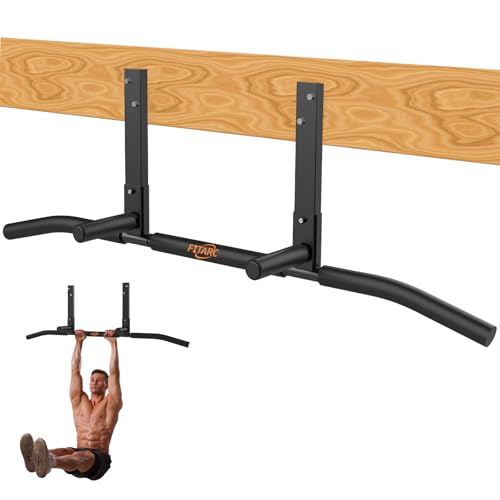
- Mounts to wooden beams instead of a doorway
- Compact design helps conserve space
- Includes multiple grips and padded handles
Best For: Basements, garages, and homes with accessible joists
Best No-Drill Heavy-Duty Pick

- No-drill design with dual-gear locking system
- Rated for up to 440 pounds
- Requires a compatible solid wood door frame
Best For: Solid wood door frames and heavy-duty home training
Best for Grip Variety
AmazeFan Multi-Angle Doorway Bar

- Multi-angle grips with wrist-friendly inclined ends
- Fits listed door widths from 21.65 to 36.22 inches
- Foldable design with silicone frame buffers
Best For: Compact rooms and varied upper-body exercises
Best Multi-Exercise Value
Ally Peaks Doorway Pull-Up Bar

- Supports pull-ups, dips, push-ups, and hanging crunches
- 440-pound listed maximum capacity
- Silicone pads help protect compatible door frames
Best For: Versatile home or office workouts in standard doorways
Best Foldaway Pick – KAKICLAY Foldable Doorway Pull-Up Bar
For shoppers comparing pull up bars for small spaces, the KAKICLAY foldable doorway bar offers a ready-to-use setup without screws or assembly. It hooks onto compatible doorframes, folds for storage, and includes suspension straps for additional exercise options.
Best For: People who want a sturdy, portable doorway bar that can be folded away after workouts.
Pros:
- Installs by hooking into the doorframe with no screws or assembly.
- Foldable, space-saving design with included suspension straps.
- Supports up to 440 pounds and includes padded, nonslip grips.
- Fits door widths from 27.56 to 36.22 inches.
Cons:
- Its fit is limited to compatible doorframe width and depth measurements.
- The product is designed for wider doorframes and may not suit narrower openings.
This is a practical choice when storage space is limited and you want a no-drill bar with a high stated weight capacity. Measure the doorway before buying.
Best Multifunction Station – RELIFE Adjustable Power Tower
Among pull up bars for small spaces, the RELIFE power tower is a compact freestanding option that adds dips, push-ups, rows, and vertical knee raises. Its 9 height settings and adjustable armrests make it more versatile than a single-purpose doorway bar, though it requires floor space and assembly.
Best For: Home users who want several bodyweight exercises from one adjustable freestanding station.
Pros:
- Supports pull-ups, dips, push-ups, rows, knee raises, and more.
- Offers 9 adjustable heights and 3 armrest positions.
- Uses thickened steel tubing, a safety locknut, and four suction cups.
- Supports up to 400 pounds.
Cons:
- Its 34-by-26.4-inch footprint and 86-inch height require dedicated floor and ceiling clearance.
- Assembly is required.
- It takes more storage space than a foldable doorway bar.
This tower is best for a small home gym rather than a very tight doorway area. Choose it if exercise variety and adjustable positioning matter more than maximum portability.
Best for Narrow Doorways – KAKICLAY Multi-Grip Pull-Up Bar
For pull up bars for small spaces, this KAKICLAY model is designed to fit a broad range of doorways, including some narrower and corner-adjacent openings. Its foldable construction, multiple grip positions, raised bar, and included suspension straps add versatility without requiring permanent installation.
Best For: Users with narrow or corner doorways who want multiple grip options and compact storage.
Pros:
- Fits door widths from 21.65 to 36.22 inches.
- Folds in multiple ways for storage and uses silicone door protectors.
- Provides shoulder-width, close, and angled grip options.
- Supports up to 440 pounds and includes suspension straps.
Cons:
- It is not suitable for hollow plasterboard walls.
- Users must verify doorframe width, depth, trim height, and condition before use.
- The bar weighs 11.6 pounds, making it less lightweight than some simple doorway bars.
This is a strong fit for space-conscious buyers who need a wider doorway compatibility range. Careful measurements and a solid doorframe are essential for safe use.
Best Adjustable No-Drill Bar – Sportneer Adjustable Doorway Pull-Up Bar
The Sportneer is a practical option for pull up bars for small spaces because it installs without drilling and adjusts from 29.5 to 37 inches. Its integrated handlebar, dual gear locks, and large PVC pads are intended for secure placement, but it must be used on a solid wood doorframe within the specified size range.
Best For: Users who want an adjustable, no-drill bar for a compatible solid wood doorway.
Pros:
- Adjusts from 29.5 to 37 inches for different doorway widths.
- No-drill installation with large PVC anti-slip pads and dual gear locks.
- Integrated cotton handlebar supports varied grips and exercises.
- Includes setup guidance with instructions, video support, and spirit levels.
Cons:
- The manual maximum load is 297 pounds, despite a higher testing figure and 440-pound product listing.
- Designed for solid wood doorframes, not painted or plastered walls, glass, or ceramic tile.
- It does not fit doorframes outside the 29.5-to-37-inch range.
This bar suits buyers who prioritize adjustable sizing and a no-drill setup. Follow the manual’s 297-pound limit and confirm the doorway material and dimensions before installation.
Best for Easy Setup – ProsourceFit Foldable Doorway Pull-Up Bar
ProsourceFit Foldable Pull Up Bar/Doorway Trainer for Multi Use Fitness & Home Gym Exercise
Check Price On AmazonFor shoppers comparing pull up bars for small spaces, the ProsourceFit stands out because it folds completely for storage in a closet or under a bed. Its doorway-mount design requires no assembly, so it can be pulled out and set up when you want to train.
Best For: Small homes, apartments, and users who want a portable bar for pull-ups, chin-ups, sit-ups, and leg raises.
Pros:
- Folds completely for compact storage.
- Requires no assembly or permanent installation.
- Supports multiple upper-body and core exercises.
- Made from steel and backed by a limited lifetime warranty.
Cons:
- Its listed maximum weight recommendation is 200 pounds, despite the supplied bullet mentioning a higher capacity.
- Doorway compatibility should be checked before use.
This is a practical choice when storage space matters most. The foldable construction and portable format make it easier to keep workout equipment out of the way between sessions.
Best Adjustable Doorway Fit – Ally Peaks Width-Adjustable Pull-Up Bar
The Ally Peaks is a strong contender among pull up bars for small spaces because its width and thickness adjustments are designed to match a range of doorways. It can be installed and removed without screwing into the frame, which is useful when one doorway needs to remain clear.
Best For: Users who need a removable doorway bar with adjustable sizing and multiple exercise options.
Pros:
- Adjusts for doorways from 21.65 to 39.37 inches wide and 4.7 to 8.27 inches deep.
- Includes silicone protection for the door frame.
- Supports pull-ups, push-ups, dips, and hanging crunches.
- Uses heavy-duty chrome steel with a listed 500-pound capacity.
Cons:
- Its 42-inch width may require careful storage in very tight spaces.
- Users should verify the doorway dimensions and test the fit before exercising.
The precise adjustment system makes this a flexible option for apartments or rooms with nonstandard doorways. Its protective pads and removable design also help limit the commitment of a permanent installation.
Best Joist-Mount Setup – Fitarc Compact Joist-Mount Pull-Up Bar
For pull up bars for small spaces where a suitable beam is available, the Fitarc uses a compact joist-mounted structure instead of occupying a doorway. It is designed for wooden beams and basement or garage gyms, creating a dedicated station for upper-body and core training.
Best For: Homeowners with accessible wooden joists who want a fixed, space-conscious workout station.
Pros:
- Mounts to wooden beams for a dedicated exercise setup.
- Compact structure helps save floor and doorway space.
- Offers multiple grip positions and padded foam handles.
- Steel construction has a listed 440-pound maximum capacity.
Cons:
- Requires installation into a suitable wooden beam.
- Less portable than a removable doorway bar.
- Best suited to basement, garage, or similar gym spaces.
This model makes sense when a permanent mount is preferable to equipment that must be removed after each workout. Its joist-based design keeps the training area focused while supporting pull-ups, chin-ups, and hanging leg raises.
Best No-Drill Heavy-Duty Pick – Sportneer Doorway Pull-Up Bar
For pull up bars for small spaces, the Sportneer is a compact no-drill option designed for compatible solid wood door frames. Its adjustable 29.5- to 37-inch span and locking system make it practical for home workouts, but careful measuring is essential.
Best For: Users with solid wood door frames who want a high-capacity, no-drill bar.
Pros:
- Supports up to 440 pounds according to the product notes.
- Uses PVC friction mats and a 360-degree dual-gear locking system.
- ASTM, EN957, and CA65 certifications are listed.
Cons:
- Only suitable for solid wood door frames.
- Requires a 29.5- to 37-inch frame width and may affect painted or plastered surfaces when removed.
Choose this model when frame compatibility and a reinforced locking design matter more than universal installation. Verify the dimensions and surface before buying.
Best for Grip Variety – AmazeFan Multi-Angle Doorway Bar
The AmazeFan is a space-saving choice among pull up bars for small spaces, combining a hang-on-door-frame setup with multiple grip angles. Its broad fit range and foldable design can suit compact rooms, provided your doorway matches the listed measurements.
Best For: Users who want varied grips and a bar that stores easily after workouts.
Pros:
- Multi-angle, foam-covered grips support different hand positions.
- Fits door widths from 21.65 to 36.22 inches, with listed depth and trim limits.
- Detachable silicone buffer pads help protect the door frame, and the bar is described as foldable.
Cons:
- Doorway dimensions must be measured carefully before purchase.
- The product weighs 8.5 pounds, which may be less convenient to move than lighter options.
This is a practical pick for compact homes where grip flexibility and quick storage are priorities. Confirm the door width, depth, and trim height first.
Best Multi-Exercise Value – Ally Peaks Doorway Pull-Up Bar
The Ally Peaks combines a portable doorway mount with multiple exercise options, making it a versatile choice for pull up bars for small spaces. It is designed for standard doorways and uses leverage rather than screws, while added silicone pads are intended to reduce frame marking.
Best For: Home or office users who want one doorway bar for pull-ups, dips, push-ups, and hanging crunches.
Pros:
- Thickened steel construction is rated for up to 440 pounds.
- Supports pull-ups, push-ups, dips, and hanging crunches.
- Fits listed 24- to 32-inch doorways and includes double silicone protection.
Cons:
- Requires specific doorway depth, trim height, and trim-thickness measurements.
- The manufacturer advises tugging down on the grips to confirm secure installation before use.
Consider this model if versatility is more important than the smallest possible footprint. Its broad exercise range adds value, but compatibility checks remain essential.
How We Picked the Best Pull Up Bars for Small Spaces
We focused on products suited to apartments, bedrooms, garages, and other areas where floor space or permanent installation is limited. Our comparison considers mounting style, adjustability, grip variety, stated weight capacity, stability features, storage practicality, and the type of doorway or structure each bar requires.
Because product specifications and installation conditions vary, treat published weight limits as a starting point rather than a guarantee. Always confirm that your doorframe, wall, ceiling joist, or floor can safely support the equipment and your intended movements.
Quick Comparison
| Type | Best For | Space Considerations | Installation |
|---|---|---|---|
| Foldable doorway bar | Easy storage and occasional workouts | Minimal when folded | Typically no-drill |
| Adjustable doorway bar | Multiple doorframe widths | Leaves the doorway usable between sessions | No-drill models available |
| Multi-grip doorway bar | Chin-ups, pull-ups, and varied hand positions | Requires adequate frame clearance | Usually no-drill |
| Wall or joist mount | Frequent, demanding training | Uses wall or ceiling structure | Permanent hardware required |
| Power tower | Pull-ups plus dips and knee raises | Needs dedicated floor space | Freestanding assembly |
Key Buying Factors for Pull-Up Bars for Small Spaces
Measure Before You Buy
Measure the clear width and depth of your doorway, along with trim thickness and overhead clearance. A bar that fits the opening may still interfere with molding, doors, cabinets, or low ceilings. For wall- and joist-mounted models, identify solid structural material rather than relying on drywall alone.
Choose the Right Installation Style
No-drill doorway bars are convenient for renters and quick setup, but they depend heavily on a suitable frame and correct placement. Wall- or joist-mounted bars can provide a more secure long-term setup when installed into appropriate structure. Freestanding towers avoid drilling but need a stable, level footprint and more floor space.
Check Capacity and Stability
Compare the stated load rating with your body weight and any added resistance. Look for broad contact points, secure hooks, anti-slip padding, reinforced steel, and clear installation instructions. Do not assume a high advertised capacity makes every doorway or wall safe.
Consider Grip and Storage Needs
Multi-grip handles can support more exercise variations, while ergonomic padding may improve comfort during longer sessions. If the bar must be removed after each workout, prioritize lightweight or foldable designs and confirm where they can be stored without damage.
Who Should Buy Which Pull Up Bars for Small Spaces?
- Renters and occasional users: Choose a no-drill or foldable doorway model that can be removed quickly.
- Users with different doorway widths: Look for an adjustable bar with a clearly stated width range.
- Frequent strength trainees: Consider a wall- or joist-mounted bar installed into verified structural support.
- Athletes wanting more than pull-ups: A power tower may be worthwhile if you have enough floor space for dips, knee raises, and related exercises.
- Anyone sharing a room: Favor compact, removable equipment that does not permanently block the doorway.
The best choice is the one that fits your structure and routine—not simply the model with the highest capacity or the most grip positions. Recheck all hardware and contact points before each session, especially after moving or reinstalling a doorway bar.