The best arm bikes with adjustable resistance make it easier to control workout intensity, build consistency, and support gentle upper-body movement at home. Options range from compact pedal exercisers to portable rehab-focused arm cycles.
We compare 10 models for resistance control, stability, portability, comfort, and everyday usability so you can choose an arm bike that fits your goals and available space.
Best 10 Arm Bikes with Adjustable Resistance Picks for 2026
Best Portable Pick
TABEKE Foldable Arm and Leg Pedaler

- Lightweight, foldable, and fully assembled
- Adjustable friction resistance for rehab or training
- LCD tracks time, RPM, count, and calories
Best For: Seniors, beginners, and compact home or office workouts
Best Therapy-Focused Option
Three-Mode Hand Bike Exerciser
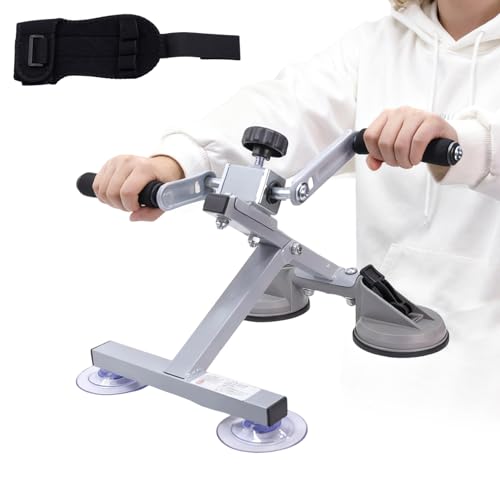
- Three arm-training modes for varied routines
- Three adjustable resistance levels
- Suction cups help secure it to smooth tables
Best For: Rehabilitation, mobility work, and tabletop arm exercises
Best Resistance Range
pooboo Magnetic Arm and Leg Bike

- 16 levels of quiet magnetic resistance
- Works arms or legs with forward and reverse pedaling
- Includes bands, straps, and a floor mat
Best For: Versatile, quiet arm-and-leg training with fine intensity control
Best Compact Rehab Design
Suction-Base Adjustable Arm Cycle

- Adjustable tension for gentle to moderate exercise
- Suction base helps stabilize tabletop workouts
- No assembly and weighs about 4.35 pounds
Best For: Compact, low-impact arm rehabilitation at home
Compact Adjustable Pick
RYGEO Foldable Arm and Leg Pedal Exerciser

- Adjustable tension for low-intensity workouts
- Folds and arrives fully assembled
- Works for both arm and leg pedaling
Best For: Seniors and gentle home or office exercise
Rehab-Focused Choice
Portable Arm Bike with Suction Base

- Two resistance settings for rehab or strengthening
- Suction base supports stable tabletop use
- Compact manual design for easy storage
Best For: Seniors and arm-focused therapy routines
Tracking Pick
an LCD Arm and Leg Under-Desk Bike

- Adjustable knob resistance for customized intensity
- LCD tracks time, count, distance, and calories
- Works for tabletop arms or floor-based legs
Best For: Home and office users who want workout tracking
Best Clamp-On Rehab Pick
Stable Adjustable-Resistance Arm Bike

- Clamp fits 0.4- to 1.95-inch tabletops
- Resistance knob supports gentle to challenging exercise
- Metal, compact design for tabletop arm workouts
Best For: Tabletop arm and shoulder rehabilitation
Best Feature-Rich Mini Pick
AGM Arm and Leg Pedal Exerciser
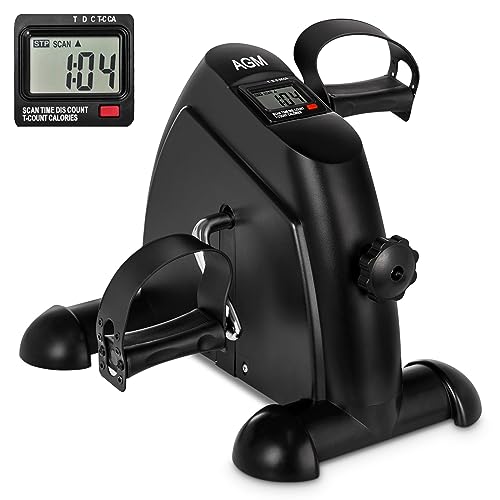
- Eight resistance levels with tension-knob adjustment
- Works for tabletop arm or floor-based leg exercise
- LCD tracks time, speed, distance, and calories
Best For: Versatile home or office arm-and-leg workouts
Best Lightweight Option
RYGEO Portable Adjustable-Resistance Pedaler

- Five resistance levels for light exercise and recovery
- Supports both arm and leg cycling
- Lightweight design stores easily under a desk
Best For: Portable low-intensity recovery exercise
Best Portable Pick – TABEKE Foldable Arm and Leg Pedaler
For shoppers seeking arm bikes with adjustable resistance that are easy to store, the TABEKE Under Desk Bike is a lightweight, foldable option for gentle indoor pedaling. Its tension knob supports low-intensity rehabilitation through higher-resistance strength work, while the LCD tracks basic workout data.
Best For: Seniors, beginners, and users who want a compact arm-and-leg exerciser for home or office use.
Pros:
- Fully assembled design folds for storage and weighs only 5 pounds.
- Adjustable friction resistance supports rehab and more demanding exercise.
- LCD monitor displays time, count, RPM, and calories.
- Non-slip feet, pads, strips, and pedals help improve stability.
Cons:
- Uses friction resistance rather than quieter magnetic resistance.
- Its compact size may provide less challenge for advanced users.
The TABEKE is a practical choice when portability and simple operation matter most. It is especially appealing for low-impact routines and occasional arm or leg workouts in small spaces.
Best Therapy-Focused Option – Three-Mode Hand Bike Exerciser
This tabletop hand bike is designed for shoppers comparing arm bikes with adjustable resistance for rehabilitation and upper-body mobility. Its three training modes allow independent-arm, synchronized, or standard cycling, while three resistance levels support a range of gentle exercises.
Best For: Stroke recovery, post-surgery exercise, shoulder and neck mobility work, and office users seeking a tabletop arm trainer.
Pros:
- Offers single-arm, bilateral, and standard arm-strength cycling modes.
- Three adjustable resistance levels suit gradual training.
- Large suction cups and silicone pads help secure it to smooth tables.
- Lightweight, portable design fits in a suitcase or storage cabinet.
Cons:
- Only three resistance levels are listed.
- Suction stability is intended for smooth surfaces.
- Assembly is required, although a hex wrench is included.
With its therapy-oriented modes and tabletop format, this model emphasizes controlled upper-body movement over high-intensity conditioning. It is a strong fit for users who value flexibility and portability during recovery routines.
Best Resistance Range – pooboo Magnetic Arm and Leg Bike
The pooboo stands out among arm bikes with adjustable resistance by offering 16 magnetic levels and both forward and reverse pedaling. It can be used on a desk for arm workouts or on the floor for leg training, with included bands and a mat for a more secure setup.
Best For: Users who want the broadest resistance adjustment, quiet operation, and combined arm-and-leg training.
Pros:
- Provides 16 levels of smooth magnetic resistance.
- Supports forward and reverse arm or leg pedaling.
- Runs at a listed noise level below 15 dB.
- Includes resistance bands, adjustable pedal straps, and a floor mat.
Cons:
- At 18.9 pounds, it is heavier than the other compact options.
- Its larger 22-by-16-by-14-inch footprint requires more storage space.
- Battery power is required for the monitor.
The pooboo is the most versatile choice here for users who want fine-grained intensity control and quieter operation. Its extra accessories also make it better suited to fuller home or office routines than basic pedal exercisers.
Best Compact Rehab Design – Suction-Base Adjustable Arm Cycle
For a simple rehabilitation-focused option, this compact arm cycle combines adjustable resistance with a suction base designed for smooth surfaces. The tension knob provides gentle-to-moderate intensity changes, while the no-assembly design makes it ready to use immediately.
Best For: Users recovering from arm injuries or surgery, older adults, and anyone needing a small, low-impact tabletop exerciser.
Pros:
- Adjustable tension knob supports gentle mobilization and moderate training.
- Suction cup helps stabilize the unit on glass, marble, or polished wood.
- Compact 17-inch footprint and 4.35-pound weight simplify storage and carrying.
- Ready to use out of the box with ergonomic non-slip handles.
Cons:
- The suction base is intended for smooth surfaces.
- Its moderate resistance range may not suit advanced strength training.
- No display or workout-tracking features are listed.
This arm cycle prioritizes ease of use, quiet rotation, and space-saving storage. It is a sensible pick for controlled home rehabilitation rather than data-driven or high-intensity workouts.
Compact Adjustable Pick – RYGEO Foldable Arm and Leg Pedal Exerciser
For shoppers comparing arm bikes with adjustable resistance, the RYGEO stands out as a compact option for low-intensity arm or leg pedaling. Its resistance knob, foldable frame, quiet operation, and ready-to-use design suit home, office, and recovery routines.
Best For: Seniors, light rehabilitation exercise, and users who want a portable arm-and-leg pedal exerciser.
Pros:
- Adjustable tension supports light exercise and gentle recovery routines.
- Can be used for both arm and leg workouts.
- Folds for storage, arrives fully assembled, and fits under most desks.
- Pedal straps and foam-covered components add stability and comfort.
Cons:
- Designed for low-intensity exercise rather than demanding strength training.
- Its 18-by-15-by-14-inch frame may still require dedicated storage space.
The RYGEO is a practical choice when portability, simple manual control, and gentle adjustable resistance matter more than advanced tracking features.
Rehab-Focused Choice – Portable Arm Bike with Suction Base
Among arm bikes with adjustable resistance, this portable rehabilitation exerciser is focused specifically on arm and shoulder movement. Its tension dial offers two resistance levels, while the suction cup base is designed to help keep the unit in place on a flat surface.
Best For: Seniors and users seeking a simple manual arm exerciser for physical therapy or low-impact strength work.
Pros:
- Adjustable resistance can be lowered for rehabilitation or raised for arm strengthening.
- Compact 16.1-by-4.7-by-8.5-inch design is easy to place and store.
- Strong suction cup base is intended to improve stability during use.
- Manual operation requires no external power.
Cons:
- Offers two resistance levels, providing less adjustment than continuously variable models.
- Designed for arm exercise rather than dual arm-and-leg pedaling.
This model makes the most sense for buyers prioritizing straightforward arm rehabilitation and a small footprint over workout tracking or extensive resistance customization.
Tracking Pick – an LCD Arm and Leg Under-Desk Bike
This an pedal exerciser combines adjustable resistance with an LCD monitor, making it a useful choice for shoppers comparing arm bikes with adjustable resistance who want basic workout feedback. Place it on the floor for leg pedaling or on a table for arm exercise at home or in the office.
Best For: Users who want quiet arm-and-leg exercise with time, count, distance, and calorie tracking.
Pros:
- Turn-knob resistance control lets users customize workout intensity.
- LCD monitor displays time, count, distance, and calories burned.
- Supports both tabletop arm exercise and under-desk leg pedaling.
- Quiet operation, rubber feet, widened pedals, and adjustable straps support practical daily use.
Cons:
- The supplied details do not specify the number of resistance levels.
- At 20 inches deep and 15 inches high, it may not fit every desk setup.
Choose this model if progress monitoring is important; its LCD display gives it an advantage over simpler manual pedal exercisers while retaining a compact, low-impact design.
Best Clamp-On Rehab Pick – Stable Adjustable-Resistance Arm Bike
This tabletop arm bike is a focused choice for shoppers seeking arm bikes with adjustable resistance for rehabilitation or seated upper-body exercise. Its desktop clamp is designed for tables 0.4 to 1.95 inches thick, while the tension knob lets you move from low-resistance rehabilitation work to more challenging arm exercise.
Best For: Tabletop arm and shoulder workouts, including low-intensity rehabilitation routines.
Pros:
- Adjustable resistance supports both gentle and more challenging sessions.
- Desktop clamp is designed to stay firmly in place and includes a silicone desk-protection pad.
- Metal construction and compact 3.3-pound design.
- Simple manual setup and knob control.
Cons:
- Only works with tabletops within the specified 0.4- to 1.95-inch thickness range.
- Designed primarily for tabletop arm exercise rather than leg cycling.
Choose this model when stability is a priority and you want direct control over resistance. The clamp-based setup is particularly practical for seated rehabilitation use at a table.
Best Feature-Rich Mini Pick – AGM Arm and Leg Pedal Exerciser
The AGM mini exercise bike is a versatile option for shoppers comparing arm bikes with adjustable resistance. Use it on a tabletop for arm exercise or on the floor for seated leg pedaling, then adjust workout intensity with the tension knob. An LCD screen tracks time, speed, distance, and calories.
Best For: Users who want one compact exerciser for both arm and leg workouts with basic workout tracking.
Pros:
- Eight resistance levels provide adjustable workout intensity.
- Supports both tabletop arm exercise and floor-based leg pedaling.
- LCD display shows time, speed, distance, and calories burned.
- Non-slip pedals with adjustable straps help secure the feet during leg use.
Cons:
- At 7.3 pounds, it is heavier than some lightweight pedal exercisers.
- It may require chair support for better stability during use.
- Supplied guidance notes that rough operation can occur when resistance is set too high.
This is a strong all-purpose choice if you value resistance adjustment and tracking features in one machine. Its dual arm-and-leg function also makes it more flexible than a tabletop-only arm bike.
Best Lightweight Option – RYGEO Portable Adjustable-Resistance Pedaler
The RYGEO mini pedal exerciser is a straightforward option for shoppers seeking arm bikes with adjustable resistance for light exercise and recovery. Its tension knob provides five resistance levels, and the lightweight, portable design makes it convenient for home, office, or under-desk use.
Best For: Low-intensity arm or leg recovery exercise when portability and simple controls matter.
Pros:
- Five adjustable resistance levels accommodate light exercise and recovery routines.
- Designed for both arm and leg cycling.
- Lightweight, space-saving construction is easy to store or transport.
- Reinforced steel pipes and ABS plastic provide a firm exercise platform.
Cons:
- Does not include an LCD workout display.
- Offers fewer resistance levels than the AGM model.
- Its low-intensity focus may not suit users seeking demanding upper-body training.
Consider the RYGEO if you want a simple, portable pedal exerciser rather than a feature-heavy machine. Its adjustable tension and dual-use design fit gentle arm and leg movement at home or work.
How We Picked the Best Arm Bikes with Adjustable Resistance
We focused on models that let users vary resistance rather than relying on a single fixed difficulty level. Our comparison also considers pedal and handle design, frame stability, portability, footprint, display features, assembly requirements, and suitability for seated workouts. For rehabilitation use, adjustability and smooth operation matter more than maximum intensity; for general fitness, a stable frame and a useful resistance range are higher priorities.
Because these machines are often used at desks, couches, or therapy stations, we also looked for practical features such as foldable frames, nonslip feet, straps, compact storage, and simple controls.
Quick Comparison
- Best for compact desk use: Choose a lightweight mini pedal exerciser with a small footprint and easy resistance dial.
- Best for rehabilitation: Look for smooth, low-resistance operation, comfortable hand pedals, and a stable base.
- Best for portability: Foldable or lightweight models are easier to move between rooms and store after use.
- Best for tracking: Select a unit with an LCD screen if time, revolutions, or estimated calories help you stay consistent.
- Best for demanding workouts: Prioritize a heavier frame, secure floor grips, and resistance that remains stable during faster pedaling.
Key Buying Factors for Arm Bikes with Adjustable Resistance
Resistance Range and Control
A resistance knob should turn smoothly and provide a meaningful difference between easy and harder settings. If you are recovering from an injury, confirm that the lowest setting is gentle enough. If you want conditioning, check whether the top setting offers enough challenge for repeated sessions.
Stability and Placement
Arm bikes can shift when used on smooth floors or lightweight tables. Look for wide bases, rubber feet, and a frame heavy enough for your pace. A model designed for desktop use may need clamping or extra support when used with the arms.
Comfort and Adjustability
Pedal straps, handle shape, crank motion, and reach all affect comfort. People with limited mobility should favor easy-to-grip pedals and a setup that does not require excessive shoulder extension.
Size, Storage, and Display Features
Measure the space beneath your desk or in front of your chair before buying. Foldable designs save room, while an LCD display can provide useful feedback but should not outweigh poor stability or uncomfortable pedals.
Who Should Buy Which Arm Bikes with Adjustable Resistance?
Choose a rehab-oriented arm cycle if you need controlled, low-impact movement for the arms and shoulders. Choose a compact under-desk model if you want occasional arm and leg exercise while seated. Choose a foldable lightweight unit if storage and portability are essential. Choose a heavier, more stable pedal exerciser if you plan frequent workouts or higher resistance. When recovering from surgery or injury, follow your clinician’s guidance and stop if movement causes pain.