Arm bikes with remote controls make seated exercise easier to start, adjust, and maintain. These compact motorized pedal exercisers can support gentle arm and leg movement while you work, relax, or follow a rehabilitation routine.
We selected 10 models with different combinations of speed control, automatic and manual modes, stability features, displays, and portability. Use the guide below to match the right machine to your mobility, comfort, and training needs.
Best 10 Arm Bikes with Remote Controls Picks for 2026
Quiet Everyday Pick
iHomey Motorized Arm and Leg Pedal Exerciser

- Remote-controlled automatic operation
- Quiet cycling for arms and legs
- LCD display for basic workout information
Best For: Quiet home or office movement sessions
Rehab Support Pick
Motorized Pedal Exerciser with Leg Support
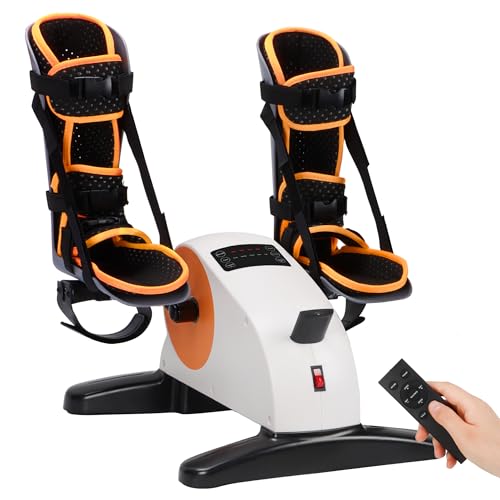
- 12 adjustable assisted speeds
- Remote LCD tracks four workout metrics
- Adjustable leg guards and non-slip pedals
Best For: Gentle rehabilitation and supported seated exercise
Long-Cord Control Pick
Exerpeutic 2000M Motorized Pedal Exerciser

- Six-foot handheld speed controller
- LCD tracks four workout metrics
- Overload protection and adjustable pedal straps
Best For: Tracked low-impact exercise with easy-reach controls
Connected Safety Pick
Sunny Smart 2-in-1 Pedal Exerciser

- 18 speeds and three preset programs
- Remote controls direction, time, and speed
- SunnyFit app plus tilt-related auto-stop protection
Best For: Connected, adjustable low-impact arm and leg workouts
Most Versatile
Nobol PhysioPedal Motorized Under Desk Bike

- Motorized and manual pedaling modes
- Arm and leg exercise with forward/reverse rotation
- Remote control, LED display, and eight resistance levels
Best For: Progressive seated upper- and lower-body exercise
Best Program Variety
Confidence Fitness Motorized Mini Bike

- Six automatic programs plus manual mode
- 12 speed settings for customized pacing
- Remote-controlled LCD workout tracking
Best For: Short, varied seated arm or leg workouts
Most Compact
HOMGIM Motorized Arm and Leg Pedaler

- Lightweight, compact eight-pound design
- Six speed levels with forward and reverse motion
- Remote control and LCD display included
Best For: Small-space seated mobility and rehabilitation exercise
Best All-Around Control

- 12 adjustable speeds with automatic and manual modes
- Remote and LCD display support hands-free tracking
- Compact design with adjustable foot straps
Best For: Seniors and seated arm or leg exercise at home or under a desk
Best for Gentle Rehabilitation
Quiet Motorized Arm and Leg Exerciser
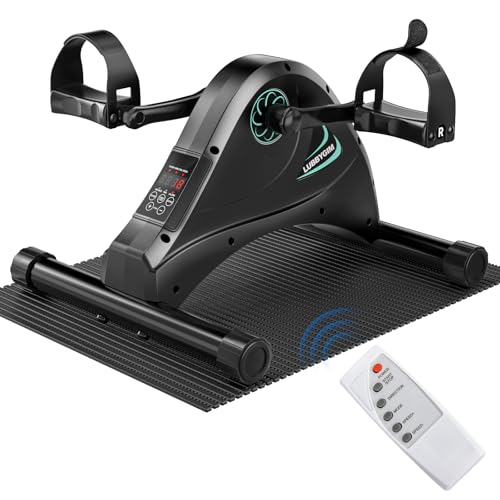
- Six adjustable speeds with remote or LED controls
- Motorized and manual forward/reverse operation
- Adjustable pedals support hand or foot use
Best For: Gentle seated exercise, rehabilitation, and muscle relaxation
Best for Quiet Operation
12-Speed Remote Pedal Exerciser

- Under-20 dB motor for discreet seated exercise
- 12 speeds with forward and reverse pedaling
- Remote, LCD display, and 90% pre-assembly
Best For: Quiet home, office, and recovery-focused workouts
Quiet Everyday Pick – iHomey Motorized Arm and Leg Pedal Exerciser
If you want arm bikes with remote controls for light movement at home or work, the iHomey provides automatic cycling for both arms and legs. Its smooth, quiet pedal motion is suitable for use while watching TV, working, talking on the phone, or playing video games.
Best For: Seniors and users seeking quiet, low-distraction arm and leg movement in a compact setting.
Pros:
- Remote control supports convenient operation.
- Automatic motorized cycling works for both arms and legs.
- Quiet, smooth motion fits home or office use.
- LCD display provides workout information.
Cons:
- The notes do not specify the number of speed or resistance settings.
- Battery-powered operation may require attention to battery replacement.
The iHomey is a straightforward choice when quiet assisted movement matters more than advanced programming. Its remote and LCD display make basic sessions easier to manage without interrupting other activities.
Rehab Support Pick – Motorized Pedal Exerciser with Leg Support
For shoppers comparing arm bikes with remote controls for rehabilitation or gentle seated exercise, this compact motorized pedal exerciser offers assisted arm and leg training. It combines 12 speeds, an LCD monitor, adjustable leg guards, and non-slip pedals in a portable design.
Best For: Seniors, rehab users, and anyone wanting adjustable assisted pedaling with added ankle and leg support.
Pros:
- Remote-controlled LCD display tracks time, speed, distance, and calories.
- Offers 12 adjustable speeds for varied assisted exercise.
- Adjustable leg guards and non-slip pedals support secure positioning.
- Compact 10-pound design is suited to home, office, or storage use.
Cons:
- The supplied information does not identify a specific maximum user weight.
- Its compact format may be less suitable for users seeking vigorous cycling.
This model stands out for buyers who prioritize adjustability and positioning support. The remote allows settings to be changed without crouching, while the monitor helps track basic session data.
Long-Cord Control Pick – Exerpeutic 2000M Motorized Pedal Exerciser
The Exerpeutic 2000M is a practical option among arm bikes with remote controls, using a handheld controller with a six-foot cord for easy speed adjustments. It supports low-impact arm and leg exercise, includes a 15-minute automatic timer, and provides several safety and tracking features.
Best For: Home or office users who want corded control, progress tracking, and assisted low-impact exercise.
Pros:
- Six-foot handheld controller reduces the need to bend over.
- LCD tracks distance, time, calories, and total repetitions.
- Overload protection stops crank rotation when excessive speed or resistance is detected.
- Foldable pedals with adjustable straps, a carry handle, and floor mat add convenience.
Cons:
- The controller is listed as a knob rather than a wireless remote.
- Its 18.2-by-21-by-14.5-inch footprint is larger than some mini pedal exercisers.
Choose the 2000M if controller reach and safety features are priorities. It is particularly useful for users who want detailed session feedback and a more secure pedal setup, though it requires more floor space.
Connected Safety Pick – Sunny Smart 2-in-1 Pedal Exerciser
This Sunny Health & Fitness model is a strong choice for arm bikes with remote controls when you want more settings and connected features. It provides arm and leg exercise, 18 speed levels, three preset programs, remote adjustments, and optional SunnyFit app access for guided workouts and progress tracking.
Best For: Users seeking versatile low-impact training with remote control, app connectivity, and automatic safety shutoff.
Pros:
- Remote adjusts speed, time, direction, and preset programs.
- Offers 18 speeds and three programs for flexible sessions.
- SunnyFit app access includes trainer-led workouts and virtual scenic tours.
- Auto-stop protection activates if the unit tilts over 45 degrees or detects an issue.
Cons:
- The optional HR200 pulse and heart-rate sensor is not included.
- At 21.5 inches long and 15.9 pounds, it may need more space than smaller units.
The Sunny model is the most feature-rich option here for buyers who want remote convenience beyond simple speed control. Its app connection, broad speed range, and auto-stop system make it appealing for structured, low-impact mobility sessions.
Most Versatile – Nobol PhysioPedal Motorized Under Desk Bike
Among arm bikes with remote controls, the Nobol PhysioPedal stands out for combining assisted and manual pedaling with both arm- and leg-exercise options. Its remote lets you adjust speed, direction, and settings without bending down, while the LED display tracks key workout metrics.
Best For: Seniors, adults, and users seeking progressive, low-impact seated arm and leg movement at home or work.
Pros:
- Supports motorized or manual pedaling with eight resistance levels.
- Works for tabletop arm exercise or under-desk leg exercise.
- Offers forward and reverse rotation, adjustable speed, and a remote-controlled LED display.
- Quiet, portable design with a 250-pound maximum weight recommendation.
Cons:
- At 19 pounds, it is heavier than the other options here.
- Requires a corded electric power source.
The PhysioPedal is a strong all-around choice if you want remote-controlled operation, broader resistance adjustment, and the flexibility to train both upper and lower body.
Best Program Variety – Confidence Fitness Motorized Mini Bike
The Confidence Fitness mini bike is a practical pick among arm bikes with remote controls for users who want automated pedaling while working, reading, or watching TV. Its remote-controlled computer provides six automatic programs, a manual setting, and 12 speed settings.
Best For: Adults wanting a compact motorized exerciser with multiple preset routines for seated arm or leg workouts.
Pros:
- Includes six automatic programs plus a manual program.
- Provides 12 speed settings for adjusting workout pace.
- Can be used for both arm and leg exercise.
- LCD screen displays distance, time, calories, and speed.
Cons:
- Initial run time is five minutes, with workouts lasting up to 15 minutes.
- Battery-powered operation may require attention to battery availability.
- Its listed maximum speed is 12 rpm.
Choose this model if preset programs matter more to you than a longer continuous session or a wider range of physical adjustments.
Most Compact – HOMGIM Motorized Arm and Leg Pedaler
The HOMGIM mini exercise bike is one of the more compact arm bikes with remote controls, making it suited to small spaces and seated rehabilitation-style movement. It offers six speed levels, forward and reverse motion, and an LCD display for monitoring basic workout data.
Best For: Seniors and users who want a small corded exerciser for seated mobility, circulation, or rehabilitation training.
Pros:
- Compact 15-by-10-by-13-inch design weighs eight pounds.
- Remote control and LCD display support convenient operation and tracking.
- Forward and reverse motion can support flexibility and joint movement.
- Simple two-step installation is designed for quick setup.
Cons:
- Offers six speed levels, fewer than the Confidence Fitness model.
- Remote batteries are not included.
- Maximum weight recommendation is 200 pounds.
The HOMGIM is a sensible space-saving option when portability and straightforward assisted movement are priorities, though its adjustment range is more limited.
Best All-Around Control – 12-Speed Mini Exercise Bike
This compact motorized pedal exerciser is a practical option for shoppers seeking arm bikes with remote controls for seated exercise at home or under a desk. It offers automatic and manual modes, 12 speed settings, and a display for tracking key workout metrics.
Best For: Seniors, office workers, and users who want adjustable assisted or manual arm and leg exercise.
Pros:
- Remote control lets you adjust settings without bending over.
- Offers 12 speeds plus automatic motorized and manual modes.
- LCD display tracks time, distance, calories, and total counts.
- Compact, portable design arrives 90% pre-assembled.
Cons:
- The corded-electric design requires access to a power outlet.
- Assembly still requires attaching both pedals and support legs.
With its broad speed range, assisted operation, and tracking display, this model is a versatile choice for low-impact seated workouts. Its adjustable foot straps and non-slip feet also support stable leg use, while the pedal design can accommodate arm exercise.
Best for Gentle Rehabilitation – Quiet Motorized Arm and Leg Exerciser
For shoppers comparing arm bikes with remote controls for gentle movement, this LUBBYGIM pedal exerciser combines motorized assistance with manual operation. Its quiet electric drive, six speed levels, and forward-and-backward pedaling are suited to relaxed exercise while sitting.
Best For: Seniors and users seeking low-impact physical therapy, muscle relaxation, or seated arm and leg movement.
Pros:
- Remote or LED-button controls adjust the six speed levels.
- Supports motorized, manual, forward, and backward pedaling.
- Adjustable pedals can be used for both hands and feet.
- Quiet operation is suitable for use while working or watching TV.
Cons:
- It provides six speed levels, fewer than some competing models.
- The supplied item weight specification is unusually high and may warrant verification before purchase.
This model emphasizes accessible, low-impact movement rather than high-intensity training. The remote operation and adjustable pedals make it especially convenient for users who want assisted exercise without repeatedly reaching down to the machine.
Best for Quiet Operation – 12-Speed Remote Pedal Exerciser
This Ukeep model is a strong fit for buyers seeking arm bikes with remote controls that can be used during quiet activities. Its under-20 dB motor, 12 speed levels, bidirectional pedaling, and LCD display support discreet, low-impact seated exercise.
Best For: Seniors, office users, and people in recovery who need quiet, hands-free assisted movement.
Pros:
- Quiet motor is rated below 20 dB for use during calls, work, or TV.
- Remote control and LCD display support convenient operation and tracking.
- Offers 12 speed levels and forward/reverse pedaling.
- 90% pre-assembled and compact for small spaces.
Cons:
- The listed warranty is only 30 days.
- It requires two AAA batteries for the remote, though batteries are included.
Among these options, the Ukeep stands out for its combination of quiet operation and a wide speed range. Its remote is useful for users with limited mobility or back issues, while reverse pedaling adds another movement option for seated routines.
How We Picked the Best Arm Bikes with Remote Controls
We focused on motorized mini exercise bikes that support arm and leg pedaling and include a remote control or remote-assisted operation. Our comparison emphasizes practical factors: ease of use, speed adjustment, automatic and manual modes, pedal design, stability, display information, noise expectations, and suitability for seniors or rehabilitation exercises.
Because these machines are often used while seated, we also considered whether their features make it easier to begin, pause, or adjust a session without bending down. Product descriptions and specifications were compared for advertised capabilities, but users should confirm dimensions, weight limits, and medical suitability before buying.
Quick Comparison
| Best for | Features to prioritize |
|---|---|
| Rehabilitation and gentle movement | Low starting speed, smooth motor assistance, remote control, secure pedals |
| Arm and leg versatility | Two-way pedaling, adjustable pedal straps, stable base |
| Under-desk use | Compact dimensions, low noise, manageable weight, simple controls |
| Independent operation | Large remote buttons, clear display, automatic mode, easy emergency stop |
| More structured workouts | Multiple speeds, timer or distance display, manual resistance options |
Key Buying Factors for Arm Bikes with Remote Controls
Motor and Speed Range
A motorized unit should provide a slow, controlled starting speed, especially for older adults or physical therapy routines. More speed settings offer better progression, but maximum speed matters less than smooth operation and precise adjustment.
Remote Control and Safety
Look for clearly labeled buttons, reliable range, and controls for starting, stopping, direction, and speed. A remote is most useful when the exerciser can operate it without reaching toward the floor. A safety shutoff, stable base, and secure foot or hand pedals are also important.
Pedal Design and Positioning
For leg use, wide pedals and adjustable straps can help keep feet secure. Arm workouts require positioning the unit on a stable table or tray at a comfortable height. Check whether the pedal shape and spacing suit the intended user.
Stability, Size, and Noise
Measure the available space before ordering. A compact bike is easier to store, but a heavier base may stay in place better. For desk or shared-room use, prioritize models advertised for quiet operation and place the unit on a non-slip surface.
Who Should Buy Which Arm Bikes with Remote Controls?
Choose a basic motorized pedal exerciser if you want occasional low-impact movement with straightforward remote operation. Select a model with leg support or enhanced stability if balance, foot placement, or seated comfort is a concern. For users alternating between arms and legs, prioritize adjustable straps, reversible pedaling, and a stable platform.
Under-desk users should choose the smallest model that fits comfortably without interfering with chair movement. Buyers following a rehabilitation plan may benefit from fine speed adjustment, automatic mode, and an easy-to-read display, but should confirm the device is appropriate with a qualified healthcare professional. No matter which model you choose, begin slowly, stop if you feel pain or unusual symptoms, and use the machine only as directed.