The best heart rate monitor for running helps you train by effort instead of guesswork. A reliable sensor can make easy runs easier, intervals more controlled, and long-run pacing more consistent.
Our roundup includes highly accurate chest straps, comfortable armbands, and connected options that work with watches, phones, gym equipment, and popular fitness apps.
Best 10 Heart Rate Monitor for Running Picks for 2026
Most Accurate Chest Strap

- Highly precise heart rate measurement
- Bluetooth, ANT+, and 5 kHz connectivity
- Waterproof with up to 400 hours of battery life
Best For: Runners who prioritize accuracy and broad compatibility
Best for Running Dynamics

- Tracks heart rate, HRV, and running dynamics
- Records workouts without a watch
- Rechargeable battery lasts up to two months
Best For: Garmin athletes seeking detailed training data
Most Comfortable Armband

- Soft, breathable armband design
- Pairs with up to three Bluetooth devices
- Automatic wear detection and 38-hour operation
Best For: Runners who prefer an armband over a chest strap
Best Long-Battery Option

- Up to one year of battery life
- Transmits heart rate and HRV data
- Machine-washable strap with 3 ATM water rating
Best For: Garmin runners who want low-maintenance tracking
Reliable Everyday Tracking
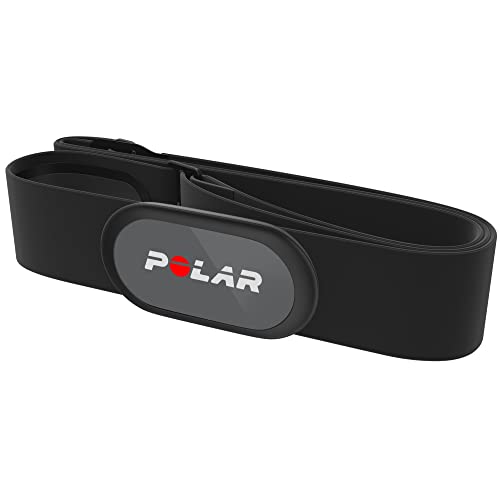
- High-accuracy heart-rate sensing
- Connects to equipment and smartphone apps
- Approximately 400-hour battery life
Best For: Everyday runners seeking dependable app-compatible chest-strap tracking
Garmin Training Companion

- Transmits heart rate and HRV data
- Works with Garmin devices and compatible apps
- Washable strap with up to one-year battery life
Best For: Garmin users who want durable real-time running metrics
Long-Life Connectivity
GEOID HS500 Heart Rate Monitor

- Supports ANT+ and Bluetooth
- Up to 800 hours of battery life
- IP67-rated and designed to reduce motion interference
Best For: Multi-platform runners seeking long battery life and flexible connections
Best Overall Armband
Rechargeable Bluetooth ANT+ HR Armband
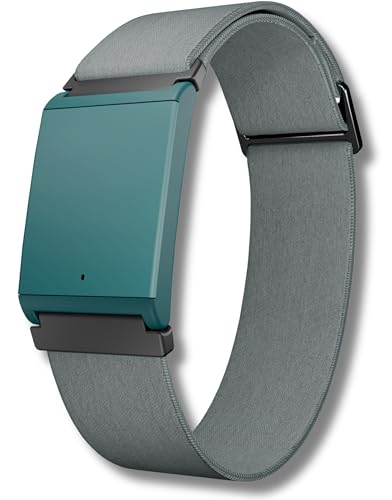
- Optical sensor with automatic wear detection
- Up to 60-hour rechargeable battery
- Connects to up to three devices
Best For: Runners who prefer a lightweight armband and multi-device connectivity
Best Long-Battery Chest Strap
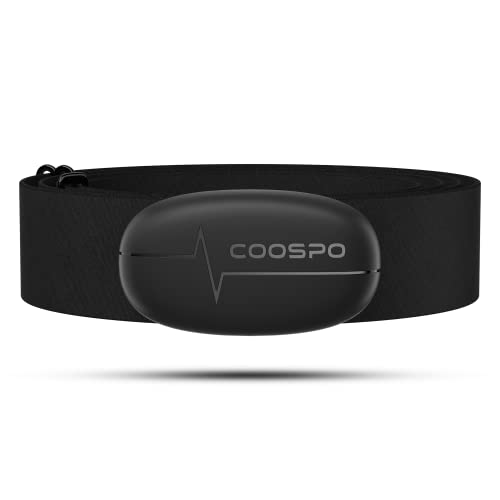
- Bluetooth and ANT+ connectivity
- Up to 300 hours with a replaceable battery
- IP67 protection for sweat and rain
Best For: Frequent runners using watches, apps, or gym equipment
Best Value Chest Strap
COOSPO H6M Bluetooth ANT+ Sensor

- Dual Bluetooth and ANT+ transmission
- 300-hour battery life
- Supports zone and interval training
Best For: Runners using compatible fitness apps or watches
Most Accurate Chest Strap – Polar H10
The Polar H10 is a strong choice if you want a highly accurate heart rate monitor for running. Its chest strap supports Bluetooth, ANT+, and 5 kHz connections, allowing it to work with compatible watches, phones, fitness equipment, and other devices.
Best For: Runners prioritizing measurement accuracy, broad device compatibility, and a waterproof chest strap.
Pros:
- Recognized for highly precise heart rate measurement.
- Supports Bluetooth, ANT+, and 5 kHz connections, including simultaneous connections.
- Waterproof and equipped with internal memory for multiple hours of data.
- Battery life is rated at up to 400 hours.
Cons:
- Chest-strap design may be less comfortable than an armband for some runners.
- Uses a separately replaceable CR2025 button-cell battery.
The Polar H10 stands out for runners who need dependable, flexible connectivity and precise readings rather than smartwatch-style features. Its comfortable Pro chest strap and long battery life make it well suited to regular training.
Best for Running Dynamics – Garmin HRM 600
The Garmin HRM 600 is a data-focused heart rate monitor for running that adds advanced running metrics to real-time heart rate and HRV data. It can also record workouts when you cannot wear a watch and sync the results to Garmin Connect.
Best For: Garmin users and performance-oriented runners who want running dynamics, workout recording, and swim support.
Pros:
- Transmits real-time heart rate and HRV data to compatible devices and apps.
- Provides running dynamics such as stride length, vertical oscillation, and ground contact time balance with a compatible smartwatch.
- Records workouts without a watch, including heart rate, calories, speed, and distance.
- Machine-washable strap and rechargeable battery lasting up to two months.
Cons:
- Advanced running metrics require a compatible smartwatch.
- Its Garmin-focused features may be less useful outside compatible devices and apps.
Choose the HRM 600 if your training depends on detailed performance data. Indoor pace and distance support, swim-data syncing, and watch-free recording make it more capable than a basic heart rate strap.
Most Comfortable Armband – COROS Heart Rate Monitor
The COROS Heart Rate Monitor offers an armband alternative to a traditional chest strap for runners seeking a softer, breathable fit. It connects by Bluetooth to up to three devices and automatically powers on when worn.
Best For: Runners who prefer an easy-to-wear armband and use Bluetooth-compatible watches, phones, treadmills, or indoor trainers.
Pros:
- Soft, breathable fabric band designed for comfortable sports use.
- Can connect simultaneously to up to three Bluetooth devices.
- Wear detection automatically powers the monitor on and off.
- Provides 38 hours of operation or up to 80 days of standby per charge.
Cons:
- Bluetooth only; it is not compatible with ANT+.
- Designed for sports and activities rather than daily heart rate tracking.
- USB charging cable is included, but a Type-C adapter is not.
The COROS armband is a practical pick when comfort and quick setup matter more than ANT+ support. Its multi-device Bluetooth pairing and automatic wear detection are especially useful for connected indoor and outdoor workouts.
Best Long-Battery Option – Garmin HRM 200
The Garmin HRM 200 is a straightforward heart rate monitor for running that transmits real-time heart rate and HRV data to compatible Garmin devices, fitness equipment, and apps. Its replaceable battery and washable strap keep maintenance simple.
Best For: Runners who want dependable Garmin-compatible heart rate and HRV tracking with minimal charging.
Pros:
- Transmits real-time heart rate and HRV data to compatible devices and apps.
- Offers up to one year of battery life.
- Uses a user-replaceable battery for convenient maintenance.
- Machine-washable strap and 3 ATM water rating support regular training.
Cons:
- Advanced compatibility is centered on Garmin devices and supported apps.
- Provides fewer listed training features than the Garmin HRM 600.
The HRM 200 makes sense for runners who want the core benefits of a connected heart rate strap without frequent recharging. Its durable construction and long battery life are useful for consistent training routines.
Reliable Everyday Tracking – Polar H9 Heart Rate Sensor
Polar H9 Heart Rate Sensor – ANT + / Bluetooth - Waterproof HR Monitor with Soft Chest Strap, M-XXL
Check Price On AmazonIf you want a dependable heart rate monitor for running without adding a smartwatch, the Polar H9 pairs a soft chest strap with high-accuracy heart-rate sensing. It connects with compatible equipment and popular smartphone apps, making it practical for everyday training.
Best For: Runners who want a trusted, app-compatible chest-strap monitor for regular workouts.
Pros:
- Designed for high-accuracy heart-rate tracking.
- Works with compatible equipment and smartphone apps.
- Offers approximately 400 hours of battery life.
- Includes a soft strap and a two-year manufacturer warranty.
Cons:
- Requires a compatible phone, device, or fitness machine to view readings.
- The listed M–XXL strap size fits 26–36 inches; other runners need the alternate size.
- Uses a CR2025 button-cell battery that must be replaced.
The Polar H9 is a straightforward choice when reliable chest-strap tracking and broad connectivity matter more than having a built-in display.
Garmin Training Companion – Garmin HRM 200
The Garmin HRM 200 is a practical heart rate monitor for running if you already use Garmin gear or compatible training apps. It transmits real-time heart rate and heart-rate variability data, while its durable, washable design is suited to regular use.
Best For: Runners who want real-time heart-rate and HRV data with Garmin devices, fitness equipment, or apps.
Pros:
- Transmits real-time heart rate and heart-rate variability data.
- Compatible with Garmin smartwatches, cycling computers, fitness equipment, apps, and smartphones.
- Provides up to one year of battery life with a user-replaceable battery.
- Has a 3 ATM water rating and a machine-washable strap.
Cons:
- Its broadest feature set is most useful with compatible devices or apps.
- The strap is sold in separate XS–S and M–XL size options.
- Battery life is listed as up to one year, shorter than some competing sensors.
Choose the HRM 200 when Garmin compatibility, HRV data, and easy strap maintenance are priorities for your running routine.
Long-Life Connectivity – GEOID HS500 Heart Rate Monitor
For runners comparing a heart rate monitor for running across phones, watches, and training platforms, the GEOID HS500 offers both ANT+ and Bluetooth connectivity. Its movement-focused algorithms, IP67 waterproof rating, and long battery life support varied workouts, though swimming is not recommended.
Best For: Runners who need flexible ANT+/Bluetooth connections and extended battery life across multiple training devices.
Pros:
- Supports both ANT+ and Bluetooth connections.
- Uses updated hardware and algorithms intended to reduce movement and sweat interference.
- Offers approximately 800 hours of battery life with a replaceable CR2032 battery.
- Features IP67 water resistance and an LED connection indicator.
Cons:
- Swimming is not recommended.
- Bluetooth pairing should be completed through the app rather than directly through phone settings.
- Compatibility and setup may require choosing the correct ANT+ or Bluetooth connection method.
The HS500 stands out for runners who switch among training platforms and want long battery life, provided they are comfortable with app-based setup.
Best Overall Armband – Rechargeable Bluetooth ANT+ HR Armband
If you want a heart rate monitor for running without wearing a chest strap, this rechargeable armband offers optical tracking, Bluetooth and ANT+ connectivity, and support for up to three connected devices. Its lightweight, sweat- and water-resistant design is suited to daily runs, intervals, and longer training sessions.
Best For: Runners who prefer an armband and need multi-device connectivity with long battery life.
Pros:
- Automatically activates when worn and supports Bluetooth and ANT+ connections.
- Up to 60 hours of battery life with a rechargeable design.
- Lightweight 20-gram construction and soft silicone strap.
- Works with platforms and devices including Strava, Wahoo, Garmin, Peloton, and Zwift.
Cons:
- An optical armband may not suit runners who specifically prefer chest-strap sensors.
- Requires compatible Bluetooth or ANT+ receiving equipment to view workout data.
This is a practical choice for runners seeking a comfortable alternative to a chest strap. The automatic wear detection, broad compatibility, and rechargeable battery make it especially convenient for frequent training.
Best Long-Battery Chest Strap – COOSPO H6 Chest HR Monitor
The COOSPO H6 is a chest-strap heart rate monitor for running that transmits real-time data over Bluetooth or ANT+. It is designed for use with sports watches, bike computers, gym equipment, and fitness apps, while its replaceable battery supports extended training between changes.
Best For: Runners and cross-training athletes who want a chest strap with long battery life and broad device support.
Pros:
- Provides real-time heart rate data with Bluetooth and ANT+ transmission.
- Up to 300 hours of battery life with a replaceable CR2032 battery.
- Supports apps and equipment including Strava, Zwift, Peloton, Garmin, and NordicTrack-compatible systems.
- IP67 protection supports sweaty workouts and rainy-day training.
Cons:
- The electrode areas should be moistened before use for stable transmission.
- Not intended for swimming or soaking.
- Requires separating and drying the sensor and strap after workouts.
With its long replaceable-battery runtime and dual wireless modes, the H6 is well suited to runners who train frequently across multiple devices. The chest-strap format also provides a snug fit during active sessions, though it requires a little more setup and care.
Best Value Chest Strap – COOSPO H6M Bluetooth ANT+ Sensor
This COOSPO H6M is a straightforward heart rate monitor for running, cycling, and indoor training. Its adjustable chest strap sends live heart rate data to compatible phones, GPS watches, bike computers, fitness apps, and supported Peloton equipment through Bluetooth or ANT+.
Best For: Runners who want a simple, app-friendly chest strap for zone training and everyday workouts.
Pros:
- Bluetooth and ANT+ support connects with compatible phones, watches, and equipment.
- 300-hour battery life helps reduce frequent battery changes.
- Adjustable strap is designed for a snug fit during longer sessions.
- IP67 resistance supports sweaty workouts and rainy outdoor runs.
Cons:
- Electrodes need to be moistened before wearing.
- It is not designed for swimming or prolonged soaking.
- Requires a compatible receiving app or device; it has no standalone workout display.
The H6M focuses on the essentials: chest-based tracking, dual connectivity, and compatibility with common training platforms. It is a sensible pick for runners who want to monitor zones and intervals through an existing phone, watch, or fitness system.
How We Picked the Best Heart Rate Monitor for Running
We focused on the features that matter during real training: heart rate accuracy, connection stability, comfort, water resistance, battery life, and compatibility. Chest straps generally provide the most responsive readings during intervals and changing effort, while optical armbands can be easier to wear and more convenient for everyday workouts.
We also considered support for ANT+ and Bluetooth, since runners may want to connect a sensor to a GPS watch, phone, treadmill, bike computer, or multiple training platforms. Models with automatic wear detection, rechargeable batteries, or long replaceable-battery life received additional consideration when those features improve day-to-day use.
Quick Comparison
| Type | Best For | Main Advantage | Potential Trade-Off |
|---|---|---|---|
| Chest strap | Structured training and intervals | Fast, precise readings | Requires a snug fit and skin contact |
| Optical armband | Comfort and convenience | Easy to put on and remove | May respond less quickly during rapid intensity changes |
| ANT+ and Bluetooth models | Multi-device training | Broad compatibility | More setup and pairing options to manage |
Key Buying Factors for a Heart Rate Monitor for Running
Accuracy and Response Time
If you train by zones, perform intervals, or race regularly, prioritize a sensor that reacts quickly to changes in effort. Chest straps are typically the safest choice for precise workout data, particularly when wrist-based readings are inconsistent.
Connectivity
Check whether the monitor supports ANT+, Bluetooth, or both. Bluetooth is useful for phones and many fitness apps, while ANT+ is common on sports watches and gym equipment. Dual-protocol models offer the most flexibility.
Comfort and Fit
A chest strap should stay secure without restricting breathing. Look for an adjustable, washable strap and electrode areas that maintain contact when you sweat. Armbands should fit firmly on the upper arm without sliding or feeling tight.
Battery, Durability, and Maintenance
Consider whether you prefer a replaceable coin cell or USB rechargeable design. Waterproofing helps with sweat and rain, but follow the manufacturer’s cleaning and storage instructions to preserve the strap and sensor.
Who Should Buy Which Heart Rate Monitor for Running?
Choose a chest strap such as the Polar H10, Polar H9, or Garmin HRM models if accuracy and fast interval response are your top priorities. A newer Garmin or COROS option may be especially appealing if you already use that brand’s watch ecosystem.
Choose an optical armband if you dislike chest straps or want a quick, comfortable option for running, gym sessions, and app-based workouts. Budget-focused runners can look to the GEOID and COOSPO sensors, provided their preferred watch or app supports the listed connection standard. Before buying, confirm device compatibility and whether the monitor’s battery and fit suit your weekly training routine.